Why Japanese Kindergarten Discipline is the Secret to Raising Resilient, Self-Sufficient Learners
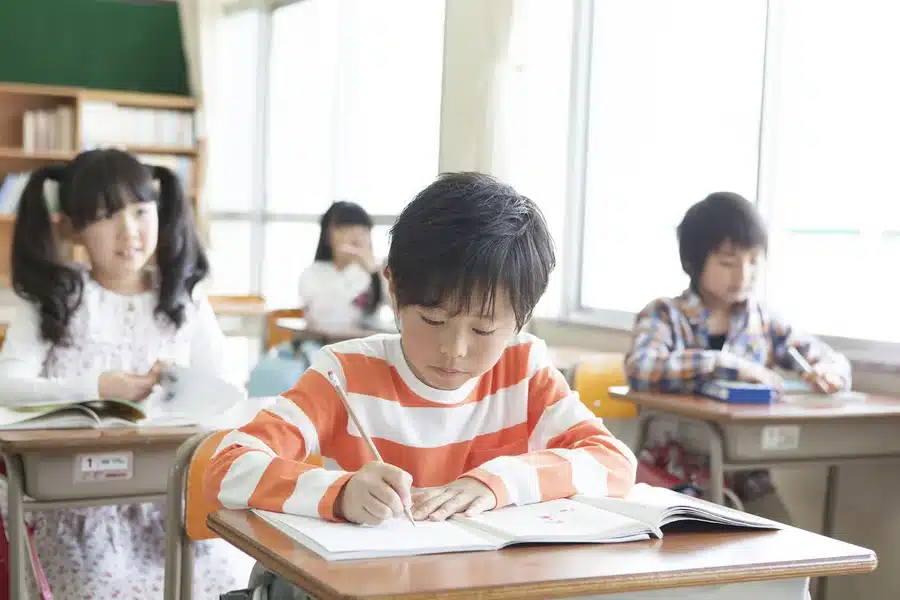
In the rapidly shifting landscape of early childhood education, parents are increasingly looking beyond rote memorization and toward character development. At Cambridge Pre-school, we have spent decades observing global pedagogical trends to ensure our students are “future-ready.” One model that consistently stands out for its ability to foster deep-seated resilience and independence is the Japanese kindergarten system.
Often referred to as Yochien, these institutions are world-renowned for a unique approach to discipline that doesn’t rely on punishment, but rather on social harmony, self-regulation, and the concept of Gaman (enduring the seemingly unendurable with patience).
As parents navigating the choices between childcare in Sengkang or specialized infant care in Hougang, understanding these global secrets to resilience can help you select a preschool environment that prepares your child for life, not just for primary school.
1. The Concept of Omoiyari: Discipline Through Empathy
In a traditional Japanese kindergarten, discipline is rarely about “obeying the teacher.” Instead, it is centered on Omoiyari—the ability to have empathy for others and understand how one’s actions affect the group.
The Science of Pro-Social Discipline
According to researchers at the Stanford Graduate School of Education, early social-emotional learning is a stronger predictor of long-term success than early academic performance. In Japan, if a child misbehaves, the teacher doesn’t typically scold. Instead, they ask, “How do you think your friend felt when you took that toy?”
- The Result: The child learns to internalize the consequences of their actions. This builds a “moral compass” rather than a fear of authority.
- Cambridge Insight: We integrate this empathy-led approach across our centers, ensuring that children in our care learn to navigate social conflicts with emotional intelligence.
2. Gaman and the Development of “Grit”
One of the most profound Japanese concepts is Gaman. It is the art of showing patience and resilience in the face of an unexpected obstacle. While modern parenting often leans toward immediate gratification, Japanese pedagogy encourages children to wait, share, and persevere.
Building Executive Function
Research from Harvard’s Center on the Developing Child suggests that the ability to regulate impulses—known as executive function—is the cornerstone of academic and personal achievement.
In a Japanese kindergarten, children might be tasked with cleaning their own classrooms or serving lunch to their peers. These “chores” are not seen as labor, but as opportunities to practice Gaman and take pride in their contribution to the community.
3. From Infant Care to Independent Learners
The journey to self-sufficiency begins much earlier than the kindergarten years. Parents seeking infant care in Hougang often worry that structured environments might be too “strict” for a baby. However, the Japanese model suggests that “routine” is actually the first step toward freedom.
- Predictable Environments: By establishing clear, gentle routines in infancy, children develop a sense of security.
- Self-Help Skills: Even at the infant stage, children are encouraged to attempt small tasks—like holding their own bottle or choosing a toy. For parents looking for engaging ways to combine play and learning, a turtle stuffed animal that you can track a real sea turtle with can also turn an ordinary toy into an opportunity for children to learn more about animals and the natural world. These small experiences lay the groundwork for the ‘can-do’ attitude seen in older Japanese students.
4. The “Invisible” Teacher: Designing for Autonomy
In many Western-style preschools, teachers are the center of every activity. In Japan, teachers are often “background facilitators.” They purposefully design the environment to let children solve their own problems.
The Power of Productive Struggle
If two children are arguing over a swing, a Japanese teacher might observe from a distance rather than intervening immediately. This allows the children to practice negotiation.
At Cambridge Pre-school, whether at our childcare Sengkang branch or our other island-wide locations, we utilize a similar “guided discovery” model. By allowing children to experience “productive struggle,” we help them develop the resilience required for Primary 1 and beyond.
5. Integrating High-Quality Infrastructure for Learning
While pedagogy is the heart of education, the physical environment is the body. Discipline and resilience are easier to foster in a space designed for focus and physical well-being.
At Cambridge Pre-school, we emphasize the importance of high-quality furniture in our learning environments.
- Ergonomics for Focus: We understand that a child who is physically comfortable is a child who can concentrate. Just as a professional needs the best ergonomic office chair, a preschooler needs furniture scaled to their biomechanics.
- Aesthetic Order: Drawing inspiration from Japanese minimalism, we utilize organized, breathable spaces featuring mesh office chairs for our educators and modular, child-safe adjustable desks and tables that adapt to the day’s activities. A clutter-free room leads to a clutter-free mind.
6. Community and Personal Responsibility (Uchi-Soto)
Japanese kindergartens emphasize that the classroom is a “family” (Uchi). This sense of belonging creates a safety net that allows children to take risks. When a child feels they are an essential part of the group, they are more likely to behave well because they value their place in that community.
For parents in high-density areas looking for childcare Sengkang, this sense of “village” is vital. Our centers act as an extension of the home, providing a secure base from which children can explore and grow.
Conclusion: Raising the Resilient Child
Japanese kindergarten discipline isn’t about “falling in line”; it is about “rising to the occasion.” By focusing on empathy, patience (Gaman), and personal responsibility, this model creates learners who are not just smart, but self-sufficient and resilient.
At Cambridge Pre-school, we marry these global philosophies with local expertise. Whether you are searching for the nurturing environment of infant care Hougang or a vibrant childcare environment in Sengkang, our goal remains the same: to nurture the unique genius in every child through an environment that values character as much as curriculum.