How to Prevent Moisture Damage in Portable Storage Units
When the storage is conducted over a long period of time, one of the most frequent reasons of damage in the portable storage units is the moisture. Poor airflow and humidity and condensation may slow down to mold, mildew, rust, and warped materials before anyone notices the problem. It is imperative to know how moisture is created and how to manage it in order to save furniture, electronics, documents, and clothing. Portable storage can be a safe and efficient option even during changing weather conditions with the appropriately prepared habits and preparation.
Choosing the Right Location
A good location of a portable storage unit contributes significantly to the prevention of moisture. The units on the uneven ground or directly on the grass and soil are prone to condensation caused by the emergence of ground moisture into the container. A horizontal surface like concrete or compacted gravel will aid in contact with wet ground to be minimized and also enhance overall stability. It also prevents stagnant moisture due to elevation which promotes good air flow under the unit.
The location should also be determined in terms of environmental surroundings. Darker areas can stay wet longer following rainfall whereas places under trees can subject units to falling leaves and debris that can trap moisture against doorways and seams. In areas with changing temperatures, like storage Windsor areas where humidity varies with the seasons, careful location can greatly lessen the chances of the development of condensation within the unit.
Preparing Items Before Storage
Moisture control should be ensured by properly preparing the items before putting them into a portable storage unit. It should also be completely dry and clean since even a little moisture that is trapped will be spread upon storage. Unfinished wood, damp clothes, and cardboard boxes are especially susceptible and may pass dampness to other neighboring objects in the course of time. This can be minimized by letting the items dry properly before packing.
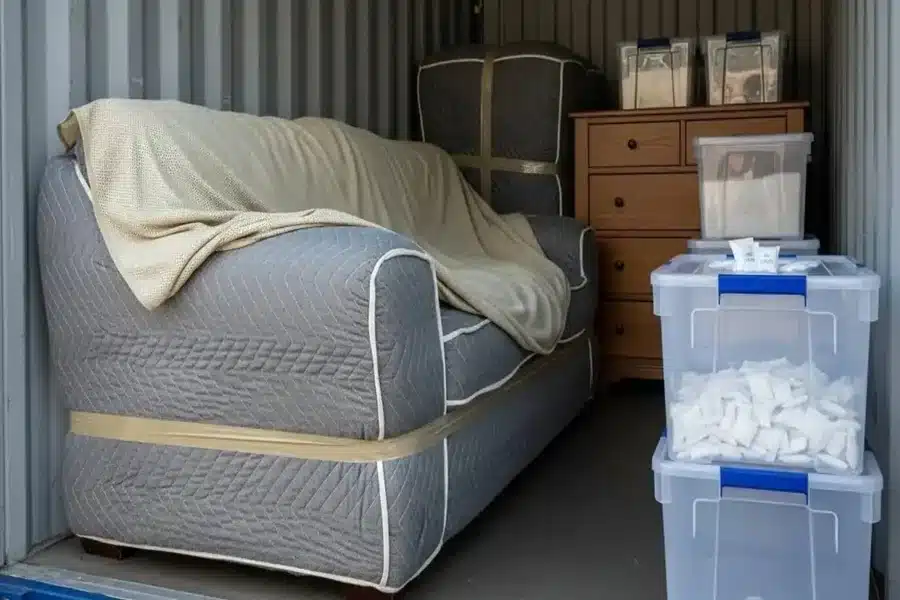
Moisture exposure is also dependent on the packaging materials. Tight-fitting lids provide more protection features compared with cardboard boxes that are capable of absorbing humidity in the air. Fabric covers are also usually better than plastic wraps on furniture because they can be gotten in breathable form and they also cover surfaces. Another way to protect the unit is to use moisture absorbing products that will provide an extra level of protection by controlling the amount of humidity inside the unit.
Managing Airflow and Interior Conditions
One of the factors that can be used to minimize the occurrence of moisture in a portable storage unit is the flow of air within the unit. Stuff that is packed too close to the walls and ceilings may prevent the airflow and promote condensation in the unseen corners. Keeping a space between items and the walls enables free movement of air and this balances temperature variations that lead to formation of moisture. Strategic distance also facilitates the inspection of items in the future.
There are possibilities of temperature alteration leading to warm air condensation on colder surfaces within the unit. Although the portable storage units are not usually climate controlled, they nonetheless can be mitigated against in order to minimize these effects. It is worth opening the unit after every dry day to get the trapped humidity out of it and to air out. Continuous control of the environment inside and the ability to make changes to the packing when necessary will mean that the belongings stored are placed on long term protection.
Ongoing Maintenance and Inspection
One step in moisture prevention that is very easily disregarded is dealing with a portable storage unit by inspecting it regularly. Looking out of condensation, musty smells, or surfaces being wet enable the problem to be resolved before it becomes too late. Items can be repositioned easily when they are detected early before the moisture absorbers are damaged or the ventilation is enhanced without incurring a lot of cleanup or losing them.
Avoiding ignorance regarding the weather and seasonal variations also helps to achieve better results in the storage. The extreme humidity or the higher rate of change in temperature might force the need to observe extra effort in maintaining the environment of the unit stable in the time. Through the proper care of placement, packing, airflow control and regular inspection, users of portable storage can be assured that their belongings will not suffer any damage over time due to moisture.