Why Some Clinics Sound Quieter Than Others the Moment You Walk In
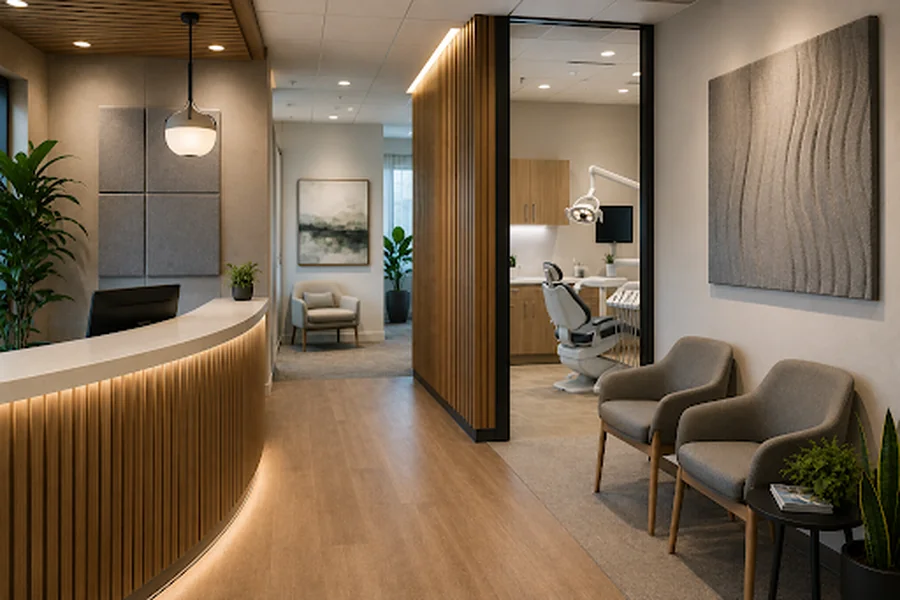
Two waiting rooms can look identical and feel entirely different. The distinction is rarely visual. It is usually acoustic, and it indicates how much thought a practice has given to the experience of being there.
Sound Carries More Anxiety Than Sight
For most people, dental apprehension attaches itself to sound rather than to anything they see. The high-pitched whine of a handpiece is the obvious example, but suction, instruments touching a tray, and voices carrying through a wall all contribute.
Sound also arrives before you can prepare for it. You can look away from something unsettling, but hearing works continuously and without warning, which is why a noise from a nearby room can unsettle someone sitting in reception who is not being treated.
What Quieter Practices Do Differently
The differences are mostly structural and rarely obvious. Solid doors rather than hollow ones. Insulation in internal walls rather than only external ones. Carpet, upholstered seating, and soft furnishings in waiting areas, all of which absorb sound that hard surfaces would reflect.
Layout matters as much as materials. Placing treatment rooms away from reception, using a corridor as a buffer, and avoiding a direct line of sight and sound into a room where work is happening all reduce transmission considerably.
Background music serves a purpose beyond atmosphere. Low-level sound raises the threshold at which other noises become noticeable, which is why a silent room can feel more exposed than one with gentle sound in it.
Why This Signals Something Larger
None of these choices are required. They cost money, complicate a fit-out, and produce no measurable clinical benefit. A practice that makes them has decided the patient experience is worth investing in.
That decision tends to correlate with others. Anyone assessing a dentist South Yarra has available might notice whether appointments feel rushed, whether explanations are offered before instruments appear, and whether staff check in during longer procedures. Attention to sound usually accompanies attention to those details as well.
What You Can Notice Yourself
A first visit offers plenty of information. Sit in reception for a few minutes and listen. Can you hear equipment from treatment rooms? Can you follow conversations at the front desk? Both suggest sound travels freely, which means it will travel towards you when you are the one being treated.
Ask whether headphones are available, since many practices offer them and simply do not mention it. Ask whether a practitioner will describe what is about to happen before starting, which removes the surprise element that makes unexpected sounds harder to tolerate.
A Detail Worth Weighing
There is something worth appreciating in the idea that a considerable amount of design effort can go into something nobody consciously registers. The point of good acoustic planning is that it produces an absence rather than a feature.
For anyone who finds appointments difficult, that absence matters more than the quality of the magazines or the comfort of the chairs. It is also one of the few things you can assess within a minute of arriving, before anything else about a practice has been tested.