Experienced Legal Guidance After a Serious Commercial Truck Collision
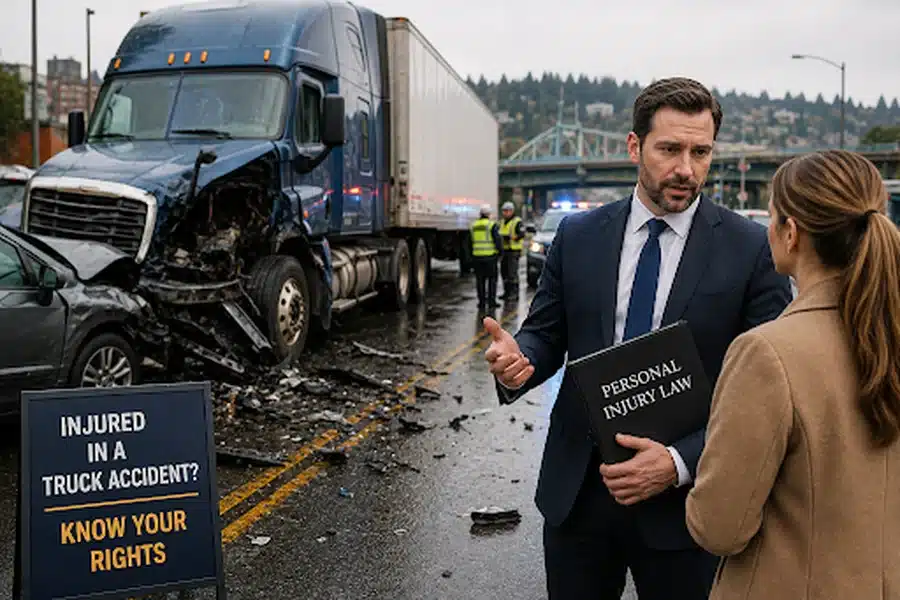
A collision involving a fully loaded commercial truck can change a person’s life in seconds. Severe injuries, overwhelming medical expenses, emotional trauma, and lost income often follow these crashes. Unlike ordinary vehicle accidents, truck collisions usually involve several parties, federal safety regulations, commercial insurance carriers, and complex investigations. That is why many injured victims seek experienced Portland truck accident lawyers to protect their legal rights and pursue fair compensation.
Portland continues to experience steady commercial traffic because of its busy highways, industrial centers, distribution warehouses, and shipping routes connecting Oregon with neighboring states. Delivery trucks, freight carriers, tanker trucks, logging vehicles, and construction trucks travel through Interstate 5, Interstate 84, Highway 26, and surrounding roadways every day. While these vehicles support the economy, they also create greater risks for drivers, passengers, cyclists, and pedestrians.
Why Commercial Truck Accidents Demand a Different Legal Strategy
Truck accident cases involve far more than determining which driver caused the collision. Commercial carriers operate under strict federal and state regulations that govern hiring practices, driver qualifications, maintenance schedules, cargo loading, and hours of service.
A successful legal strategy often requires examining:
- Driver qualification files.
- Electronic logging devices (ELDs).
- Black box data.
- Driver fatigue records.
- Maintenance reports.
- Inspection history.
Common Causes Behind Serious Truck Collisions in Portland
Many truck accidents result from preventable mistakes rather than unavoidable circumstances. Identifying the exact cause helps establish negligence and strengthens a compensation claim.
Some of the leading causes include:
- Brake failure caused by poor maintenance.
- Tire blowouts.
- Overloaded trailers.
- Improperly secured cargo.
- Driving under the influence.
- Inadequate driver training.
Understanding the Serious Injuries Truck Crash Victims Face
Because commercial trucks outweigh passenger vehicles by tens of thousands of pounds, injuries are often catastrophic. Victims frequently require extensive medical treatment and long recovery periods.
Common injuries include traumatic brain injuries, spinal cord damage, multiple fractures, internal organ injuries, severe burns, crushed limbs, permanent disability, and psychological trauma.
Some victims recover after months of rehabilitation, while others experience lifelong limitations affecting employment, mobility, and independence. A comprehensive legal claim should account for both current and future losses rather than immediate medical bills alone.
Who May Be Responsible for a Truck Accident?
One of the most important parts of any truck accident investigation involves identifying every responsible party. Liability may extend beyond the truck driver.
Potential defendants may include:
| Potential Responsible Party | Possible Negligence |
| Truck Driver | Fatigue, speeding, distracted driving |
| Trucking Company | Negligent hiring or poor supervision |
| Cargo Loading Company | Improper cargo distribution |
| Maintenance Contractor | Failure to repair critical components |
| Truck Manufacturer | Defective vehicle parts |
| Parts Manufacturer | Mechanical defects causing failure |
Evidence That Can Strengthen Your Injury Claim
Truck accident evidence disappears quickly. Commercial carriers sometimes repair vehicles, replace equipment, or overwrite electronic records within weeks.
Important evidence often includes:
- Accident scene photographs.
- Surveillance footage.
- Dash camera recordings.
- Electronic logging device data.
- GPS tracking records.
- Black box information.
- Police reports.
- Eyewitness statements.
- Medical documentation.
- Truck maintenance records.
Federal Trucking Regulations Often Play a Major Role
Commercial trucking companies must comply with numerous federal regulations established by the Federal Motor Carrier Safety Administration (FMCSA). These rules exist to reduce preventable crashes and improve highway safety.
Violations may involve exceeding hours-of-service limits, skipping required inspections, allowing unqualified drivers to operate commercial vehicles, or failing mandatory drug and alcohol testing. Evidence of regulatory violations often strengthens negligence claims because it demonstrates that safety rules designed to protect the public were ignored.
Calculating the Full Value of a Truck Accident Claim
Many accident victims underestimate the true value of their case because they focus only on immediate medical bills. Serious truck crashes often create financial losses that continue for years.
Compensation may include both economic and non-economic damages.
Economic damages may include:
- Emergency medical treatment.
- Hospital stays.
- Surgical procedures.
- Rehabilitation expenses.
- Prescription medications.
- Lost wages.
- Reduced future earning capacity.
- Property damage.
- Long-term nursing care.
- Medical equipment costs.
Non-economic damages may include:
- Physical pain.
- Emotional suffering.
- Permanent disability.
- Loss of enjoyment of life.
- Mental distress.
- Disfigurement.
- Loss of companionship in qualifying cases.
How Insurance Companies Attempt to Reduce Truck Accident Claims
Commercial trucking companies typically carry large insurance policies. Because significant money is involved, insurers often begin investigating immediately after a crash.
Common insurance tactics include delaying investigations, requesting recorded statements, questioning the seriousness of injuries, arguing that the victim shares responsibility, or making an early settlement offer before the full extent of damages is known.
Before accepting any offer, injured individuals should understand the long-term cost of ongoing medical care and lost earning potential. Once a settlement is signed, additional compensation is generally unavailable.
Choosing the Right Legal Representation After a Serious Truck Crash
Not every personal injury attorney regularly handles commercial trucking litigation. Truck accident claims require knowledge of federal transportation regulations, accident reconstruction, and commercial insurance practices.
When evaluating legal representation, consider whether the attorney has experience with:
- Commercial truck accident litigation.
- Federal trucking regulations.
- Catastrophic injury claims.
- Multi-party liability cases.
- Expert witness coordination.
- Complex settlement negotiations.
- Jury trial preparation when necessary.
What to Do Immediately After a Portland Truck Accident
The decisions made during the hours and days after a collision can significantly affect both recovery and any future legal claim.
| Step | Why It Matters |
| Seek immediate medical attention | Creates medical documentation and protects your health. |
| Report the accident | Establishes an official record of the crash. |
| Photograph the scene | Preserves valuable evidence before conditions change. |
| Collect witness information | Independent witnesses may support your claim. |
| Avoid discussing fault | Early statements can be misunderstood or used against you. |
| Preserve medical records | Documents the extent of injuries and treatment. |
| Speak with an attorney promptly | Helps secure evidence before it is lost. |
Taking these steps strengthens both personal safety and the legal case.
Conclusion
A commercial truck collision can leave victims facing physical pain, financial uncertainty, and difficult legal questions. These cases require careful investigation, a thorough understanding of trucking regulations, and the ability to identify every responsible party. Experienced Portland truck accident lawyers help preserve critical evidence, negotiate with commercial insurers, and pursue compensation that reflects both current and future losses. Seeking legal guidance early gives injured individuals the strongest opportunity to protect their rights and focus on recovery while the legal process moves forward.