Why Dogs Actually Want a Den, Not Just a Bed
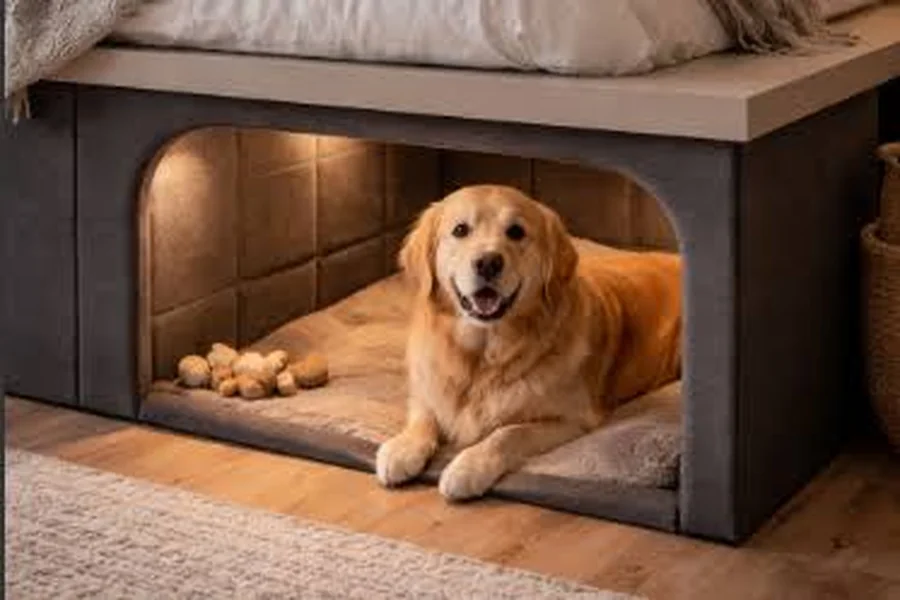
Dogs curl up under tables, wedge themselves behind couches, and squeeze into the narrow gap next to the nightstand more often than they settle into the middle of an open room. It looks like a quirky habit, but it’s actually an old instinct showing up in a modern house – wild canines are den animals, and that need for a small, enclosed, defensible space never really left, even after generations of domestication, selective breeding, and increasingly comfortable dog beds. A well-placed wooden dog house tends to satisfy that instinct far better than an open cushion ever manages to, because it actually gives the dog walls instead of just padding.
The Instinct Behind Why Dogs Seek Small, Enclosed Spaces
In the wild, a den serves one clear purpose: safety while resting, with limited exposure on every side except the one entrance. Domestic dogs still carry that wiring, even in houses that have never posed any real threat to them. It’s why a dog will often pick a cramped spot under a desk over a large open bed sitting a few feet away in plain view, sometimes ignoring the expensive bed entirely for weeks or even months at a stretch. The behavior isn’t a preference against comfort. It’s a preference for feeling enclosed, protected, and slightly out of the main flow of the house.
Why a Plain Bed Doesn’t Fully Solve It
A flat bed handles the comfort part reasonably well but leaves the enclosure part completely untouched. It’s soft, certainly, but it’s still open on every side, sitting exposed in the middle of whatever room it happens to be placed in, without a single wall around it. Some dogs adapt fine to that setup and settle in without much fuss. Others keep wandering off toward smaller, tighter spots regardless of how genuinely nice the bed actually is, which is usually a clear sign the den instinct is still looking for something the flat cushion simply can’t provide on its own, no matter how soft it gets.
Fitting a Den Into a Home That Doesn’t Look Like a Kennel
The upside of a proper enclosed house is that it doesn’t have to look like plastic pet-store equipment stuffed into a corner. Wood pairs with almost any interior style already in the room, unlike molded plastic crates that tend to stick out awkwardly no matter where in the room they end up getting placed. Positioned in a quiet corner rather than the center of traffic, it gives the dog exactly the enclosed spot the instinct is asking for, while still genuinely fitting into the room the exact same way any other well-chosen piece of furniture would.