What Families Should Do After Water Damage at Home
A burst pipe, a leaking dishwasher, or a storm that pushes water through the roof can turn an ordinary evening into an emergency. When kids are in the house, the stress doubles. You want to fix the problem, but you also need to keep everyone safe and keep the day running.
The first few hours matter more than most people expect. What you do, and what you avoid doing, can decide whether the damage stays small or spreads into walls, floors, and furniture. This guide walks through the steps families should take after water damage, in the order that makes the most sense.
Put Safety First
Water and electricity do not mix. If water has reached outlets, appliances, or the electrical panel, stay out of the room until the power is off. If you cannot reach the breaker box without stepping through water, do not try. Call your utility company or a licensed electrician instead.
Stop the Source of the Water
Find where the water is coming from and shut it off if you can. For a broken pipe or appliance line, close the main water valve. Every family member old enough to do it should know where that valve is. Show your teenagers, and point it out to any babysitter or relative who watches your kids.
Sometimes the source is outside your control, like heavy rain or a damaged roof. In that case, move valuables and electronics to higher ground and focus on keeping everyone dry and safe until the weather passes.
Keep Children and Pets Away
Standing water hides hazards. Broken glass, sharp debris, slippery floors, and exposed wiring are all common after a leak or flood. Curious kids and dogs will head straight for the puddles, so set a clear boundary early.
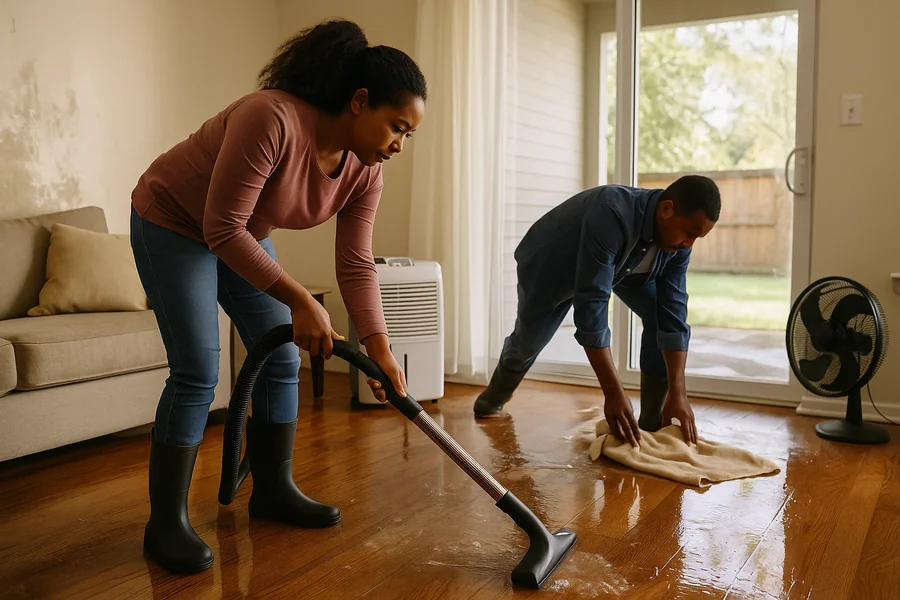
Move the family to a dry room, ideally one close to a bathroom. Give younger children something to do, like a movie or a board game, so they stay put while you handle the cleanup. Wear rubber boots and gloves any time you step into the affected area.
Find Out What Kind of Water You Are Dealing With
Not all water damage carries the same risk. Restoration professionals usually sort it into three categories. Knowing which one you have tells you what you can handle yourself and what you should leave alone.
- Clean water comes from a broken supply line, a leaking faucet, or fresh rainwater. It is the least risky, but it can turn into a bigger problem if it sits for a day or two.
- Gray water comes from washing machines, dishwashers, or sink drains. It can carry soap, food waste, and bacteria, so avoid direct skin contact.
- Black water comes from sewage backups or floodwater that entered from outside. It can carry harmful germs and should never be handled without professional help.
If you are not sure which type you have, treat the water as unsafe. That matters even more in homes with infants, older relatives, or anyone who gets sick easily.
Document the Damage Before You Clean Up
It is tempting to start tossing soaked items right away. Pause long enough to take photos and video first. Walk through each affected room and capture the walls, floors, ceilings, furniture, and any electronics.
Then make a simple list of damaged belongings with a rough age and value for each. Keep receipts for emergency purchases such as fans, tarps, or a hotel stay. Call your insurance company soon after to report the loss and ask what your policy covers. Coverage for water damage depends heavily on the cause, so read the details before you assume anything.
Hold on to damaged items until an adjuster has seen them, unless they are unsafe or unsanitary. Photos help, but some claims need the physical item.
Keep notes on every call you make, including the date, the name of the person you spoke with, and what they said. A notebook or a phone note works fine. Those details help if questions come up later with your insurer or a contractor.
Know When to Call a Professional
Some water problems are small. A spilled bucket or a minor sink leak that you catch quickly can often be dried with towels and a fan. Bigger jobs are different. If water has soaked into drywall, flooring, or insulation, or if it has been sitting for more than a day, the moisture is likely deeper than it looks.
This is where professional disaster restoration services make a real difference. Crews bring extraction pumps, moisture meters, and high-capacity dryers to remove water and find hidden dampness behind walls and under floors. Companies such as Classic Disaster handle water, fire, storm, and mold restoration for homes and businesses, which helps when more than one type of damage is involved.
Ask a few questions before you hire anyone. Are they licensed and insured? Do they offer emergency response? Will they work with your insurance company and provide written documentation? A good provider answers these plainly and explains the process before any work begins.
Dry Everything Out Fast to Prevent Mold
Mold can begin to grow within 24 to 48 hours in damp conditions. That timeline is one of the main reasons speed matters. Mold also affects indoor air quality, which is a real concern for children with asthma or allergies.
Simple Drying Steps
If the damage is minor and the water was clean, these steps can help while you wait for a professional or finish the job yourself.
- Open windows when the weather allows, and run fans and dehumidifiers.
- Remove wet rugs, cushions, and soaked toys from the room.
- Pull furniture away from wet walls so air can move behind it.
- Lift soaked carpet and padding, which are often too wet to save.
- Skip the central heating and cooling system if the ducts may have taken on water, until someone has checked it.
Watch for signs that moisture is lingering. A musty smell, peeling paint, bubbling wallpaper, warped baseboards, and dark spots on walls or ceilings all point to trouble. If you notice any of these days after the incident, have someone inspect the area. Painting over the spots hides the problem without solving it.
What to Keep and What to Toss
Porous items that soaked in contaminated water, like mattresses, stuffed animals, and upholstered furniture, are usually not worth saving. Hard plastic toys can often be washed and disinfected. When you are unsure, replacing a cheap item is easier than risking your child’s health.
Clean hard surfaces with hot water and detergent, then disinfect them. Wash your hands well afterward, and launder any clothes that touched the water separately from the rest of the family’s laundry.
Help Your Kids Feel Steady During the Cleanup
Kids notice more than we think. A flooded kitchen or a ruined bedroom can feel scary to them, even when parents stay calm. Give them a short, honest explanation, such as: “A pipe broke and water got into the house. We are fixing it, and we are safe.”
Keep routines as normal as you can. Meals, bedtime, and school should stay on schedule where possible. If the family needs to stay somewhere else for a few days, let each child pick a favorite toy or book to bring along.
Older children may want a job to do. They can help pack a bag, sort dry belongings, or make a list of items that need replacing. A small task gives them a sense of control when things feel out of place.
Habits That Lower the Risk Next Time
You cannot prevent every leak or storm, but a few habits reduce the odds of serious damage. Most take only a few minutes.
- Check under sinks and around appliances every few months for slow leaks.
- Clean your gutters and make sure downspouts send water away from the foundation.
- Test your sump pump, if you have one, before the rainy season starts.
- Replace old washing machine hoses, which crack and split over time.
- Label your main water shutoff and electrical panel so anyone in the house can find them.
- Add water leak sensors near the water heater, washer, and dishwasher. Many send an alert straight to your phone.
- Keep a small kit with flashlights, batteries, gloves, and copies of your insurance documents.
Talk through your plan with the whole family once a year. A five-minute conversation about who shuts off the water, where everyone meets, and who calls whom can prevent panic later.
Conclusion
Water damage is stressful, but a clear plan makes it manageable. Turn off the power and water, keep your family away from hazards, and take photos before you clean anything up. Call your insurer early, start drying the space quickly, and bring in help when the damage goes beyond a small spill.
Then look after your kids, because they take their cues from you. If you do only one thing this week, find your main water valve and breaker box and show your family where they are. That small step can save hours when it counts.