Why Forklift Visibility Has Become a Manufacturing Performance Issue
Walk onto any high-volume manufacturing floor and the pressure is immediate. Machines are running, pallets are moving, production lines are waiting, and every small delay has a way of showing up somewhere else in the operation.
Forklifts sit at the center of that movement. They carry raw materials to production, finished goods to staging, and urgent loads to the dock. Yet in many facilities, leaders still have only a partial view of where those vehicles are, how they are being used, and whether they are supporting the flow of work or quietly slowing it down.
That gap matters. When the physical reality of the floor is hidden behind assumptions, small inefficiencies turn into leased equipment nobody needs, congested aisles nobody owns, and downtime nobody planned for. That is why enterprise-grade Forklift Tracking is becoming less of a technology upgrade and more of an operating discipline for manufacturers that need tighter control over cost, safety, and throughput.
The Visibility Gap Hiding in Plain Sight
Most facility managers recognize the problem immediately. On paper, the fleet looks ready for the shift. In practice, several trucks may be parked behind racking, held by one department as a backup, or sitting idle in a zone where another team cannot easily access them.
The result is a familiar but expensive misunderstanding: the business appears to need more equipment when the real issue is poor visibility into the equipment already on site.
A tracking system changes that conversation. Instead of relying on radio calls, walk-through checks, or assumptions from the previous shift, leaders can see which vehicles are active, which are idle, and where asset availability is breaking down.
Differentiation of Idle Equipment and Capacity Problem
Asset utilization rates in undocumented manufacturing plants are shockingly low. It is incredibly common to see forklifts operating at barely thirty percent capacity throughout a busy shift.
When you track the physical movement of your fleet, you capture hard, indisputable data on engine hours versus actual motion. You can immediately identify underutilized trucks taking up space.
This raw data allows operations directors to right-size the entire fleet. Returning leased vehicles or reallocating them to higher-traffic zones directly impacts the bottom line, turning wasted lease payments into recovered capital.
Forklift Tracking and Route Inefficiencies in Manufacturing Facilities
Raw materials are moved to the production line throughout the day. Forklifts are often used for this task. Some routes may take longer when there is more activity in certain areas of the facility.
These micro-delays compound over a twelve-hour shift, killing your daily throughput. Drivers often take paths out of pure habit rather than efficiency, navigating through heavy foot traffic or localized bottlenecks at the loading docks.
Location data maps these daily inefficiencies out in plain sight. It creates a spaghetti diagram of your actual floor traffic, highlighting exactly where physical congestion destroys your cycle times.
Using Forklift Tracking to Design a Smarter Floor Plan
Once you see the congestion points, you can physically fix them. Truck activity can vary across different parts of the facility. The records can show where movement is more common and where traffic levels are higher.
This isn’t about making drivers work harder or pushing them to the brink. It is about removing the physical friction from their daily routes. Optimizing traffic flow reduces travel time, cuts battery consumption, and keeps the production line heavily fed.
Forklift Tracking for Safety and Daily Operations
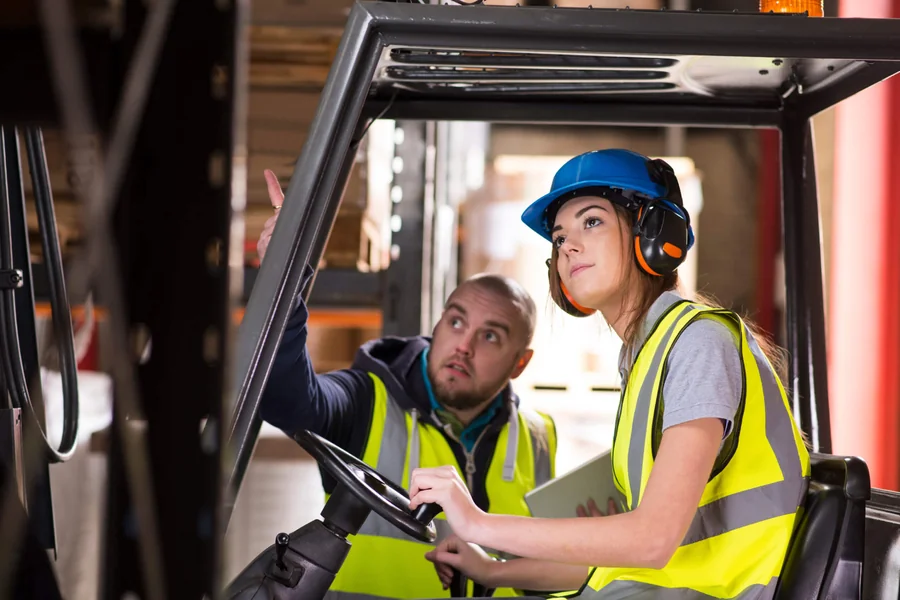
Daily work takes place across different parts of a warehouse or manufacturing facility. Workers are busy with their daily jobs while forklifts travel through different areas.
Forklifts move through different parts of the facility during the day. In some cases, loads may shift while materials are being transported. Relying on manual paper checklists and visual supervision to curb this behavior is a completely broken system.
Modern tracking systems monitor telematics and exact movement patterns. They flag aggressive driving, hard braking, and sudden physical impacts the second they happen.
Forklift Tracking and Predictive Maintenance
Another massive drain on operational capital is reactive maintenance. Forklifts break down when pushed past their limits or when routine service is ignored.
Without tracking, maintenance is based on calendar days, not actual usage. This means you are either over-servicing idle trucks or running high-usage trucks into the ground until the engine gives out.
Tracking engine hours and physical utilization allows facility managers to implement strict, condition-based maintenance. You only pull a truck off the floor when it actually needs service, preventing unexpected downtime that paralyzes the dock.
Getting More Value from a Real-Time Location System
A massive problem in industrial logistics software is dashboard fatigue. Facility managers and shift leads do not need more useless dots crawling across a computer screen.
They need systems that trigger actionable alerts only when something breaks protocol. If a forklift enters a restricted pedestrian zone or sits idle for two hours during peak production, the system should push an immediate notification.
To achieve this level of operational logic, you don’t need another isolated software tool that locks you into proprietary hardware. You need a centralized nervous system that translates physical movement into financial clarity, powered by a robust, vendor-neutral Real-Time Location System.
Forklift Tracking and Real-Time Location System for Better Operations
LocaXion is the world’s first pure-play RTLS & Digital Twin systems integrator. We engineer systems for your business outcomes-not just “tracking.”
That means less risk, less integration of guesswork, and faster time-to-value. And because we’re not locked to one technology stack, you get the freedom to scale with the right technology – not the technology we happen to sell.
RTLS tracks your assets. LocaXion transforms how your operation runs.
That’s the difference. And it’s not a small one.
Stop bleeding capital on idle equipment and broken infrastructure and engineer your outcomes today.