Solar Generator vs. Gas Generator for Hurricane Season: Which Backup Plan Works Better?
A solar generator is usually the better tool for quiet, indoor backup of refrigerators, communications, lights, and medical devices. A gas generator is usually better when a home must support central air conditioning, pumps, or several high-demand appliances for days. For a long hurricane outage, however, the strongest plan may use both.
The decision is not simply solar versus gasoline. It depends on what must stay powered, how long utility service may be unavailable, and whether sunlight or fuel will be easier to obtain after the storm.
Hurricane Outages Test More Than Generator Wattage
A hurricane backup system has to work through three different periods. Before landfall, the home can charge batteries, obtain fuel, and test equipment. During severe wind and rain, going outside to start, refuel, or reposition equipment may be unsafe. After the storm, the outage may continue for days while roads, gas stations, and local services recover.
This changes the comparison. High output is valuable, but so are safe placement, stored energy, fuel access, weather-resistant connections, and the ability to operate overnight without constant attention.
Solar and Gas Generator Comparison
| Hurricane factor | Solar generator | Gas generator |
| Stored supply | Limited by usable battery capacity | Limited by stored or delivered fuel |
| Refilling the supply | Solar after conditions are safe; grid or other charging sources may also be used | Add gasoline, propane, or use an available natural-gas connection |
| High-demand loads | Depends on continuous and surge output; large systems may support them | Often cost-effective for sustained high output |
| Placement | Battery unit may be used indoors as directed; panels require a safe outdoor location | Combustion units must remain outdoors and away from the home |
| Noise | Low, apart from cooling fans | Continuous engine noise |
| Upkeep | Charge checks and battery storage care | Fuel management, engine testing, oil, and scheduled service |
When a Solar Generator Works Better
Solar generators fit homes that plan to preserve a defined group of essential loads instead of maintaining normal whole-home consumption. They are especially useful overnight because the battery can power equipment without engine noise or combustion exhaust. The power station can remain indoors when used according to its instructions, while the panels stay outside once weather conditions allow safe deployment.
Match Battery Capacity to Essential Loads
Capacity has to match the outage plan. Suppose a refrigerator uses 1.5 kWh per day, the router and modem use 0.5 kWh, and lights plus device charging use another 0.4 kWh. The essential-load budget is already 2.4 kWh per day before conversion losses or extra demand. A 2 kWh unit would therefore be useful, but it should not be described as a full day of backup for this load.
Check Whether Solar Can Replace Daily Use
Solar input must also be large enough to replace what the home consumes. An 800-watt panel array receiving four useful sun hours has a theoretical daily harvest of 3.2 kWh. Real output will be lower because of cloud cover, panel angle, temperature, and conversion losses. If daily charging does not replace daily consumption, the battery will continue to fall even while panels are connected.
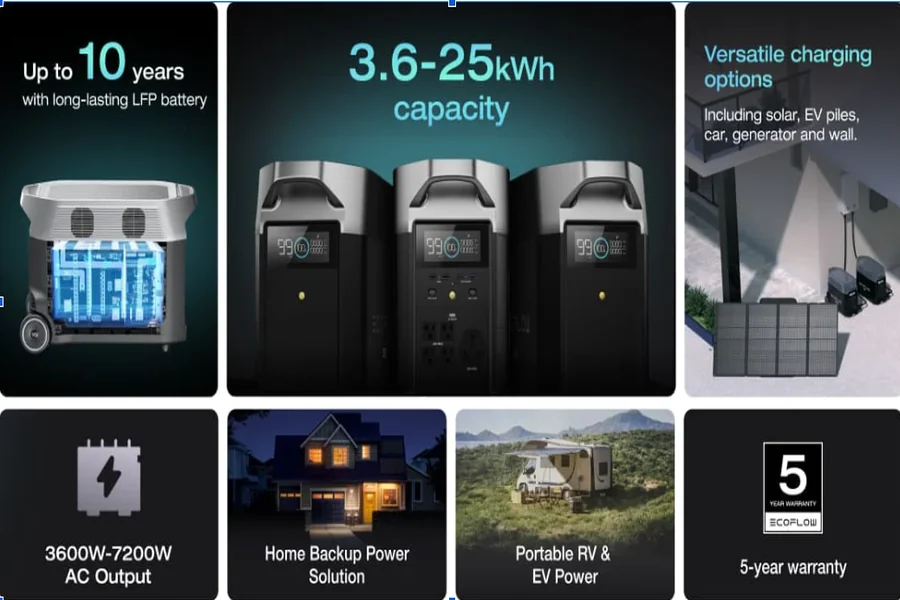
Best solar generator for home backup systems from EcoFlow cover both ends of this requirement. The DELTA Pro 3 expands from 4 to 48 kWh and scales from 4 to 12 kW of output, while the DELTA Pro Ultra X supports 12 kW output, 12 kWh capacity, and up to 10 kW solar input. A household can therefore begin with refrigeration, communications, and lighting, then expand for longer outages or larger 120/240V loads without moving to a separate backup platform.
When a Gas Generator Works Better
A gas generator has the advantage when the priority is sustained power rather than stored energy. If fuel remains available, it can support heavy loads for much longer without requiring a large battery bank. That can matter when a home depends on central air conditioning, a well pump, a large sump pump, electric cooking, or several appliances operating together.
Size for Running and Starting Power
The correct size must include both normal running load and motor startup demand. Add the running watts of equipment likely to operate at the same time, then account for the largest additional starting requirement. If a generator can run the appliances but cannot absorb the momentary compressor or pump surge, it may trip or fail to start the load.
Plan Fuel for the Full Outage
Fuel is the practical limit. A portable generator can continue as long as it can be refueled and maintained, but a multi-day plan should not assume nearby gas stations will be open immediately after landfall. Propane storage or a natural-gas connection changes the calculation, yet each still requires appropriate equipment and installation.
Safety Can Decide the Winner Before Runtime Does
Portable combustion generators cannot be used in a garage, shed, basement, porch, or other enclosed or partly enclosed location. The U.S. Consumer Product Safety Commission advises operating them outdoors at least 20 feet from homes and buildings, with exhaust directed away from doors, windows, and vents. Battery-powered carbon monoxide alarms should be working before the storm.
Wet conditions create a second problem. A gas generator needs an outdoor setup that follows the manufacturer’s weather-protection and electrical-safety instructions without trapping exhaust. Solar panels should not be unfolded, moved, or secured while winds remain dangerous. The battery can supply stored energy during the storm, but meaningful solar recharging may have to wait until conditions improve.
Neither type should be connected to household wiring through an improvised outlet. Supplying home circuits requires approved transfer equipment or another code-compliant connection that prevents power from feeding back onto utility lines.
Why a Hybrid Plan Often Handles Multi-Day Outages Better
A hybrid plan uses the battery for the first hours of the outage, quiet overnight operation, and low-to-medium essential loads. A gas generator then handles high-demand periods or recharges the battery when solar production is insufficient. This can reduce engine runtime and fuel consumption while preserving a second energy source if either sunlight or fuel becomes limited.
The two systems must be compatible. Confirm the charging input the battery can accept, the generator output required by the charger, grounding and neutral requirements, and whether both can be connected through the selected transfer equipment. A hybrid plan is useful only when the components have been tested together before hurricane warnings begin.
Which Backup Plan Works Better?
Choose a solar generator when the goal is to keep a controlled group of essential devices running quietly, avoid storing fuel, and recharge after the storm when sufficient sunlight is available. It is also the practical option when there is no safe place to operate a combustion generator.
Choose a gas generator when the home requires sustained high output and has a safe outdoor operating location plus a realistic fuel plan. For households preparing for outages that may last several days, combining battery storage, solar charging, and limited generator use offers better resilience than expecting one energy source to perform perfectly throughout the entire event.