The Rise of Posthuman Philosophy: Rethinking the Boundaries of Being

What Is Posthuman Philosophy?
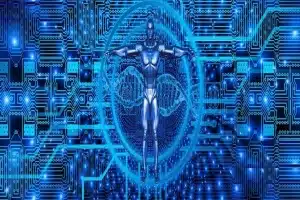
Posthuman philosophy is not a futuristic fantasy — it is a critical framework to interpret the present. As artificial intelligence, biotechnology, and ecological collapse reshape the very foundations of life, the humanist ideal — of a rational, autonomous, superior subject — grows increasingly inadequate. Posthumanism emerges not as escapist speculation, but as a necessary intellectual response to the erosion of long-standing boundaries: between human and machine, organic and synthetic, nature and code.
At its core, posthuman thought questions the centrality of the human — not by denying its importance, but by exposing the constructed nature of the human. The concept of “human” in classical humanism was never a universal category. It was historically defined in exclusionary terms: white, male, able-bodied, rational. Posthumanism challenges this legacy and replaces it with a more distributed, entangled view of subjectivity — one in which humans are no longer the sole axis of meaning, agency, or value.
Reconfiguring the Human: Bodies, Machines, Ecologies
Rather than seeing the human as a self-contained, coherent individual, posthuman philosophy reframes it as an emergent node within vast material and informational systems. Thinkers such as Donna Haraway, Rosi Braidotti, and N. Katherine Hayles offer alternative figures — the cyborg, the zoe-centered subject, and the post-biological body — that help dismantle inherited dualisms. These conceptual tools are not merely theoretical: they help us grapple with real transformations in medicine, neuroscience, AI, and environmental collapse.
The cyborg, for example, is not simply a hybrid of flesh and machine — it is a metaphor for how all identity is constructed through interfaces and mediations. The posthuman body is not necessarily mechanical, but porous, fragmented, and co-shaped by nonhuman forces: viruses, algorithms, hormones, implants, networked data.
Beyond the Human Subject: Identity in Flux
A central concern of posthuman thought is the destabilization of the concept of the human subject. In a world governed by algorithmic governance, predictive analytics, and biotechnological interventions, identity is no longer a sovereign possession. It is distributed, co-produced, shaped by relations and flows of information, of capital, of affect, and of code. The “I” becomes porous — less a source of interiority and more a temporary intersection of systems.
This is not a call to erase the human, but to decenter it. Posthumanism asks: Who else speaks? Who else feels, acts, or desires? What if the subject is no longer an isolated thinker, but a symbiotic composite, always already entangled with the nonhuman? In this view, subjectivity becomes an unstable event, not a stable essence.
Posthumanism invites us to consider nonhuman intelligences — from AI models to animal cognition, from fungal networks to machine learning agents. It also opens space for multiple temporalities and ontologies, resisting the universalizing tendencies of Enlightenment thought. Instead of clinging to mastery and control, it embraces uncertainty, hybridity, and a state of becoming.
Ethics After the Human: Toward New Forms of Responsibility
If the human is no longer the sole center of value, ethics must be rethought from the ground up. Posthuman ethics is not about extending human rights to animals or machines, as if they were latecomers to a human party. It is about questioning the very frameworks that produced human supremacy in the first place.
Responsibility, in this context, does not arise from power or superiority. It arises from interdependence. We are embedded in ecological systems we cannot master, and in technological infrastructures that now shape our desires, our decisions, even our perceptions. Posthuman ethics demands we acknowledge these entanglements — not to paralyze action, but to cultivate a new kind of care.
This care is not sentimental. It does not return to nature as a romantic ideal. It looks instead to the relational fabric of existence: to microbial kin, to synthetic companions, to algorithmic others. It affirms that meaning and connection do not require human exceptionalism. They can emerge from networks, from collaborations, from nonhuman solidarities.
A Philosophy for the Present — and What Comes After
Posthuman philosophy is often misread as dystopian or nihilistic. But in truth, it is generative. It gives us new tools to make sense of our moment — a moment defined by systemic crisis and ontological uncertainty. It offers a way forward that does not rely on nostalgia for human mastery or Enlightenment universality.
Instead, it urges us to invent new narratives of kinship — with machines, with forests, with viruses, with future intelligences we can’t yet imagine. It challenges us to let go of the idea of being “above” the world and begin learning how to live within it, vulnerably, attentively, responsibly.
In this sense, posthumanism is not about the end of humanity, but the beginning of something more honest, plural, and entangled. Not the disappearance of the subject — but its transformation into something more than human.