Why Commercial Buildings Still Choose Brick: The Case for Masonry in Modern Construction
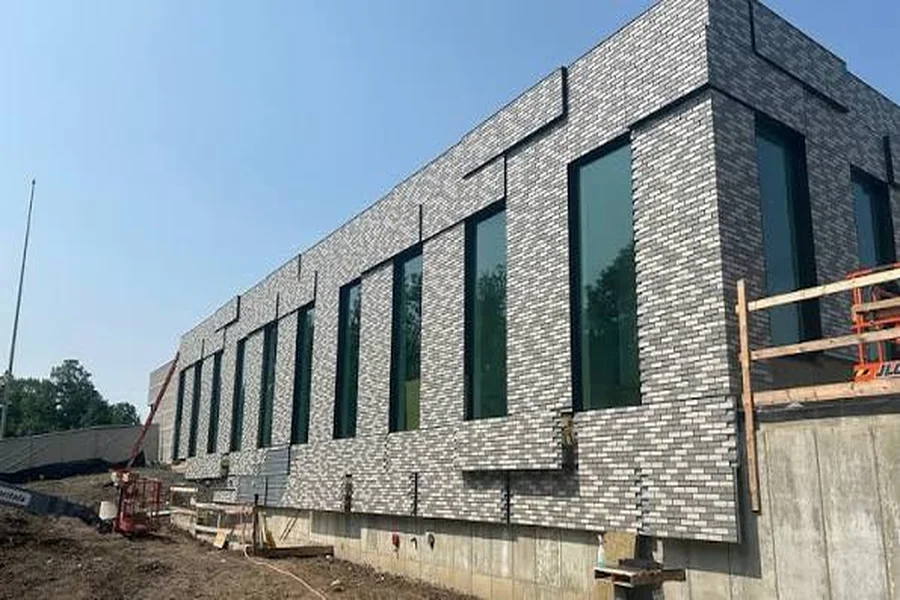
Seventy years of architectural fashions have come and gone, and brick is still standing. Literally. Glass curtain walls, aluminum composite panels, and fiber-cement cladding all promised to replace it. None did. And there is a straightforward reason for that: few materials deliver the combination of structural permanence, fire resistance, and low lifetime cost that a well-executed masonry envelope provides on a commercial building.
If you are managing a commercial development, sitting on a property committee, or simply trying to understand why your architect keeps specifying brick, this article breaks down the practical case for masonry in plain terms and gives you a decision framework you can actually use.
Brick Lasts Longer Than the Mortgage
The single most compelling argument for brick is its lifespan, which is not a marketing claim but a documented research finding. Research conducted by Adrian Bown at Leeds Metropolitan University, published by the Clay Brick Association, examined 860 brick structures and found that clay brick construction can remain structurally serviceable for 500 years or more under the right conditions. Lighter alternatives like timber-frame or fiber-cement panels carry design lives as short as 50 years.
For a commercial property, that gap is not academic. A building that needs a facade replacement every 50 years will go through four or five cladding cycles before a brick structure ever needs a mortar refurbishment. On a mid-sized office complex or apartment building, each cladding cycle can represent a six-figure capital event. Brick sidesteps most of those cycles entirely.
The one maintenance task brick does require is tuckpointing: the periodic removal and replacement of degraded mortar joints. Think of it as the oil change for your exterior wall system. Timed correctly and executed by skilled hands, it adds decades to an already formidable service life without requiring you to replace a single unit of the brick itself.
The Workforce Behind the Work
A material is only as good as the craftspeople placing it, and the masonry workforce is a genuine profession, not an entry-level trade. According to the U.S. Bureau of Labor Statistics Occupational Outlook Handbook (2024), masonry workers held roughly 294,300 jobs nationally, with the trade projecting steady continued employment through 2034. The median annual wage sat at $56,600 in May 2024, reflecting a skilled occupation that commands real market value.
Why does that matter to you as a building owner? Because a contractor whose crew earns professional wages is a contractor who can afford to hire experienced people and keep them. High turnover on a masonry crew shows up as inconsistent joint widths, variable mortar mix ratios, and misaligned courses. All of those errors become your problem the first winter a freeze-thaw cycle finds a weak point in the mortar. Vetting the labor practices of any contractor you consider is not overthinking. It is basic due diligence.
In a market like Metro Detroit and the surrounding counties, local reputation compounds this effect. A local masonry contractor in Macomb County MI carries accountability that a regional chain simply cannot match: the same crew you meet at the bid is the one showing up on day one, and their future work in the community depends on the quality of yours.
The Brick Permanence Test: A Framework for Material Decisions
Before your next project, run any cladding candidate through what I call the Brick Permanence Test. It is a three-question screen that filters out materials that look attractive at bid time but carry hidden lifecycle costs.
- What is the material’s realistic maintenance interval? If a contractor cannot give you a documented, sourced answer in years, not “depends on conditions,” push harder or move on.
- What happens at failure? Does a single damaged section require replacing the entire panel system, or can you repair unit by unit? Brick repairs in isolated spots. Many modern cladding systems do not.
- What is the installed cost per year of expected service life? A cheaper upfront material that requires replacement in 30 years may cost more per year of life than brick specified correctly from the start.
Brick clears all three questions consistently. That is not tribalism for a traditional material. It is the math.
How Masonry Performs Against Common Alternatives
The table below puts brick alongside two frequently specified commercial cladding alternatives across four decision factors that matter to property owners and developers. The qualitative ratings reflect documented industry performance characteristics, not opinion.
| Factor | Brick Masonry | Fiber-Cement Panel | Metal Composite (ACM)
|
|---|---|---|---|
| Typical service life | 100+ years (often 500+) | 30 to 50 years | 40 to 60 years |
| Unit-level repairability | Yes, by individual brick | Panel replacement required | Panel replacement required |
| Fire resistance (Class A) | Inherent, no treatment needed | Requires treatment | Core-dependent; varies |
| Mortar/joint maintenance | Tuckpointing every 25 to 50 years | Sealant every 7 to 10 years | Sealant every 5 to 10 years |
The pattern that emerges is consistent. Brick’s higher upfront labor cost is not a penalty; it is the prepayment of decades of maintenance savings. The materials competing with it tend to transfer cost forward in time, where it is easier to ignore at bid and harder to ignore at the property committee meeting 15 years later.
When Masonry Restoration Makes More Sense Than Replacement
Not every commercial masonry project starts from bare ground. A large share of the real work happening in established markets involves existing brick structures, not new builds. Masonry restoration, which can include tuckpointing, steel lintel repair, chimney rebuilding, and facade repointing, often delivers better return on capital than tearing out and re-cladding.
A few indicators that restoration is the right call instead of replacement:
- The brick units themselves are sound with no structural spalling or frost damage
- Mortar joints show deterioration but underlying courses are plumb and stable
- Water infiltration is isolated to specific sections rather than systemic
- The building’s architectural character adds to its commercial appeal or tenant attraction
An experienced masonry contractor will give you an honest assessment of which path makes financial sense. If a contractor is pushing full replacement on a building where the brick is intact, get a second opinion. Restoration is slower work and requires more skill, but it is almost always the more cost-effective outcome when the underlying structure is sound.
“It’s not the brick that’s the issue; it’s how the bricks are placed and the setting in which they are placed that determines the life of the overall facade.”
This observation, widely cited by commercial building enclosure professionals, points to the variable that matters most in any masonry project: execution quality.
Choosing a Contractor Who Can Actually Deliver
Material performance only materializes when the installation is correct. Here is a short practical checklist for evaluating any commercial masonry contractor before you sign a proposal:
- Ask for references on commercial projects of similar scale, not just residential work
- Confirm the contractor uses properly graded mortar matched to your existing masonry spec
- Request a written scope that identifies specific repair zones, not just a lump sum
- Verify the crew performing the work has experience with the specific service you need: tuckpointing, lintel repair, and full restoration each require different skill sets
- Check that the contractor is familiar with local climate conditions, because freeze-thaw cycles in Michigan affect mortar selection and timing in ways that a Southern contractor may not account for
Brick has earned its place in commercial construction over centuries. The material does its part. The question is always whether the hands placing it, and the company standing behind them, are equally up to the job.