7 Common Eyewash Station Mistakes That Lead to Safety Violations
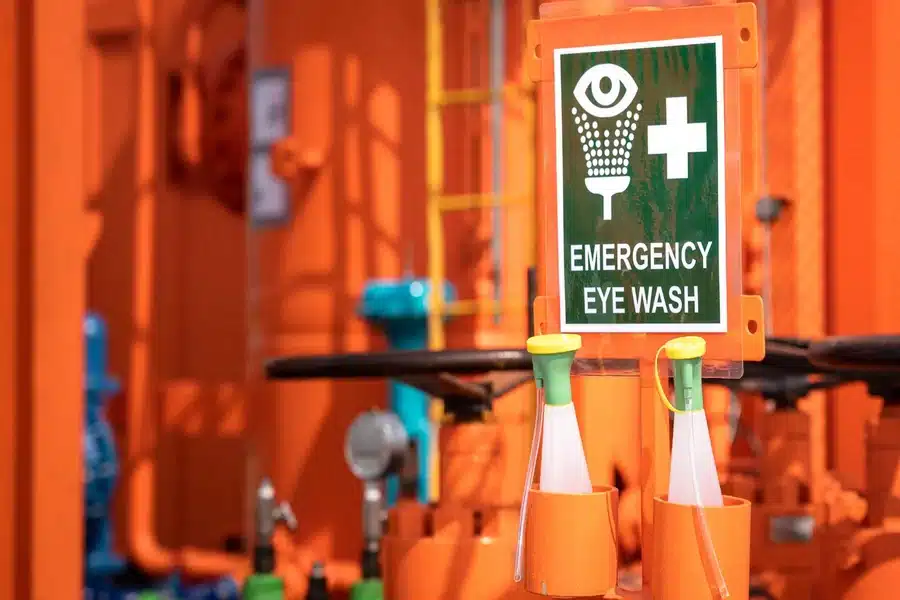
Eyewash stations are important in ensuring that workers have protection against severe eye diseases that may occur due to splashing of chemicals, dust and debris, but they are not given much attention until when a safety inspection uncovers their vulnerabilities or when an emergency occurs. Most organizations believe that compliance can be satisfied with an eyewash station installed but in practice a big variety of typical errors can result in expensive safety breaches and endanger employees.
Placement
The location of the eyewash units is one of the most common compliance problems as they are often located in areas that are either challenging or slow to access. Safety regulations normally involve the workers being able to reach an eyewash station within a few seconds of an incident, yet they are often located behind a door or around corners or in storage spaces that are obstructed by equipment. Such delays may provide a serious injury with an even more severe result and raise a red flag at the time of an inspection.
Poor placement also involves the lack of consideration of the workspace layout that is altered with time. An eyewash unit which was conveniently located, may be blocked or obscured when machinery/shelving or workstations are moved. It is easy to find a company that has not regularly checked placement with existing floor plans, and in that case, its original install would have been up to standard but is not today.
Maintenance
Another error made is failure to do regular maintenance that directly results in safety violations. The eyewash systems must also be flushed and tested regularly in order to ascertain the flow of the water. Failure to do this may result in the accumulation of sediment, bacteria or corrosion such that a safety device becomes a source of health hazard rather than solution.
Maintenance records in most work places are either missing or incomplete and this is equally problematic as not taking the tests. The inspectors usually seek recorded evidence that eyewash facilities have been inspected and maintained. In the absence of record keeping, an organization might not pass audits despite its equipment seeming to be in good operation.
Water Quality
Lack of compliance with the standards of water which is used is a covert yet severe compliance problem. Hot, cold, or infected water may also produce harm when it gets in contact with the eyes. The eyewash systems are sometimes linked to unsuitable water sources by the employers with an assumption that any water supply will be satisfactory thus leading to the disobedience of health and safety regulations.
Absence of temperature regulation is particularly typical in institutions which are either too hot or too cold indoors or outdoors. Uncomfortably cold water can either scare injured employees away from spending the necessary amount of time in the station, whereas too warm water can burn tender tissues of the eyes. The two scenarios may result in breaches and liability expansion.
Training
The greatest equipment is ineffective because employees are unaware of its usage. The mistake that is the most frequent is the lack of or minimal training on how to operate an eyewash station. The employees might be unaware of the locations of stations, how to activate them, and the duration of flushing their eyes after exposure. Such ignorance causes higher injury severity and implies bad safety management.
Training has also been used as a one time activity as opposed to a continuous process. Proper education of new employees, temp workers, and contractors might never happen, and current employees might lose some important steps during the course of time. Periodic refresher is a must to ensure compliance and preparedness.
Signage
Another cause of the failure of eyewash facilities in inspection is the presence or absence of adequate signage. The stations are to be conspicuous and with visible and bright signs that guide the employees in a fast manner during an emergency. In cases of faded signs, blocked signs or no signs at all, the workers will end up wasting precious time in search of assistance.
Signage is another issue that is likely to have an impact on compliance documentation because in many cases, regulations predetermine the way in which eyewash locations should be marked. Even in the case when equipment is in good condition, organizations that fail to update or replace signage when the layout varies are at risk of violation.
Inspections
The inability to perform regular internal checks enables minor challenges to evolve into significant compliance challenges. Leaks and blocked access points may take months before it is noticed and this creates unsafe conditions, which is only detected in a formal audit or after an incident happens.
Conducted periodically, inspections are also a chance to notice the trends and frequent problems. Devoid of this proactive strategy, firms are always reactive with violations only being given after they have been given and not beforehand.
Compliance
Most safety breaches occur due to the failure of organizations to match the new regulations and standards. The demand of eyewash may vary throughout the years and using old information may result in installations, which will not comply with the existing regulations. It is also important to be informed as much as it is important to have the right equipment.
There is also the need for compliance coordination among the safety teams, facility managers and the leadership. Without clarity in responsibility of the eyewash systems, there will be a fall through gap in some crucial duties like testing of the eyewash systems, training, and documentation. The main solution to ensure a consistent safety practice is clear ownership.
Conclusion
There is more to not making mid-way through the eyewash station mistakes than passing through inspection to save a life of those in need of the equipment during times of crisis. Organizations can also become very efficient in eliminating the chances of safety violations by concentrating on the right placement, maintenance, water quality, training, signage, inspection, and regulatory awareness. An effective eyewash program shows concern for workplace safety and helps ensure that when an accident occurs, a worker receives immediate and appropriate treatment at the time of the incident—reflecting the same kind of responsibility and awareness often emphasized in workplace and safety discussions on alexousa104.