IoT in Healthcare: Benefits for Hospitals and Healthcare Providers
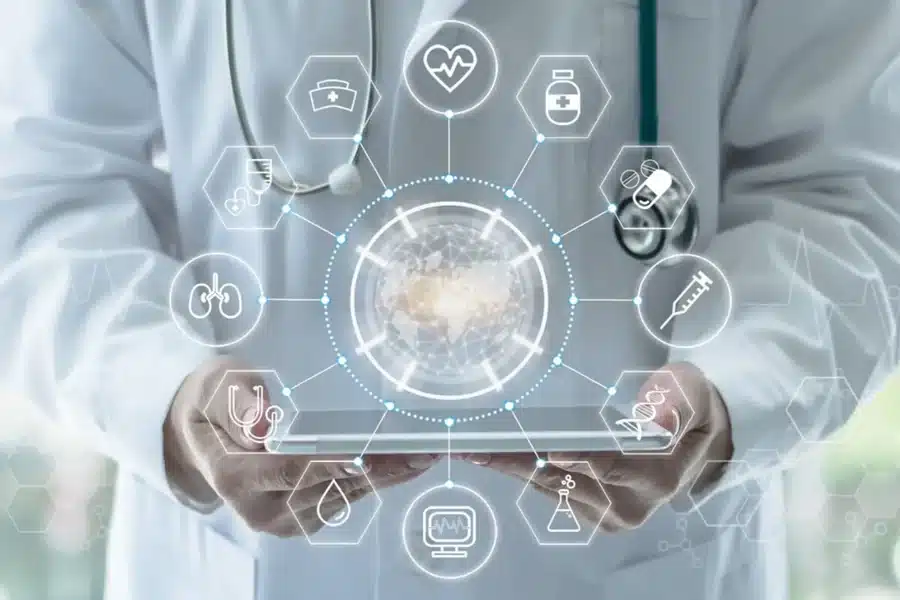
The Internet of Things (IoT) in healthcare is an evolution, one that connects the many devices, sensors, and systems that can be networked to create smart intelligence across the continuum of care. IoT Healthcare Solutions have helped hospitals and medical people deliver fast, intelligent, and more proactive care, than ever before. Utilizing custom IoT development enables hospitals to efficiently and safely utilize these devices to create the ultimate service experience, efficiency, safety, and experience patients appreciate. Healthcare systems are under increasing pressure to serve a growing population with increasingly diverse and complicated medical needs and IoT is playing a large role in this critical, sustainable technology-enabled transformation.
Key Benefits of IoT for Hospitals and Healthcare Providers
1. Remote Patient Monitoring
IOT Healthcare allows continuous remote monitoring of patients’ vital signs, activity levels, and adherence to treatment plans outside of hospital walls. Thus, precious readmissions are reduced, and earlier medical action can happen for chronic, or at-risk populations. IOT app development can securely integrate with hospital records, and IOT Development Services offer tailored style of monitoring with deployed devices that can individually monitor patients–providing real-time insight, engagement, and awareness for both patients and professionals.
2. Improved Hospital Workflow
The IoT will enhance the hospital experience with smart scheduling, automated staff allocation, and digital monitoring of patient location and room conditions. Through the ability to unite core operational processes, IOT app development enhances care coordination and lessens manual demand on clinicians, so they can focus on patients instead. Hospitals that have taken advantage of IOT Development commonly experience expedited turnover rates, less bottlenecks, and better communication across departments, resulting in smarter hospital management that prioritizes patient experience.
3. Better Patient Safety
With smart alarms, ongoing vitals checks, and automated medication dispensing, IoT systems can reduce medical mistakes and adverse events. IOT Healthcare alerts staff of early warning signs, indicating abnormal readings, automated reports, and more, so that critical information is never missed. Through IOT app development, hospitals can adopt protocols according to regulations and standards consistently, supporting enhanced patient safety through every area of care.
4. Efficient Equipment Management
IoT-enabled tags and real-time location systems make asset tracking of hospital equipment (e.g., wheelchairs, infusion pumps, defibrillators) easy. IOT Application Development offers dashboards for supervision of usage, maintenance, and location of devices using real-time tracking equipment. This limits expensive losses and shows downtime and allows the organization IoT Development and assess roads to produce required equipment purchasing, and further enable utilization to operate every bed, device, and investment where it is wanted and needed most.
5. Reduced Healthcare Costs
IoT assists hospitals with spending reduction by means of remote care, predictive maintenance, optimized inventory management, and more centralized operations. The effect of an IOT Healthcare minimizes unnecessary, in-person visits, and reduces hospital stay. IOT app Development allows hospitals to create data-driven automation which produces cost savings in terms of resource allocation and usage, energy, and preventive care, which are only further enhanced by an IOT Development provider that is able to scale your usage, while also maximizing your return on technology spending, and broad operational efficiencies.
6. Enhanced Data Collection and Analytics
Connected IoT devices produce streams of clinical and operational data in real time for hospitals. IOT Healthcare performs heated data-driven decision-making and predictive analytic processes to find trends, predict outbreaks, and provide facilities with appropriate treatment processes. IOT app development and IOT Development are ultra-modern approaches to securing, managing, and scaling big data to turn raw sensor data into actionable data to improve patient care and quality of hospital care.
7. Faster Emergency Response
The use of IoT provides rapid emergency escalation of care to notify appropriate personnel in hospital emergencies such as code blues, patient falls, or when equipment malfunctions occur. Real-time alerts and automated location tracking ensure hospital teams can mobilize immediately when a second count. IOT app development provides customization to the escalation paths when emergency care needs to be provided and IOT Development ensures that all systems are connected when hospital care measures become critical. This means the delays for identification and mobilization are reduced significantly, greatly improving response times to provide support to patients when action is most important and can save lives.
8. Better Inventory Management
IOT Healthcare services provide automated tracking of inventory related to medications, surgical supplies, and essential supplies. IoT use of RFID tags, smart cabinets, and predictive ordering of inventory supplies will help limit shortages and waste. Data related to supply ordering are improved through customized IOT Development dashboards and analytics and broadened to obtain value across clinical departments with IOT Development – so you can be confident resources are at hand and costs are minimized.
9. Support for Chronic Disease Management
Using IoT-enabled home monitoring devices and virtual check-ins, hospitals can continue their long-term disease management programs into the home. IOT Development helps IOT patient apps to track symptoms as IOT Healthcare services sends alerts for medication adherence and abnormal measurements. Expert IOT Development combines these benefits with a seamless transition between health care providers and their patients to achieve better patient outcomes for numerous diseases, including but not limited to diabetes, heart failure, COPD, and others.
10. Enhanced Patient Experience
IoT tailors and empowers each patient’s journey. Smart beds, personalized entertainment, mobile check-in, and real-time feedback increase patient comfort and involvement. IOT Development can also deliver self-service and communication options. IOT Healthcare can also assist in keeping patients and families respectively updated. IOT Development can maximize the enhancements to build trust, satisfaction, and loyalty and make healthcare less suspicious and more patient-centric.
Challenges Hospitals Face in IoT Adoption
Data Security Risks
As hospitals increase the number of connected devices, they are at increased risk for data privacy and cybersecurity attacks. Medical records are very sensitive. Medical records, medical protocols and other systems are prime choices for hackers when trying to penetrate a healthcare business. In order to mitigate risk, and ensure that patient data is protected by all current IOT Healthcare in place, it is imperative to have solid IOT Development in place with an IOT Development partner, with all of the proper encryption, access and ongoing threat detection measures; to in place as part of their IOT Healthcare services.
Integration Challenges
Combining legacy health system records, EHRs and many IoT devices is difficult and challenging. Customized IOT Development, and a stable IOT Development partner is needed to develop capable interoperable platforms, standardized data formats and ensure messages can be transferred and read between the newly installed technology and legacy technology. Thoughtful integration planning is needed to provide seamless IOT Healthcare services.
High Initial Investment
When hospitals decide to implement IoT they must put investment in hardware, connectivity, training, and support – the initial cost can be high. But the benefits of cost savings, improved outcomes, and decreased maintenance far outweigh any initial upfront costs. Partnering with a trusted IOT Development helps streamline all IoT Development and the progression of adoption; and helps quantify ROI for the administration to justify their investment in advanced IOT app Development.
Training Needs
The swift uptake of IoT requires ongoing training for clinical personnel, information technology professionals, and hospital executives. Without adequate training, the rollout of new technologies will be slowed and even fail. Providers must work closely with IoT Development Services to develop and implement meaningful hands-on training programs and ongoing support, allowing all staff to be empowered to use IoT Healthcare and realize the full benefits that IoT Application Development provides in modern care delivery.
Final Thoughts
IoT is quickly changing how hospitals and healthcare providers deliver care, maintain and operate resources, and create and sustain patient engagement. IoT Healthcare Solutions by experts unlocks ultimate benefits including smarter workflows, better efficiencies, and safer, more individualized patient experiences. Challenges remain, but the future of healthcare is grounded in data and connectivity. This is the future of healthcare that gives providers the tools they need to tackle the changes required to meet the evolving demands of medicine, today.