How to Achieve a Professional-Level BBQ Smoke Ring
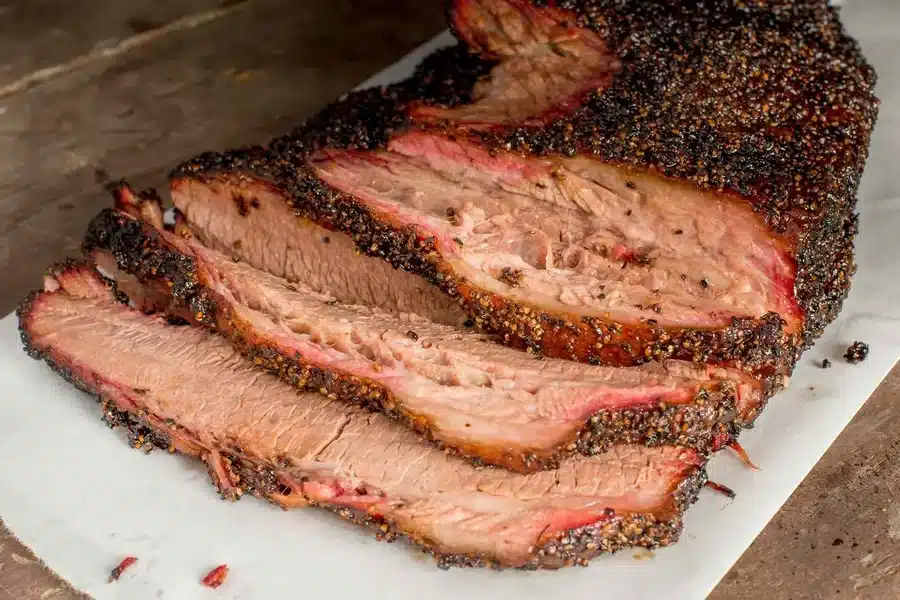
As a sign of perfect mastery over a smoking process, a thick smoke ring is greatly appreciated both in terms of appearance and the flavor it indicates. Most home pitmasters want to produce the smoke ring effect and often attempt to do so but in order to obtain a true smoke ring effect there is both knowledge of science behind the process as well as techniques involved in order to master it. Keeping an eye on temperature, quality of the smoke, and techniques used in preparation, you can take your BBQ to competition level.
Understanding the Science of the Smoke Ring
The smoke ring is done because when the smoke hits the meat the nitrogen dioxide in the smoke interacts with the myoglobin in the meat. When the meat is subjected to nitrogen dioxide and low, constant heat, the myoglobin deposited to it will retain a pinkish color after cooking. I find it the strongest in cuts of meat such as brisket, pork shoulder and ribs. Knowing this reaction helps you control conditions to promote a more pronounced, well-formed smoke ring.
Not only is a professional smoke ring all about aesthetics, but also it helps in enhancing the flavor. The proper penetration of smoke can add complexity to the entire flavor of the meat, without over-powering it. A cautious picking of a wood and density of smokiness will make your smoked meat form the typical ring and rich smoky flavor that is popular in high quality BBQ.
Preparing the Meat Properly
Preparation is critical to achieving a consistent smoke ring. To smooth any season or rub, the meat surface should be kept clean and moist to some degree. Moisture will help in the chemical process that generates the smoke ring. To avoid dryness, a thin coat of mustard or light oil will hold the moisture and serve as an adhesive to the rub, strengthening both its flavor and the ability to make the rings.
Besides, it is vital to ensure that the meat reaches room temperature before placing the meat into the smoker. Cold meat may slow the amount of time it takes to create the smoke ring, because the interior is warming too slowly. Appropriate preparation and well reserved seasoning technique ensures the establishment of a professional level presentation.
Controlling Heat and Smoke
It is an important aspect of smoke ring formation to control the temperature. Running at a low and consistent cook temperature allows the meat to cook fairly evenly and it gives the smoke plenty of time to react with the surface. This is because sudden change of temperature can interfere with the chemical reaction and produce a lumpy ring. Attention to internal and ambient temperature using a good quality thermometer is the key to success.
Smoke quality also plays a critical role. Thin smoke is desirable, but thick, bouncing smoke is apt to be bitter and to eclipse the ring. Chips of hardwood, including oak, hickory or cherry wood, are preferable to be used because it ensures there is consistent smoke and taste is predictable. Regulating the air supply and maintaining the right circulation of smoke inside your smoker will aid further circularity in rings.
Maintaining Equipment and Techniques
The quality of your BBQ machine will greatly affect the chances of you producing a smoke ring. Cleaning up burners, checking seals and the replacement of worn and stripped parts should be done frequently to ensure that there is a consistent amount of heat and smoke. Analogously, appropriate reassembly of the BBQ after cleaning or repair will ensure that the smoker is used as intended so that there is a free flow of smoke and temperature is easily controlled. Follow-up performance by scheduling BBQ repair, and taking special care during BBQ assembly can also affect your output significantly.
One must also focus on how meat is placed in the smoker. Placing the meat too near heat would also produce an uneven cooking condition and interfere with the formation of the rings. By dividing meat with care taken on the side of airflow and heat distribution, you are maximising the quantity of meat exposed to the smoke with the interior simultaneously being brought to temperature.
Finishing and Serving
It is also important in finishing processes in order to complement the smoke ring. The results are that slicing against the grain prevents the appearance of the ring whilst retaining tenderness. The rest of the smoked meat gives the meat a chance to re-distribute juices, making the meat have better flavor and appearance.
The presentation is the last factor that can prove a professional level smoke ring. Arranging meat on a trim, fresh cutting board or platter can enhance the aesthetic presentations of the ring. Attention during preparation, temperature control, and smoke management, and finishing, can bring you to a smoke ring that is amazing both visually and flavor wise.