Why Pottery Is One of the Oldest Forms of Human Creativity

Pottery stands out as one of the earliest examples of human creativity. From the start, it was about more than just shaping items for use-it was about making something useful from simple clay while also adding a personal touch.
Pottery has existed for over 20,000 years, showing just how inventive people were even in ancient times. Early pottery, such as pieces from China’s Xianrendong Cave, was not just for holding things; it also began to show basic decorations and patterns. This mix of practical need and artistic detail is what makes pottery such a long-lasting part of human life and culture.
Pottery remains popular today because it’s made by hand, not just mass-produced in factories. Whether you’re looking at old examples from ancient times or new pieces from local artists, pottery shows how we value both usefulness and beauty.
If you want to see how these traditions continue and maybe make your own pottery, the traditions of Polish pottery – Zakłady Ceramiczne Bolesławiec are a great example of how these skills are still thriving.
What Makes Pottery One of the Oldest Forms of Human Creativity?
Pottery isn’t just old; it shows an important step in human development. It marks the time when people stopped simply using what nature gave them and started changing materials to make their lives better. Turning clay from the ground into a strong, useful object with fire needed careful observation and a lot of experimenting. It took creativity and a willingness to try new things.
Even the simplest early pottery had some kind of mark or basic decoration. This shows that people have always wanted to make things not just useful, but also pleasing to look at. Pottery blends usefulness with the wish to create art, which is a key part of being human.
How Pottery Shows Early Human Invention
Pottery is a clear example of how early people found new ways to solve problems. Before metal was common and buildings were advanced, people needed containers to store food, carry water, and cook meals. Clay was the answer.
Heating shaped clay until it became hard and could hold liquids was a big step forward. This development took careful steps as people figured out what worked best with different types of clay and fire.
Methods like coiling and pinching, and later the invention of the potter’s wheel, show how potters kept finding better ways to make their work. Each new idea-like moving from cooking pots in open fires to using kilns-gave people new options and laid the groundwork for future improvements in technology.
Why Pottery Lasts Longer Than Many Other Ancient Arts
Unlike fragile cave art or textiles, pottery has lasted thousands of years because fired clay is very strong. Pottery is often found at old sites, helping us learn about people who lived long ago. Its toughness means we still find pieces all around the world, offering a look into early human life.
Because it was always needed for daily chores-such as storage, cooking, and carrying-the tradition didn’t disappear. People kept making pottery, learning new methods, and passing down skills. Its usefulness made sure it never went out of use, and its artistic side kept it interesting for generations.
When and Where Did Pottery Begin?
Pottery started to appear as human societies changed from wandering groups to settled villages in the Neolithic era. But evidence shows it began even before farming was common. The oldest known pottery goes way back, showing the craft was started much earlier than many thought and in lots of different parts of the world.
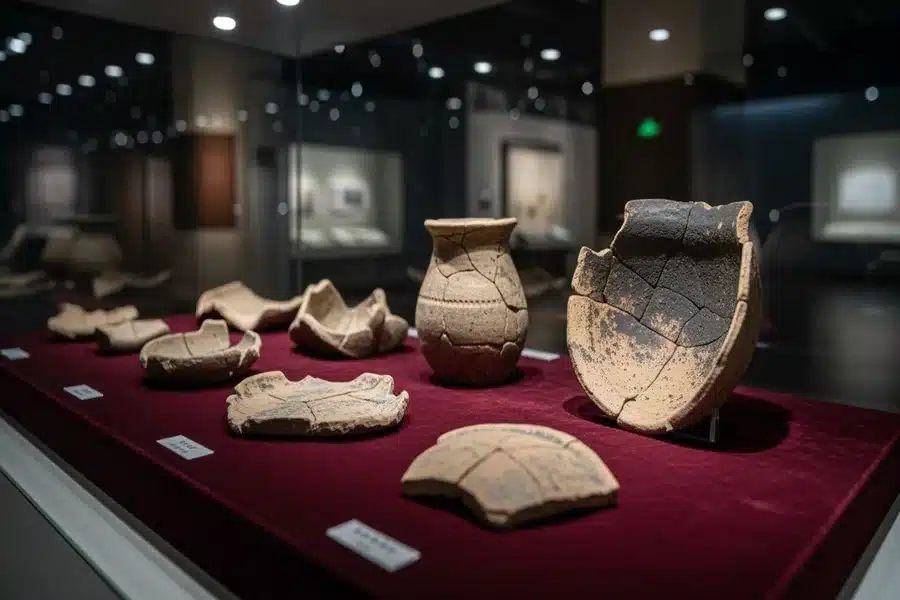
This suggests that people everywhere felt the same need to shape nature for both daily use and self-expression. Rather than beginning at a single time or place, pottery developed as a combination of different ideas and exchanges over thousands of years.
Early Pottery Around the World
Some of the oldest pottery ever discovered comes from China’s Xianrendong Cave-with pieces that are about 20,000 years old. These pots were made when the world was much colder and food was hard to get. Making pots that could withstand fire helped people cook foods better and get more nutrition.
Though these early pots were simple, they were a huge step ahead. They sometimes had decorations too, showing that even then, people wanted to make things look nice. Pottery helped these early societies survive tough conditions and changed how they cooked and ate.
Pottery in Early Civilizations
As civilizations grew, pottery became more detailed and important. In Mesopotamia, around 3,000 BCE, potters started using the potter’s wheel so they could make more pots faster and with better shapes. This made pottery not just useful but also stylish and interesting to look at.
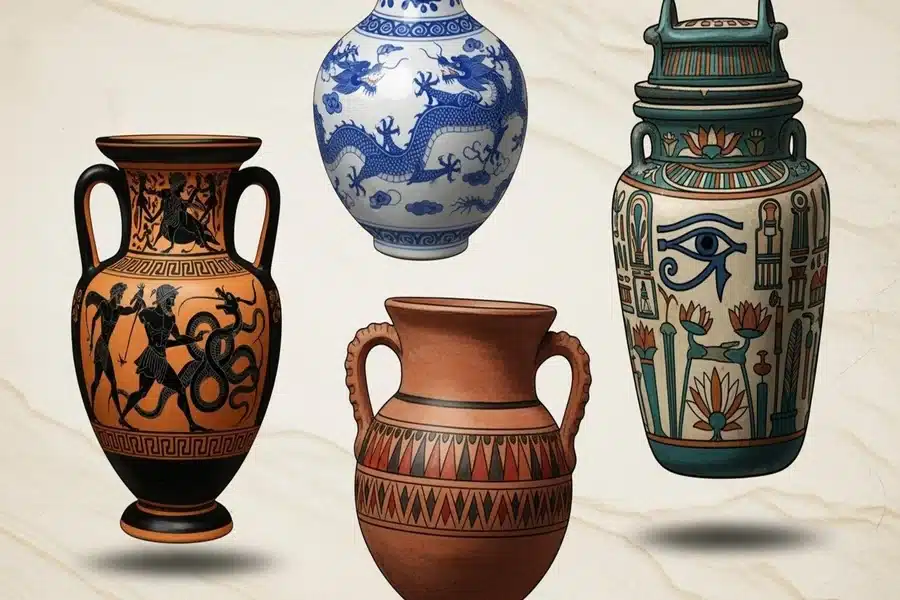
In Egypt, pottery often had colorful paint or carvings and played a role in daily and religious life. Greek pottery told stories with detailed pictures. The Romans made strong, well-designed pottery for their large empire. In Asia, the Chinese perfected porcelain, and Japan developed Raku pottery focusing on simplicity. Every culture made its own kind of pottery, using it for both daily living and to show their ideas and traditions.
| Region | Pottery Innovation | Time Period |
| East Asia (China) | Earliest pottery vessels; porcelain | 20,000 years ago and onwards |
| Mesopotamia | Potter’s wheel | ~3,000 BCE |
| Egypt | Decorated, symbolic pottery | Ancient Egypt |
| Greece | Storytelling pictures (amphorae) | Classical Greece |
| Japan | Simple, spiritual Raku pottery | 16th Century onward |
How Did Pottery Change Over Time?
Pottery did not stay the same. From making pots by pinching and rolling clay, people moved to new tools and better ways of firing. Improving the shapes, inventing glazes, and using kilns made pottery stronger and more beautiful. Each idea made the next one possible, and potters kept building on what came before.
Key Pottery Breakthroughs
- Pinching and Coiling: Early, simple ways of shaping by hand.
- Potter’s Wheel: Helped make rounder, more uniform pots much more quickly.
- Enclosed Kilns: Let potters control heat better and made ceramics even tougher.
- Use of Glazes: Started as a way to make pottery waterproof but quickly added colors and shine.
How the Potter’s Wheel and Kiln Changed the Craft
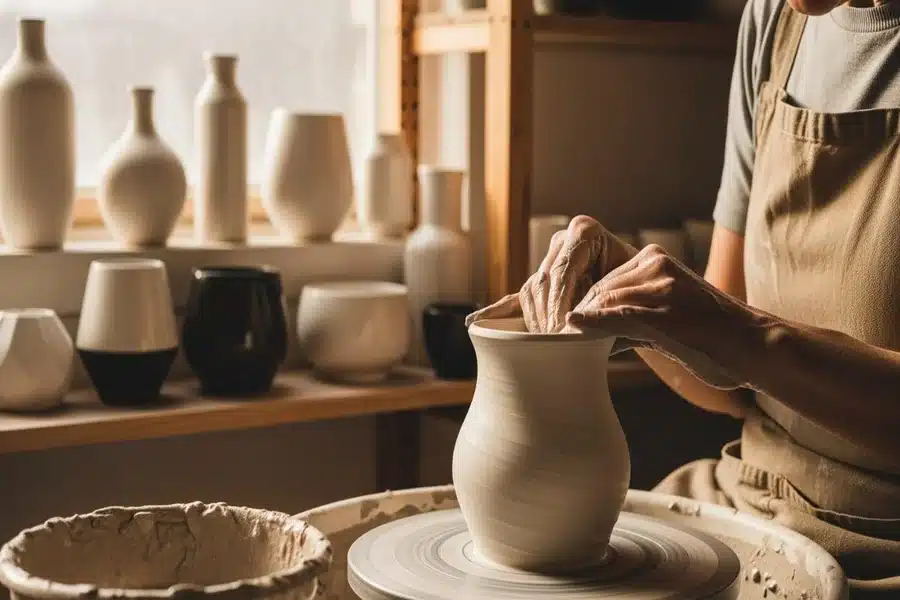
Once potters started using a wheel-operated by hand or foot-they could make pots that were more even and detailed. This meant they could make the same designs over and over, helping pottery become more complex and specialized.
Switching from open fires to using kilns let potters reach higher temperatures, which was necessary for certain types of pottery and for fusing glazes. These changes allowed for new styles and shapes, and ancient techniques are still part of pottery today.
Why Pottery Is Culturally Important
Pottery is more than a practical item; it is part of a culture’s story. Pieces of pottery tell us how people lived, what they believed, and what they thought was beautiful. Pots, bowls, and urns give us clues about everything from everyday life to religious rituals.
Pottery Tells Stories
Pottery has often been used to show stories, important events, or spiritual ideas. Greek pots often show scenes from myths and daily life, while Native American pottery features designs with deep meanings for different tribes. The shapes and decorations showed who made them and what those people valued.
Common Patterns and Meanings
- Geometric shapes: Seen in many cultures, often used to symbolize natural or spiritual ideas.
- Animal designs: Many pots feature animals for protection or to show respect for nature.
- Stylized figures: Used to show beliefs or mark special occasions.
Though different cultures had their own ideas, similarities across the world show that working with clay is something all humans share.
What Can We Learn from Pottery’s Past?
The history of pottery helps us understand the daily life, trade, and environment of past peoples. Even simple fragments can show what people ate, how they cooked, and who they traded with. The spread of certain pottery styles or materials lets researchers trace trade routes and cultural contact across large distances.
What Ancient Pottery Tells Us About Survival and Trade
- Types of pots tell us about food and cooking methods.
- Unique designs or materials show contact between distant communities.
- Fragments of foreign pottery can point to trade and the movement of ideas.
Sustainability Lessons from Early Potters
Ancient potters mostly used materials close to home-local clay, minerals for glazes-and made items to last a long time. Fired pots could last hundreds or thousands of years. In today’s throwaway culture, these old ways remind us of the value of making things to last, using local resources, and not wasting materials.
What Is Pottery’s Lasting Impact?
Pottery’s story doesn’t end in ancient times. Pottery is still made and enjoyed, showing that the basic wish to shape clay is still strong. People today value handmade pottery for its beauty, usefulness, and the connection to a long tradition. Working with clay takes patience and care, making each piece unique.
Why Pottery Still Matters
- Handmade pottery stands out because it’s unique, not mass-produced.
- It can be used for both everyday tasks and as art.
- Making pottery is often relaxing and rewarding for the maker.
How Ancient Traditions Continue Today
Modern potters still use many ancient methods, like coiling and pinching. The potter’s wheel, now sometimes powered by a motor, remains a tool that connects us to past generations. Many potters today focus on making their work eco-friendly and on telling their own stories through the things they make.
By learning from early potters, today’s makers continue a long tradition-valuing durability, artistry, and a close relationship with the materials. Pottery is an ongoing link between the past and present, keeping ancient creativity alive in our daily lives.