The Unseen Complexities of a CNC Machining Service Quote
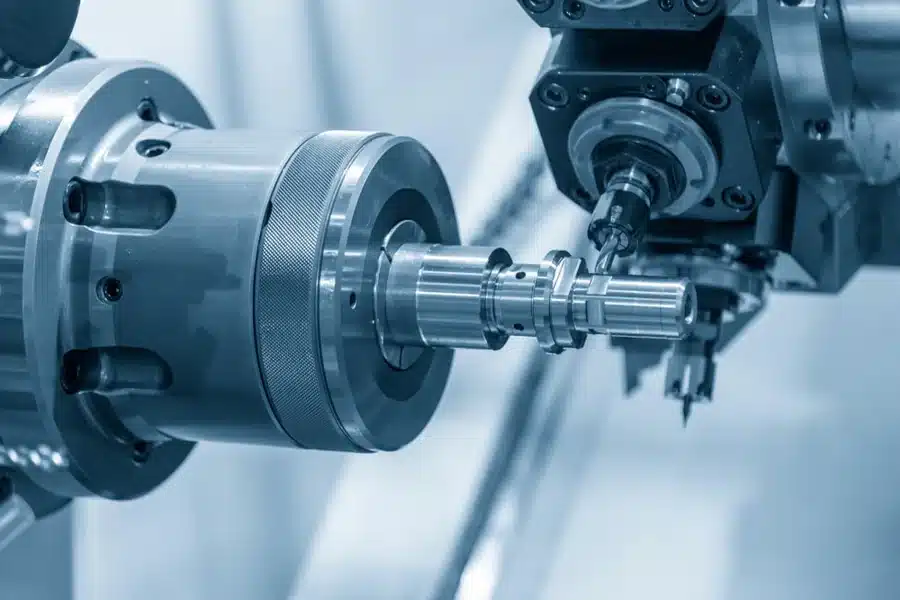
For any designer or engineer, the moment of truth often arrives not on the factory floor, but in their inbox. You’ve poured hours into a perfect CAD model, a digital masterpiece of form and function. You send it off to a machine shop for a quote, expecting a straightforward number. The response that comes back can sometimes be a source of confusion. What is the meaning of such a big price on such a tiny seemingly simple element? The fact is, CNC machining services quote is much more than a mere price-tag; it is the final result of a complex analogy of analysis of your design backstage. It is the translation of your vision into the real language of manufacturing where all its shades are evaluated according to the influence on time, resources, and expertise.
Design Complexity: The Hidden Cost Drivers in Your CAD File
At first glance, a 3D model might look simple, but to the experienced eyes of a manufacturing engineer, it tells a story of potential challenges. The geometry you choose has a direct and profound impact on the final cost. Deep pockets, for instance, require long-reach tools that must cut slowly and carefully to avoid deflection and breakage, significantly increasing machining time. Internal right angles that are sharp and internal cannot be made with rotating cutting tools, which are incapable of leaving an edge radius, and thus a near-perfect corner can be made only by such techniques as electrical discharge machining (EDM), which adds a full secondary operation to the work. Other characteristics, such as thin walls, will be sensitive and need light and finer finishing strokes to avoid vibration and achieve precision, and complex 3D shapes will need multi-axis movement at once, which more advanced equipment and more time to process. All these items, though beautiful in software, give an extra layer of complexities to the actual manufacturing process and every layer has a cost that has been carefully estimated into the quote.
The Material Matrix: More Than Just Choosing Aluminum
The selection of a material is often driven by functional requirements like strength, weight, or thermal properties, but it is also a primary driver of cost in ways that are not always obvious. The initial price per kilogram of the raw material stock is just the beginning. These factors exponentially increase the machine time and the cost of consumable tooling. Furthermore, the size of the required stock block matters. A part might only weigh 100 grams in its final form, but if its geometry necessitates starting with a large block of titanium to accommodate all the necessary machining operations, you are paying for the entire block of that expensive material, not just the final weight.
Tolerances: The Exponential Price of Perfection
Use of dimensional tolerances is one of the most important, and the least understood fields of design, which influences cost. A tolerance is a variability within a given dimension. It is a statement on the level of perfection that a feature must have to enable the part to become functional. The default tolerance that most machine shops provide is just sufficient to the large majority of features that are non-critical. Nevertheless, in case a designer requires astonishingly small tolerance in a single part, the price may go through the roof. Tolerance of ±0.025mm (±0.001″) is an order of magnitude harder and more time consuming to hold than that of ±0.125mm (±0.005″). It needs more modern sharped tools, reduced cutting speed, continuous observation and inspection with high precision equipment such as coordinate measuring machine (CMM). In the quest to be perfect, there is no place to miss. As such, one form of cost effective manufacturing is that tight tolerances should be used only where there is a necessity in the operation of the part, on a bearing surface or on a mating interface, and that more liberal tolerances should be used on those features that are not essential. Such considerate attitude gives an indication to the machinist that you are not ignorant of the process and thus he is able to streamline his workflow accordingly.
How to Partner with Your Machine Shop for a Better Outcome
A cooperative work between the designer and the manufacturer gives the most effective and economical projects. This is not intended to procure a quote, but to start a conversation. There are enormous benefits associated with interacting with a machine shop at an early stage of the design process during the Design for Manufacturability (DFM) phase. Giving in your first concepts to be looked at will enable their engineers to see what cost drivers they may have, such as unnecessary tight tolerances or machinability features, and propose a few small changes that will leave your design intentions intact and radically enhance manufacturability. By simply having a well-defined and detailed drawing of your 3D model, with important tolerances stated and important features marked, guesswork is avoided and expensive mistakes are avoided. This partnership model will make the process of quoting more of a strategy consultation rather than a transaction. It develops a rapport on the basis of understanding each other so that your vision comes to be as much as possible with the precision as well as with the effectiveness that will result to an improved product and a competitive end quote that accurately depicts a streamlined manufacturing process.