Chania, Crete: A First-Timer’s Guide to the Old Town, Beaches, and an Easy Arrival
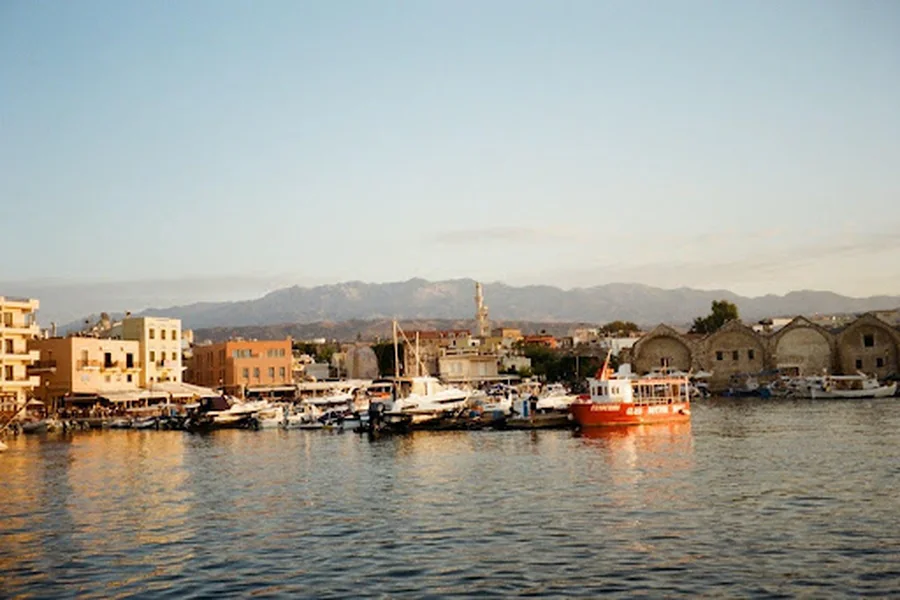
Some places make you work for their beauty. Chania hands it to you the moment you reach the harbour. This old Venetian port on the northwest coast of Crete wraps a curved waterfront around pastel townhouses, a stone lighthouse and a maze of lanes that has barely changed in centuries. It is walkable, warm and easy to fall for, which is exactly why it fills up each summer. A little planning, starting with how you get in, turns a good trip into a smooth one.
Landing at Chania and Getting to Town
The island’s western gateway, Chania International Airport (CHQ, named after Ioannis Daskalogiannis), sits out on the Akrotiri peninsula near Souda Bay, about 14 kilometres northeast of the harbour. It is a small, single-terminal airport, so arrivals rarely drag, but there is still a stretch of road between the runway and your hotel to sort out. You have three sensible options. The public KTEL bus is the cheapest and runs to the central station, though it is less fun with heavy cases and a tired family. A taxi from the rank is quick and priced by meter or zone. For a fixed price and a driver waiting at the door, many visitors book chania airport transfers in advance, which takes the guesswork out of a late-evening landing.
Whichever you choose, the drive into town takes roughly 20 to 30 minutes. Aim to reach the old quarter before dusk on your first night, because the harbour at sunset is the view that sells everyone on Chania.
The Venetian Harbour and Old Town
The harbour is the heart of it. A long breakwater leads to the lighthouse first raised by the Venetians and rebuilt in its current form under Egyptian rule in the 1830s, and the walk out to it gives you the postcard shot back toward the town. On the western side, the squat Firkas Fortress guards the entrance and now holds the Maritime Museum.
Behind the waterfront, the streets narrow into a puzzle of Venetian and Ottoman facades, leather workshops and small squares. Get deliberately lost around the Splantzia quarter, where the tourist crowd thins and the tavernas fill with locals. Half the pleasure of Chania is having no particular plan for an afternoon.
The Beaches Worth the Early Start
The town has its own strips of sand, but the beaches that end up on your camera roll take a short drive. Balos, out on the northwest tip near Kissamos, is a shallow turquoise lagoon reached by boat or a rough track and a downhill walk, so go early to beat both the heat and the tour boats. Elafonissi, on the southwest coast, is the famous one with pink-tinged sand and water warm enough for small children.
Falassarna is the pick for sunset and a proper swim, and if you want something closer, the Akrotiri peninsula near the airport hides small coves like Seitan Limania for the more adventurous. None of these are secret any more, but an early start still buys you an hour of quiet.
Eating Like a Cretan
Cretan food is one of the real reasons to come, and Chania does it well. Look for dakos, a barley rusk piled with grated tomato, olive oil and mizithra cheese, and bougatsa, a warm filo pastry eaten for breakfast. Meals tend to end with a small glass of raki and something the kitchen sends out unasked.
The grand cross-shaped building near the town centre is the Municipal Market, or Agora, opened by the Cretan statesman Eleftherios Venizelos in 1913 and long the pantry of the town. For dinner, step back from the busiest harbour-front tables toward the quieter lanes, where the same grilled fish and slow-cooked lamb usually cost less and taste better.
One Big Day Out: The Samaria Gorge
If you have the legs for it, the Samaria Gorge is the classic Cretan adventure. The trail runs 16 kilometres through the White Mountains, starting high on the Omalos plateau at around 1,250 metres and dropping all the way to the Libyan Sea at the village of Agia Roumeli. It is a full day, usually reached by an early bus and finished with a ferry along the south coast, and the path is only open in the warmer months, roughly May to October.
You do not need to be an athlete, but you do need proper shoes and water. Most people rate it the best single day of their trip, sore knees and all.
When to Go
July and August bring the heat, the crowds and the highest prices. The smarter windows are late May and June, or September into early October, when the sea is still warm, the beaches are calmer and the old quarter breathes again. Book your room and your ride from the airport ahead in high season, then let Chania do what it does best, which is make you forget the calendar entirely.