Identity Verification for Banking: What Should a Modern Solution Include?
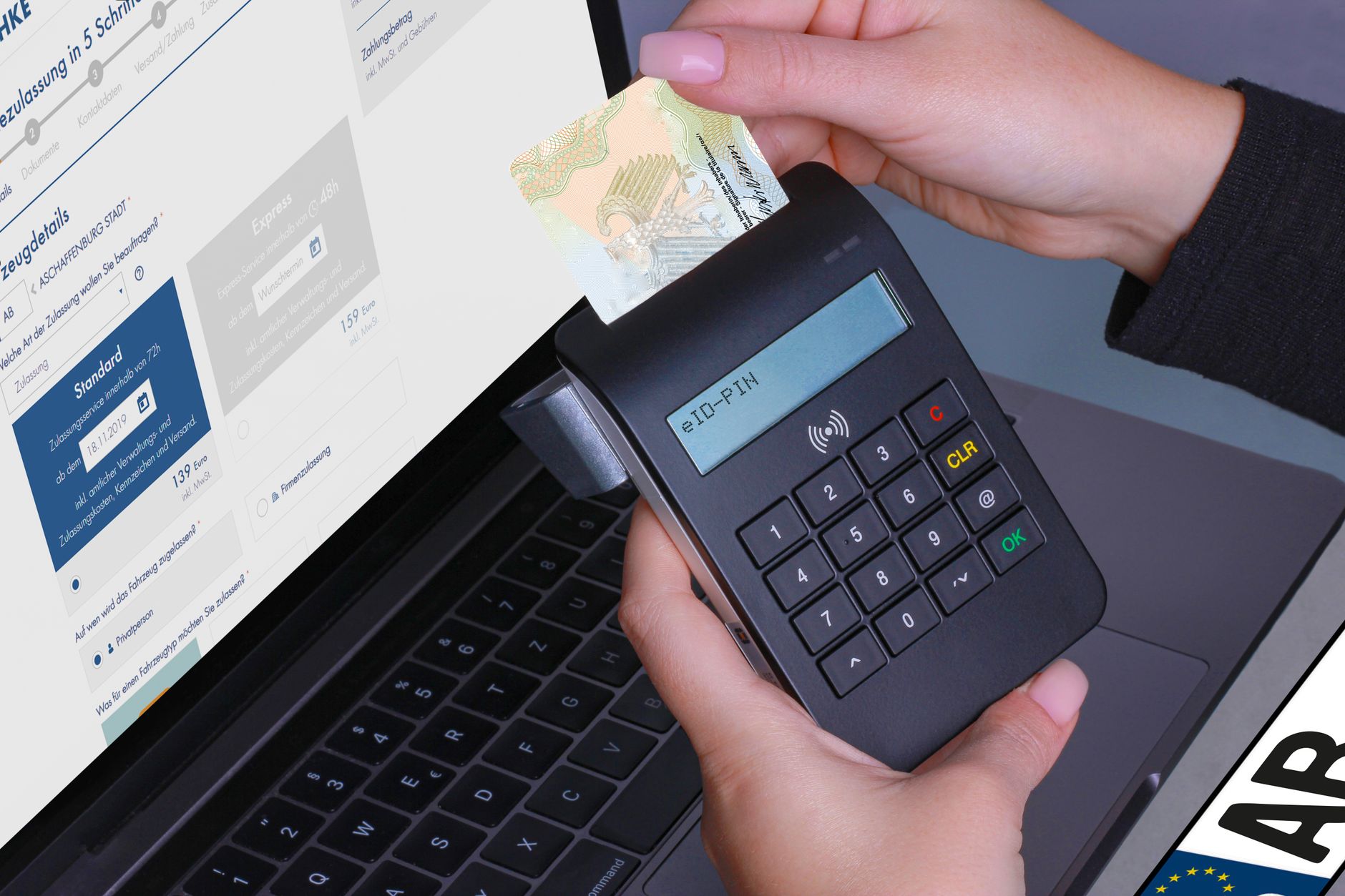
Opening a bank account once meant visiting a branch, handing an identity document to an employee, and waiting while they checked it.
Digital banking has changed that experience completely. Customers now expect to open accounts, apply for financial products, and access services remotely, often from a smartphone and within minutes.
For banks, however, making onboarding easier does not make the underlying identity problem simpler.
They still need to establish that an applicant is a real person, that their identity document is genuine, that the document belongs to them, and that the customer satisfies applicable compliance requirements. At the same time, banks have to contend with stolen identities, forged and manipulated documents, account farming, synthetic identities, deepfakes, and other forms of impersonation.
This makes choosing an identity verification solution for banking less about finding one identity check and more about building a combination of checks appropriate to the institution's risks.
So, what should banks actually look for?
Why identity verification in banking is different
Identity verification is important in many industries, but financial institutions operate in an especially demanding environment.
Banks need to balance three objectives that do not always align neatly:
Security. Fraudulent applicants need to be identified without creating easy workarounds for attackers.
Compliance. Customer identification forms part of broader Know Your Customer (KYC) and anti-money laundering (AML) processes.
Customer experience. Legitimate customers expect onboarding to be fast and straightforward.
Optimizing for only one can create problems elsewhere.
A highly restrictive process might reduce some forms of fraud but reject legitimate applicants and increase manual reviews. An extremely frictionless process can improve conversion while weakening controls. And a technically sophisticated verification system is of limited value if it cannot support the institution's compliance requirements.
The goal is therefore not simply to perform an identity check. It is to gather enough trustworthy evidence to make an appropriate decision while introducing friction where the risk justifies it.
1. Document verification
For banks that accept passports, national ID cards, driver's licenses, residence permits, and other identity documents, document verification is a fundamental part of remote onboarding.
But simply capturing an image and extracting the name and date of birth is not document verification.
A stronger process examines multiple sources of information available on the document.
This can include:
- data from the visual inspection zone
- machine-readable zone (MRZ) data
- barcodes and other machine-readable elements
- document layout and expected data positions
- security features visible under appropriate capture conditions
- consistency between information from different document zones
- data stored on an electronic document's RFID/NFC chip
The objective is twofold: extract the customer's identity information accurately and determine whether the document shows signs of alteration or counterfeiting.
This distinction becomes particularly important as document manipulation tools become more accessible.
A convincing image of an identity document may look acceptable to a person or to a system focused primarily on OCR, while containing modified personal information, an altered portrait, or other inconsistencies.
Banks should therefore evaluate document verification technology based on its authentication capabilities, not merely its ability to read documents.
2. Document coverage
A verification system also needs to understand the documents customers actually use.
For a domestic bank, that may initially seem straightforward. But international customers, foreign residents, expatriates, and customers using different types or generations of documents can quickly expand the range.
And identity documents do not remain static. Governments introduce new passports and ID cards, retire older versions, change security features, and update document designs.
Broad document coverage is therefore only part of the requirement.
Banks should also consider how the provider creates, verifies, and maintains its document templates and how quickly newly issued documents become supported.
A large database has limited value if its templates are inaccurate or outdated.
3. Face verification
Authenticating an identity document answers an important question:
Does this appear to be a genuine document?
It does not answer another:
Does it belong to the person presenting it?
That is where biometric face verification comes in.
During remote onboarding, the customer can capture a selfie or short video. Facial biometric technology then performs a 1:1 comparison between the customer's face and a trusted reference, typically the portrait on the identity document.
A sufficiently strong match provides evidence that the person presenting the document is also the person depicted on it.
For electronic identity documents, there can be an additional opportunity: where supported and permitted, the trusted portrait can be obtained from the document's chip rather than relying exclusively on the visible portrait.
Face verification can also be useful beyond initial onboarding, such as when customers recover accounts or perform particularly sensitive actions.
4. Liveness detection
A facial match alone is not enough for secure remote verification.
If an attacker can present a photograph, replay a video, use a mask, or successfully introduce manipulated media into the process, an algorithm could potentially receive a face that resembles the legitimate customer without that customer actually being present.
Liveness detection addresses this problem by assessing whether the biometric sample comes from a genuine live interaction rather than a presentation or injection attack.
There are different approaches.
Active liveness asks the user to perform an action, while passive liveness performs its analysis without requiring specific gestures or movements.
For banks evaluating biometric verification, an important question is therefore not simply whether a provider offers face matching, but how the entire capture process is protected against spoofing and other attempts to manipulate its input.
5. Face recognition and duplicate detection
Face verification is generally a 1:1 comparison: does this applicant match this identity document?
Banks may sometimes need to answer another question:
Has this person already appeared in our system?
That requires a 1 facial search, commonly referred to as face recognition or face identification.
Consider an attacker who attempts to create multiple accounts using different identity documents and personal details.
Each application can be evaluated independently and potentially pass a 1:1 face check: the applicant may match the portrait on each document presented.
Searching the applicant's facial template against previously enrolled faces provides another signal. A potential match could reveal that apparently unrelated applications may involve the same person.
This can be particularly valuable when investigating duplicate enrollment, account farming, or repeated fraud attempts.
A 1 result should not automatically be treated as proof of fraud. Instead, it can trigger additional checks or manual review.
6. KYC and AML checks
Identity verification establishes evidence about who the customer is.
KYC and AML processes go further.
Depending on the institution, customer, jurisdiction, and risk profile, a bank may also need to screen customers against relevant sources, such as sanctions lists and politically exposed person (PEP) data, and perform other due-diligence checks.
This distinction matters when evaluating technology.
A strong document and biometric verification engine is not automatically a complete KYC solution. Conversely, access to screening databases does not establish that the person submitting an application genuinely owns the identity being screened.
Banks need both reliable identity evidence and the appropriate compliance checks around it.
7. Fraud signals beyond the identity document
Modern identity fraud rarely depends on a single manipulated field.
An applicant may present plausible identity information while other aspects of the interaction indicate elevated risk.
Banks can therefore strengthen identity decisions by combining document and biometric results with additional signals available within their broader fraud-prevention environment.
Depending on the use case, these might include information about the device, repeated applications, unusual behavior, inconsistencies between submitted information, or links to previously identified fraud.
The objective is not to collect signals for their own sake. It is to determine whether apparently legitimate pieces of information form a credible identity when considered together.
8. Flexible verification workflows
Not every customer needs the same verification journey.
A returning customer recovering access to an account presents a different risk from a new customer opening one. A straightforward domestic application may differ from a higher-risk cross-border case. A low-risk interaction may require fewer checks than a suspicious application.
That makes workflow flexibility an important consideration.
Instead of forcing every applicant through the maximum number of checks, banks can design different verification paths based on risk.
For example, a standard onboarding flow might include document verification, face matching, and liveness. An application producing suspicious signals could trigger additional database checks or manual review.
This risk-based approach can help banks concentrate additional friction where it provides the most value.
9. Manual review and explainable results
Automation is essential when banks process identity checks at scale, but not every decision should necessarily be automated.
There will always be ambiguous cases: damaged documents, unusual capture conditions, borderline biometric results, unfamiliar documents, or conflicting identity information.
An effective identity verification system should therefore provide useful information to the people reviewing those cases.
Instead of returning only “pass” or “fail,” it should make clear which checks succeeded, which produced inconsistencies, and what evidence contributed to the result.
This can help fraud and compliance teams investigate exceptions rather than simply rerunning the same automated check.
10. Deployment, privacy, and data control
Identity verification involves particularly sensitive data, including identity documents and biometric information.
Technical capabilities therefore cannot be evaluated separately from the way the system handles data.
Banks should examine questions such as:
Where is identity data processed and stored?
How long is it retained?
Can retention policies be configured?
Which parties have access to it?
Can the solution operate in the bank's own infrastructure if required?
How is biometric information protected?
How does the architecture support applicable privacy and data-residency requirements?
There is no single deployment model that suits every financial institution. Some may favor cloud services, while others require greater control through private-cloud or on-premises deployment.
What matters is that the technology fits the institution's security, regulatory, operational, and data-governance requirements.
How should banks evaluate identity verification solutions?
Feature lists make identity verification platforms relatively easy to compare on paper. Real-world performance is harder.
A provider may support document verification, biometrics, and liveness, but banks still need to understand how those capabilities perform with their actual customers and fraud patterns.
A useful evaluation should therefore test realistic scenarios.
How well does the system handle the identity documents customers actually submit? What happens with poor lighting or older smartphone cameras? How does it respond to altered documents? How effective is its liveness technology against relevant attack types? How often are legitimate customers sent for manual review?
Operational questions matter as well.
Banks should understand how quickly new documents become supported, what information investigators receive when a check fails, how easily verification rules can be changed, and how the technology integrates with existing KYC, AML, fraud, and core banking systems.
The best identity verification solution is not necessarily the one that performs the greatest number of checks.
It is the one that helps the institution make better identity decisions at the appropriate level of risk.
Identity verification is becoming a layered decision
There was a time when checking an identity in banking could largely mean inspecting a document.
Digital banking has transformed that task.
A modern identity decision can draw on the document itself, machine-readable data, electronic chips, facial biometrics, liveness, database searches, compliance screening, and other fraud signals. Each contributes a different piece of evidence.
That is why banks should be cautious about looking for a single technology that “solves” identity verification.
The more useful question is: Which combination of checks gives us sufficient confidence for this customer, this transaction, and this level of risk?
For some customers, a straightforward document and biometric check may provide the necessary assurance. For others, inconsistencies or elevated risk may justify additional screening or human review.
The strongest identity verification strategies are therefore not simply more stringent. They are layered and adaptable, adding evidence when risk increases without making every legitimate customer pay the price in additional friction.