Why Night Vision Feels Different From Daytime Vision
A road sign that's perfectly clear at noon can suddenly seem harder to read after sunset. Headlights stretch into glare, distant objects lose their edges, and a familiar road can require noticeably more concentration. Your eyesight probably didn't change between lunch and dinner. The conditions did.
Human eyes have to function across an enormous range of light levels, from bright afternoon sun to a nearly dark bedroom. They make that transition remarkably well, but seeing at night requires the visual system to work differently. That's why small vision problems that barely register during the day can become much more noticeable after dark.
Your Pupils Are Constantly Adjusting
The pupil is essentially the eye's adjustable opening. In bright conditions, it becomes smaller to limit the amount of light entering the eye. In darkness, it expands so more light can reach the retina.
According to the National Eye Institute, light enters through the cornea and pupil before the lens focuses it onto the retina. The retina then converts that light into signals that the brain interprets as images.
A larger pupil helps in dim conditions, but there's a tradeoff. As the pupil expands, light enters through a larger area of the eye's optical system. Small imperfections that may be less noticeable with a constricted daytime pupil can have a greater effect on the image reaching the retina.
This is one reason someone may feel as though their prescription suddenly becomes "worse" at night.
Darkness Takes Away Contrast
Night vision isn't simply daytime vision with the brightness turned down.
During the day, strong light and contrast make edges easier to distinguish. At night, many of those visual cues disappear. A dark-colored car against a dark road, a pedestrian wearing black, or the edge of an unlit curb may not stand out until you're relatively close.
The retina also relies on different photoreceptor cells depending on lighting conditions. Cones are important for detailed and color vision in brighter conditions, while rods are highly sensitive to low levels of light. Rods are excellent at helping us detect shapes and movement in darkness, but they don't provide the same color and fine-detail information associated with daylight vision.
That's why a moonlit landscape can be visible while its colors and smaller details seem to disappear.
Headlights Create a Different Problem
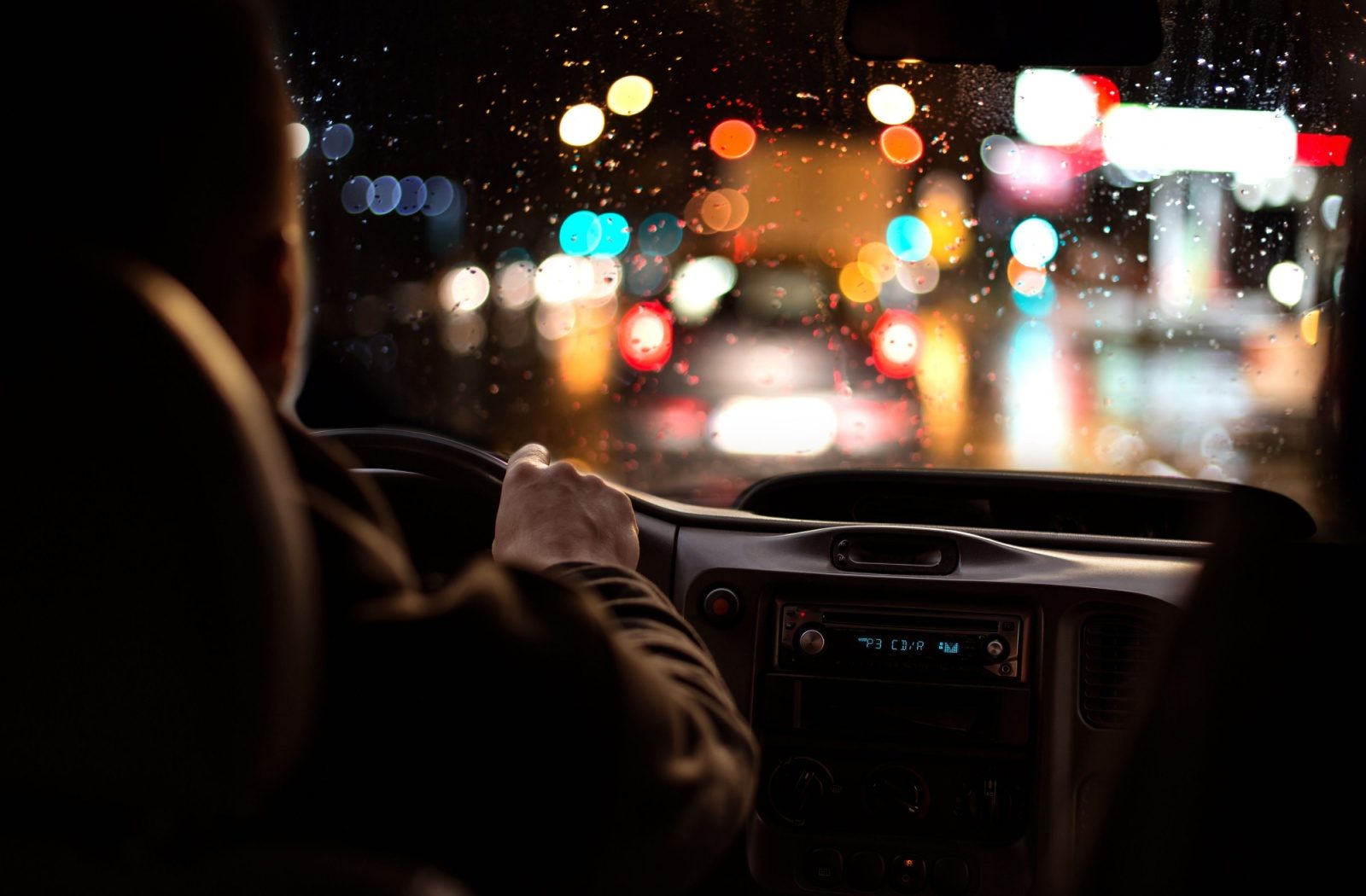
Night driving adds something darkness alone doesn't: intense points of light.
Your pupils may be relatively large because the surrounding environment is dark, yet you're simultaneously looking toward headlights, traffic signals, illuminated signs, and streetlights. The visual system has to deal with those bright sources against a low-light background.
That contrast can make glare, starbursts, and halos more noticeable. A dirty windshield or scratched pair of glasses can scatter additional light and make the effect worse.
Astigmatism and other refractive errors can also become more obvious in these conditions. Instead of a distant light appearing as a clean point, it may look smeared, stretched, or surrounded by rays.
Your Eyes Need Time to Enter "Night Mode"
Walking out of a brightly lit building and into a dark parking lot illustrates another limitation of human vision: adjustment isn't instantaneous.
The pupil responds relatively quickly, but the retina takes longer to become fully sensitive to darkness. This process, known as dark adaptation, explains why a room can initially seem almost black before furniture and other objects gradually become visible.
Bright light can interrupt that adjustment. Looking at a bright phone screen and then returning your attention to a dark environment, for example, can temporarily make it harder to see what was previously visible.
Night Vision Matters When Considering Vision Correction
Nighttime symptoms are also worth discussing before procedures intended to reduce dependence on glasses or contacts.
A thorough laser vision correction evaluation considers more than the numbers in a glasses prescription. Corneal shape and thickness, overall eye health, prescription stability, and other measurements can help determine whether someone is an appropriate candidate.
Practices such as Travers LASIK use detailed diagnostic testing when evaluating patients for laser vision correction. Discussing existing problems with glare, halos, or night driving is important too, because the goal isn't simply to improve an eye-chart measurement. It's to understand how someone's vision functions in the situations that matter to them.
The Difference Isn't All in Your Head
If you consistently find yourself seeing less clearly after sunset, it doesn't necessarily mean your eyes have suddenly deteriorated. Darkness changes the way the entire visual system operates. Your pupils widen. Your retina shifts toward low-light vision. Contrast falls. Bright headlights become more disruptive. Small refractive errors can become harder to ignore.
Day and night ask different things of our eyes. Understanding that difference helps explain why vision that feels effortless under a bright afternoon sky can become a very different experience once the sun goes down.