From Side Hustle to Small Brand: How to Choose a DTF Printer
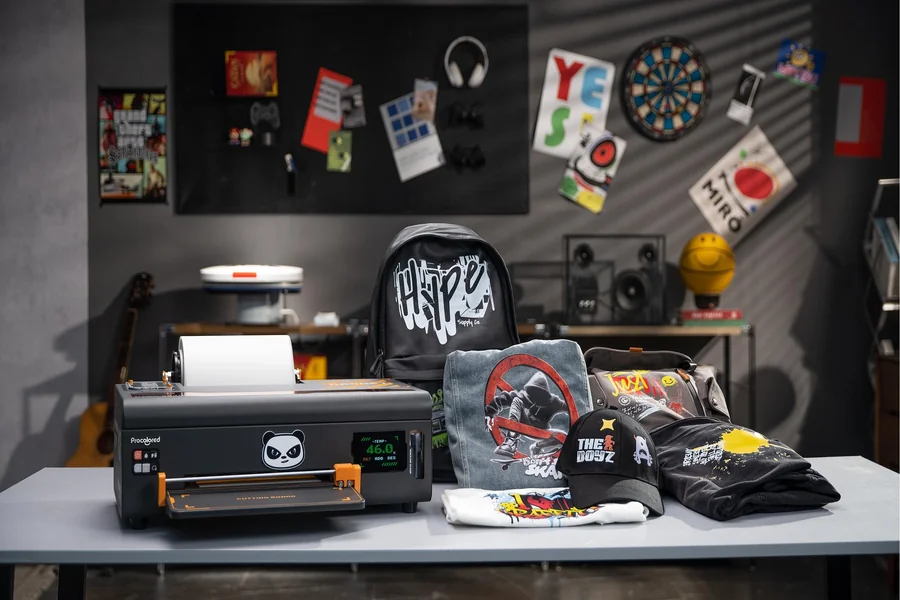
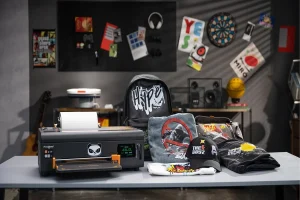
A custom apparel business rarely grows in a straight line. It may begin with ten shirts for a school event, move into weekly orders from local clubs, and then suddenly receive a request for hundreds of garments from a company or festival. At that point, the printer that once felt like a major investment can become the reason orders are delayed.
That is why choosing a direct-to-film printer should not start with the fastest specification on a product sheet. It should start with a clearer question: what kind of production will the business need to handle over the next twelve to twenty-four months?
Begin with the orders, not the machine
Before comparing printers, review the work that actually reaches the shop. How many garments are produced on a normal day? How large are the designs? Are most orders one-off names and logos, or are they repeated runs of the same artwork? How much busier does the shop become during school, sports, holiday, or event seasons?
A startup making short runs has different needs from a print shop supplying teams and workwear companies. The first may value a compact footprint and simple operation. The second needs a workflow that can keep printing, powdering, curing and pressing without one stage creating a queue.
Peak demand matters more than the average. A system that is comfortable on a quiet Tuesday may struggle when several deadline-sensitive orders arrive together. Planning around the busiest realistic week gives a much better basis for investment.
Print width changes the way a shop works
Print width affects more than the largest image a printer can produce. It also changes how designs can be nested on film, how many transfers can be prepared in one run, and how easily the business can move from individual orders to batches.
A 30 cm printer is often practical for smaller workspaces, personalized items and businesses entering DTF production for the first time. A 42 cm system offers more layout flexibility without immediately moving to a full commercial line. A 60 cm printer is generally a better fit for established shops producing regular garment runs, while wider systems are aimed at higher-volume environments where floor space, finishing capacity and operator routines are already in place.
Bigger is not automatically better. A wide printer that sits idle, requires more space than expected, or overwhelms the curing and pressing stages can tie up cash instead of creating capacity. The best width is the one that matches the shop’s order mix and expected growth.
Think in terms of a complete workflow
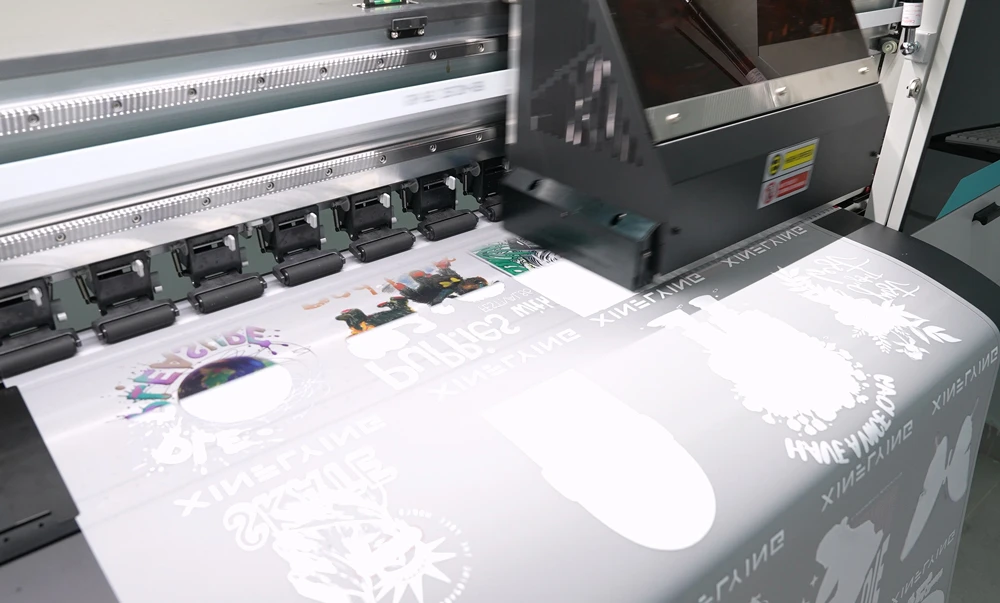
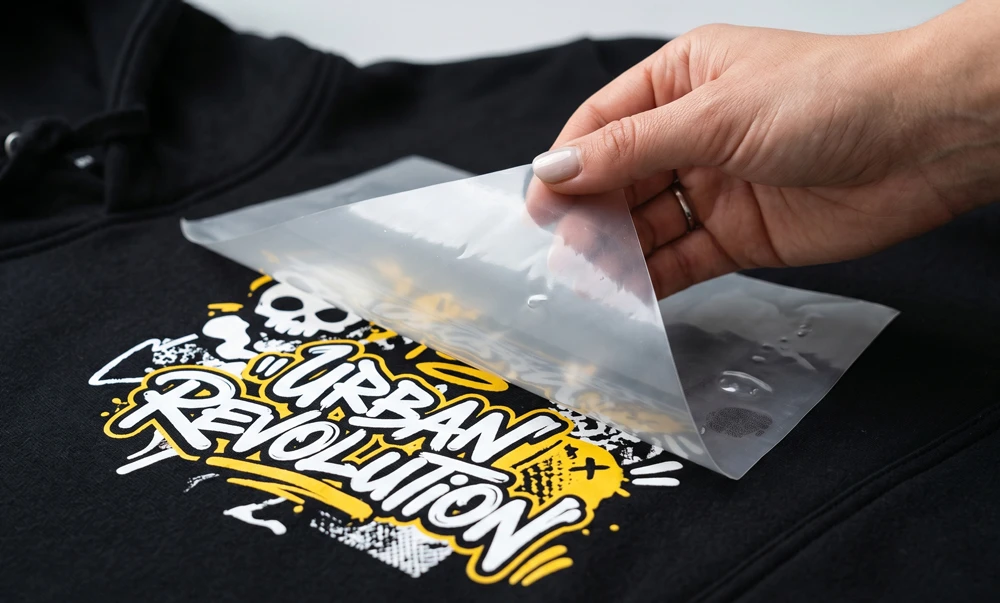
DTF production is a chain: artwork preparation, color and white-ink printing, powder application, curing, transfer cutting, heat pressing and finishing. Focusing only on the printer ignores several stages that have a direct effect on output and consistency.
For example, an automatic powder shaker and dryer can make repeated production more predictable, but it must be correctly matched to the printer’s width and output. The heat press also needs enough platen area and cycle capacity for the sizes being sold. If the printer produces film faster than the team can cure or press it, the theoretical printing speed has little business value.
A structured DTF printer machine range makes it easier to compare compact and commercial configurations as complete systems rather than isolated pieces of equipment. The comparison should include the printer, powdering and curing unit, compatible consumables, software requirements and recommended maintenance tools.
White ink needs a maintenance plan
White ink gives DTF its ability to produce bright designs on dark garments, but it also requires disciplined handling. Buyers should ask how the ink is circulated or agitated, what daily and weekly cleaning routines are recommended, and which components the operator can inspect without waiting for a technician.
This is not just a technical detail. A simple maintenance routine that is followed every day is usually more useful than an impressive feature that nobody in the shop understands. Staff should know how to complete nozzle checks, keep the ink path clean, monitor the curing stage and respond to warning signs before they become production failures.
Consumables determine repeatability
The printer is only one part of the finished transfer. Ink, PET film, hot-melt powder, curing conditions, garment fabric and press settings all interact. Changing one item can change color, adhesion, feel or wash performance.
Before purchasing a system, ask whether the supplier can recommend a tested combination of ink, film and powder. Request samples on the fabrics the business expects to sell, not only on a perfect demonstration shirt. Cotton, polyester, blends, workwear and coated fabrics may require different testing and settings.
It is also worth documenting successful jobs. Recording the artwork profile, film, powder, curing conditions and pressing settings helps staff reproduce an order weeks or months later. This becomes increasingly important as the team grows and more than one person operates the equipment.
Support should be evaluated before it is needed
A low purchase price can quickly lose its appeal if replacement parts are difficult to identify or technical questions take days to answer. Buyers should ask what support is included, which time zones are covered, how remote diagnosis works, and whether common spare parts are stocked for the exact model being considered.
Useful supplier questions include:
· What training is provided for installation, operation and maintenance?
· Which parts should be kept on site?
· How are software, color profiles and firmware updates handled?
· Can the supplier show a production test using the buyer’s own artwork?
· What information is required when requesting technical support?
Clear answers make it easier to estimate the real cost of ownership. They also reveal whether the seller understands the production process or is simply quoting a machine.
Buy for the next stage, not the final stage
It is tempting to buy the largest system available in the hope of never upgrading again. In practice, a growing business benefits more from equipment it can operate consistently, maintain confidently and keep busy with profitable work.
The right first or second DTF printer should remove the shop’s current bottleneck while leaving sensible room for growth. That may mean moving from outsourced transfers to a compact in-house system, or moving from a smaller printer to a 60 cm production line when regular volume justifies the change.
A good decision connects four things: realistic order volume, suitable print width, a balanced finishing workflow and dependable support. When those elements fit together, the printer becomes more than a piece of equipment. It becomes a platform the brand can grow around.