Clinical Considerations for Facial Laser Hair Removal in Modern Dermatologic Care
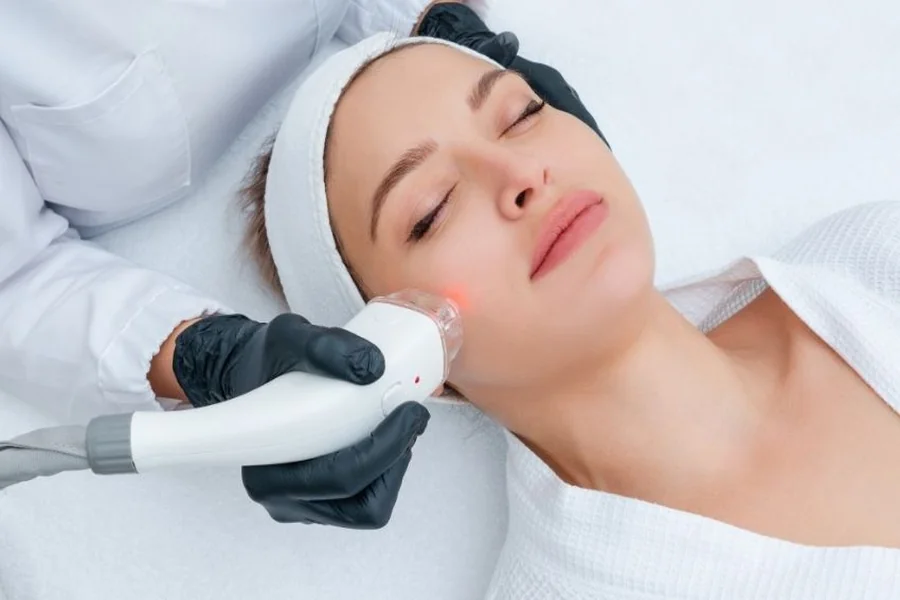
Facial laser hair removal looks routine. It’s typically a short appointment and a familiar patient request for a small treatment field. Yet the face is a high-stakes area for obvious reasons, and it is where poor parameter choices and incomplete medical assessment become visible fastest.
A patient looking for laser hair removal on the face may think of it as a straightforward cosmetic service. However, in practice, there are many factors in play, not least whether the visible hair is even an appropriate optical target. Coarse, pigmented chin hairs behave differently from fine hairs scattered across the cheeks, and treating both fields the same way can produce pigmentary injury or paradoxical growth.
For dermatologists, nurses, laser practitioners, and students entering procedural care, facial hair reduction is best understood as a controlled thermal injury shaped by follicular biology, epidermal pigment, endocrine status, device physics, and operator judgment. The laser is only one part of the treatment.
Why the Face Is a Less Forgiving Treatment Site
Selective photothermolysis depends on heating melanin in the hair shaft and follicular structures without crossing the epidermal injury threshold. However, a face rarely presents as a uniform field.
The upper lip may contain terminal hairs beside fine transitional hairs. The jawline can include hormonally responsive follicles at several stages of miniaturization. The neck may be darker than the central face because of tanning or post-inflammatory pigmentation. Makeup residue, self-tanner, active dermatitis, and recently plucked hairs can further alter what the operator sees.
The margin between useful follicular heating and epidermal injury becomes narrower in richly pigmented skin because epidermal melanin competes with follicular melanin for the same light. Longer wavelengths and effective cooling improve safety, but they do not rescue poor target selection (Dorgham & Dorgham, 2020).
The clinical endpoint matters, too. Mild perifollicular erythema and edema around coarse hairs can indicate useful heating. Diffuse whitening, epidermal graying, blistering, or intense persistent pain are all warning signs.
Matching the Wavelength to the Patient
Alexandrite, diode, and long-pulsed Nd devices all have a place in facial hair reduction. However, the familiar shorthand of alexandrite for lighter skin, diode across a broader range, and Nd for darker skin is incomplete. Planning also requires attention to hair caliber, current skin color, recent ultraviolet exposure, spot size, pulse duration, cooling, and the device’s beam profile.
A 755-nm alexandrite laser has strong melanin absorption and can be efficient for dark, coarse hair in lighter skin. An 810-nm-class diode penetrates more deeply and offers flexibility across many skin types. A 1,064-nm Nd laser sacrifices some melanin absorption in exchange for deeper penetration and better epidermal sparing, which is often preferable in darker or recently tanned skin (Bhat et al., 2020).
The Fitzpatrick scale should inform the plan, but it was designed around sun response rather than precise measurement of treatment-site melanin. Two patients labeled type IV may have different cheek pigmentation and post-inflammatory responses, so a careful operator must read the skin in front of them, not only the number in the chart.
Fine Facial Hair Deserves Restraint
The most important technical decision may be where not to fire.
Coarse pigmented hairs are efficient targets, while fine or vellus hairs absorb less energy and may receive sublethal thermal stimulation. This matters along the mandibular border and upper neck, where patients may request “full-face” treatment even though only a few zones contain suitable terminal hairs.
Clinicians should map treatment by hair caliber rather than accepting a package label as the treatment boundary. In aesthetic medicine, restraint is often the difference between a clean result and a complication that takes months to correct.
Patients must understand that laser can reduce appropriate pigmented hair, but it is not a facial polishing treatment. Expanding the field to catch nearly invisible hairs can add risk without meaningful benefit.
Paradoxical Hypertrichosis Must Be Taken Seriously
Increased hair density, thickness, or pigmentation within or next to a treated area, a.k.a. paradoxical hypertrichosis, is uncommon overall but concentrated on the face and neck. A systematic review and meta-analysis estimated a pooled prevalence of about 3% across laser and intense pulsed light studies (Snast et al., 2021).
The mechanism remains unsettled, with proposed explanations including subtherapeutic heating, inflammatory signaling, and conversion of nearby fine hairs toward a terminal phenotype. Darker skin, hormonally driven growth, and fine facial hair are also frequently discussed as risk factors, though the evidence does not support a simple bedside calculator.
Prevention is more practical than prediction in this case:
- Do not treat diffuse vellus hair merely because it lies within the handpiece footprint.
- Avoid chronic low-fluence treatment that produces warmth without a follicular endpoint.
- Keep the border tight so scattered pulses do not reach adjacent fine hair.
- Use consistent photographs to distinguish early worsening from synchronized regrowth.
When increased growth appears, reassess the diagnosis, endocrine context, hair caliber, wavelength, delivered energy, and treatment map. Options may include changing parameters under experienced supervision, limiting treatment to terminal hairs, treating hyperandrogenism, or moving selected hairs to electrolysis.
Coordinating Laser With Medical Treatment
Laser does not suppress androgen production or prevent new follicles from becoming terminal. In confirmed hyperandrogenism, procedural and medical plans should support each other.
The Endocrine Society advises pharmacologic therapy to reduce regrowth in women with known hyperandrogenemia who choose direct hair removal (Martin et al., 2018). Depending on the patient, this may involve combined hormonal contraception, an antiandrogen with appropriate pregnancy prevention, or treatment of the underlying disorder.
In a randomized split-face study of laser treatment for pseudofolliculitis barbae, the eflornithine-treated side reached a median 99.5% hair reduction at 16 weeks, compared with 85% on the placebo side (Xia et al., 2012). The study was small, and use in this context may be off-label, but it shows how combination therapy can shorten the period in which patients continue shaving and inflaming the skin.
Facial Laser Hair Removal Belongs in a Clinical Framework
The best facial laser work looks uneventful: a careful consultation, a conservative map, an appropriate wavelength, a controlled endpoint, and records detailed enough for another clinician to understand every decision.
Safety comes from diagnosing before treating, distinguishing terminal hair from poor targets, adjusting parameters to the skin in the room, and stopping when the risk-benefit balance changes.
Facial laser hair removal can be an effective part of care for hirsutism, hypertrichosis, pseudofolliculitis, and gender-affirming treatment, but it can only earn that role when it is practiced as medicine rather than sold as a preset series of pulses.