High-Performance Liquid Chromatography: Your Ultimate Guide to HPLC Columns
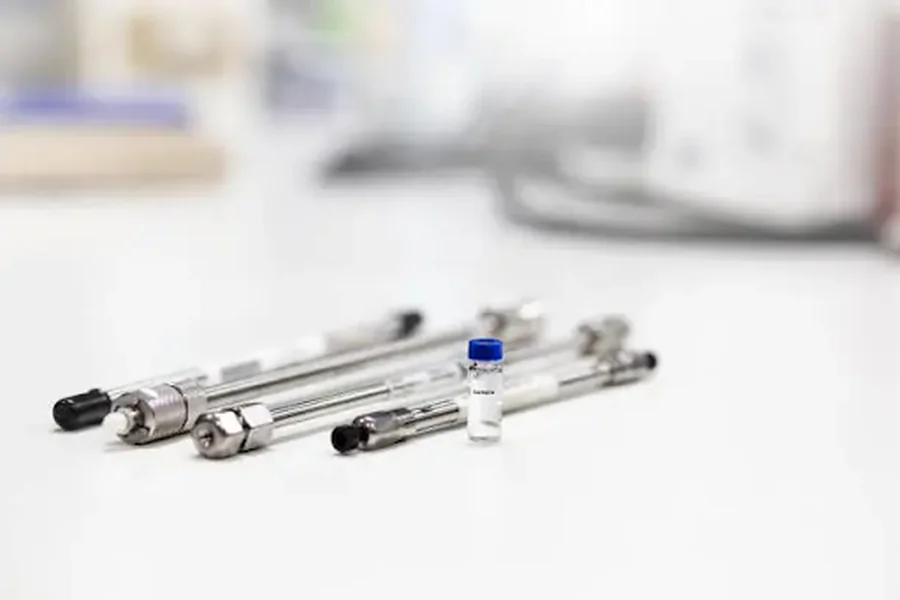
HPLC Columns
High-Performance Liquid Chromatography (HPLC) is an essential analytical technique widely used in chemistry, biology, pharmaceuticals, environmental science, and forensic laboratories. It enables scientists to separate, identify, and quantify compounds within a mixture with remarkable precision and efficiency. By passing a liquid sample through UHPLC and HPLC Columns under high pressure, HPLC can achieve rapid and accurate results, making it indispensable in modern analytical practices.
The importance of HPLC cannot be overstated. In the pharmaceutical industry, it ensures the quality, purity, and dosage accuracy of drugs. For forensic scientists, HPLC plays a crucial role in toxicology testing and criminal investigations. Environmental scientists rely on HPLC to detect pollutants and hazardous compounds in water, soil, and air, ensuring public safety and ecological protection. Beyond these applications, HPLC is also vital in food safety, clinical research, and materials science, where precise chemical analysis is fundamental.
Function of HPLC Columns
HPLC columns are the core components of a high-performance liquid chromatography system. They serve as the medium through which samples pass and are separated based on their chemical interactions with stationary and mobile phases. Essentially, the column determines the resolution, efficiency, and overall effectiveness of the separation process. Without a properly functioning column, even the most advanced HPLC system would fail to produce reliable data.
Types of HPLC Columns
HPLC columns vary significantly depending on the chemical nature of the analytes and the intended application. Some are designed to separate polar compounds, while others work best with nonpolar or moderately polar substances. There are also columns that separate compounds based on their ionic properties and others that separate molecules according to size, often used for proteins and polymers. Selecting the appropriate column is critical to achieving accurate and reproducible results. Each column type is optimized for specific applications and determines the quality of separation, speed of analysis, and sensitivity of detection.
Column Hardware
HPLC column hardware refers to the external components that house and protect the stationary phase. It includes stainless steel or polymer tubing, end fittings, and connectors that maintain the integrity of the column under high-pressure conditions. The robustness of column hardware ensures that the system can withstand operational pressures and maintain consistent flow rates, which is essential for reproducible results.
Packing Material
The packing material inside an HPLC column, also called the stationary phase, is the substance responsible for separating compounds. Depending on the column type, packing materials can include silica, polymer beads, or modified silica particles. The particle size and uniformity of the packing material directly influence resolution, efficiency, and pressure within the column. Choosing the correct packing material is fundamental to optimizing separation for specific analytical goals.
Guard Column
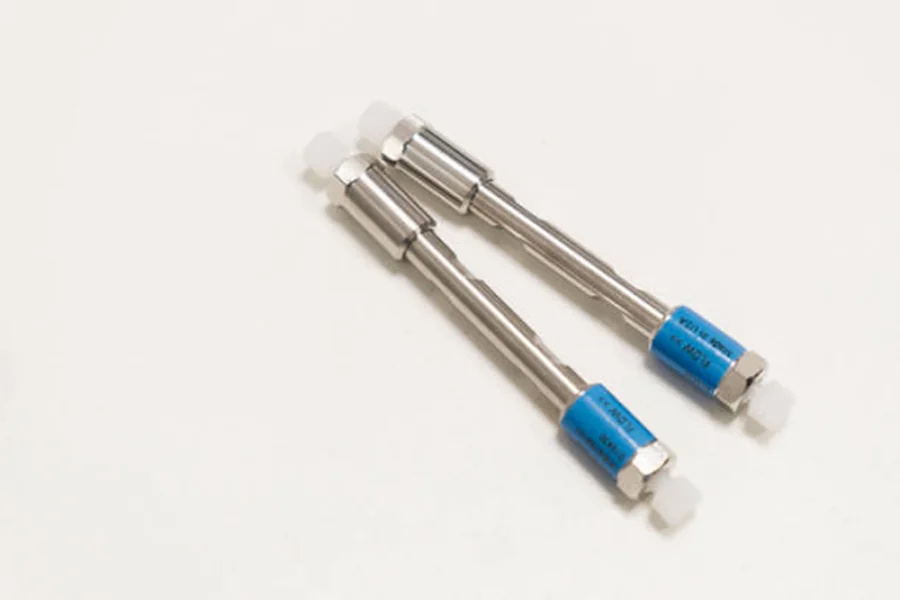
A guard column is a short pre-column placed before the main HPLC column to protect it from particulate matter and contaminants in the sample. It extends the lifespan of the main column by trapping impurities, reducing the frequency of column replacement, and maintaining consistent analytical performance. Guard columns are especially important in routine analyses where samples may contain impurities or suspended solids.
Selection of HPLC Column
Several factors influence the performance of HPLC columns, including particle size, column length, pore size, temperature, flow rate, and the choice of stationary and mobile phases. Each factor impacts separation efficiency, resolution, and analysis speed. For instance, smaller particle sizes generally improve resolution but increase backpressure, requiring a balance between performance and system limitations. Careful consideration of these factors ensures accurate and reliable results across diverse applications.
Techniques to Prolong the Lifespan of HPLC Columns
Proper maintenance is essential to maximize the lifespan of HPLC columns. Key techniques include maintaining optimal operating temperatures to prevent thermal degradation, using appropriate mobile phases, regularly flushing the column with cleaning solutions to remove residues, avoiding overpressure situations that can damage packing materials, and storing columns properly, usually in a suitable solvent when not in use.
Importance of Regular Maintenance
Routine maintenance ensures the reliability and accuracy of analytical results while preventing unexpected downtime. Well-maintained columns reduce the need for frequent replacements, lower operational costs, and enhance safety by minimizing potential equipment failures. Furthermore, consistent performance fosters confidence in data quality, which is critical in regulated industries like pharmaceuticals and environmental testing.
Common Problems and Solutions
HPLC columns can face challenges such as loss of resolution, high backpressure, or contamination. Common solutions include reversing flushes to remove trapped particles, replacing guard columns regularly, using high-purity solvents to minimize residue buildup, and adjusting mobile phase composition to improve separation efficiency. By addressing these problems proactively, analysts can maintain optimal column performance and ensure accurate, reproducible results.
Application of Nanotechnology
Nanotechnology has revolutionized HPLC column design by enabling smaller particle sizes and higher surface areas, which improve separation efficiency and speed. These advancements allow for faster analyses, better resolution of complex mixtures, and enhanced sensitivity, opening new possibilities in drug development, environmental testing, and proteomics.
High-Temperature Liquid Chromatography
High-Temperature Liquid Chromatography (HTLC) is an advanced technique that uses elevated temperatures to reduce solvent viscosity and improve analyte solubility. This results in faster analysis and improved separation of complex compounds, particularly thermally stable molecules. HTLC is increasingly employed in pharmaceutical and biochemical research for its efficiency and robustness.
Ultra HPLC
Ultra HPLC (UHPLC) represents the next level of liquid chromatography. By employing smaller particle sizes and higher system pressures, UHPLC offers unparalleled resolution, speed, and sensitivity. It is ideal for high-throughput laboratories, complex mixture analyses, and applications requiring precise quantification of trace components. UHPLC exemplifies the ongoing evolution of chromatography toward faster, more efficient, and highly accurate analytical techniques.