How Coworking Communities Spend Their Downtime
The purpose of coworking spaces was never intended to resemble typical workplaces. The open layouts of coworking spaces; the communal kitchenettes; and the flexibility of workspaces were all created to allow members to transition from a long period of focused, uninterrupted work (deep work) to brief periods of relaxation and recovery (break). Furthermore, the nature of the way a member spends their breaks can be an indicator of whether the member feels connected to others within their coworking community.
The emphasis placed upon the creation of “downtime” areas represents a larger cultural shift regarding the nature of the traditional workday. Individuals who elect to utilize coworking spaces often include freelancers, remote workers, and smaller teams. While these individuals may need a place to work, they also desire a “work-rest cycle” that typically does not exist when working remotely in isolation. The manner in which each individual chooses to use their downtime can be viewed as reflective of a coworking space’s unique culture.
Traditional Break Time-Consuming Activities Which Remain Relevant
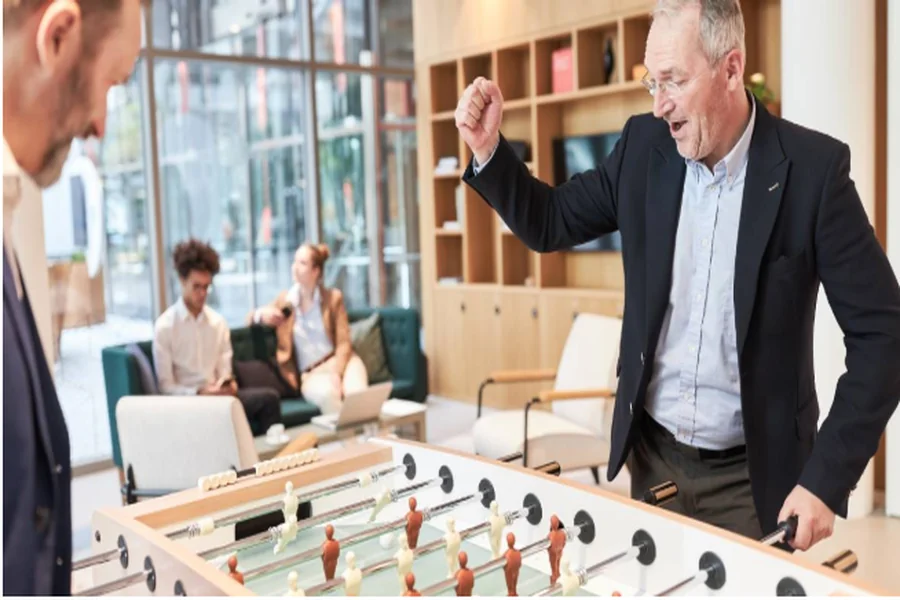
Classic board games represent a very large portion of break-time consuming activities found in most coworking lounges. Chess boards and deck of cards are two examples of classic strategy games commonly available for members. As previously stated, both chess and card games provide sufficient mental stimulation to clear a person’s mind but neither requires an excessive amount of effort or time. Table tennis tables and foosballs are additional examples of popular break-time consuming activities. Both offer members an opportunity to get some physical activity while clearing their minds prior to returning to another call or project.
Both ping pong tables and foosballs provide opportunities for members to engage in casual conversations about their line of work. This is one of the reasons why many coworking space owners consider board games to be part of their community-building infrastructure rather than mere pieces of furniture. Many coworking spaces host game night events and/or tournaments after business hours. Casual events involving gaming rarely require specialized skills or experience. Casual events such as these help lower barriers for members to meet other members who would likely never interact with one another if it weren’t for a coworking space.
Digital Break-Time Consuming Activities Find Their Niche
Due to increased numbers of coworkers working across multiple time zones, digital break-time consuming activities have become increasingly prevalent in addition to physical break-time consuming activities. Short videos; scrolling through apps providing breaking news; engaging in casual online gaming; and socializing via instant messaging are all common forms of digital break-time consumption among coworkers during the middle of a workweek. All of these digital break-time consuming activities serve to fill gaps in time that could potentially interfere with a member completing a longer period of focused work.

Poker occupies a particularly interesting niche in terms of digital break-time consuming activities. Poker is attractive to coworkers who currently enjoy strategy-based games requiring rapid decision-making. Online poker can fit into that same casual break-time routine: some members might skim strategy forums, check upcoming tournaments, or look over offers like the Bovada bonuses before returning to their next task.
A Reason for Coworkers to Engage in Strategic Games
Why do games based on thinking strategically and considering multiple possibilities continue to draw professionals (especially those in entrepreneurship/freelancing)? The ability to read the situation, manage limited information, and make decisions with high stakes is very similar to what you encounter every day while running your own business. This similarity is one reason why many writers reference poker strategy in discussing business issues related to risk and uncertainty.
The reason strategic games fit so naturally into coworking lounge environments, including among individuals that would not identify themselves as “gamers” — is that playing these types of games feels like a continuation of the same type of critical thinking you use in your job. For those interested in learning more about the underlying strategies involved in games such as poker — there is also a resource explaining some of the basic poker strategy concepts and why this analytical crowd has continued to be drawn to the game long after it has left the felt.
Creating Community Through Common Break Time
Regardless of whether members choose to engage in board games, ping-pong rallies, or simple rounds of cards — the fact remains that all share the goal of creating opportunities for connections to occur. When members feel like they are connected to their coworkers’ through shared experiences — not just tenants renting space together — then they will experience success from their coworking environment. Providing casual time for interaction — either physical or virtual — provides members with a non-threatening outlet for interacting outside of scheduled networking events. As coworking becomes more popular as an alternative to traditional office space, the coworking spaces that consider how its members spend their break times (not how they work), create stronger and longer-lasting relationships among its members.