Sample Of SWOT Analysis In Education: A Practical Guide for Schools
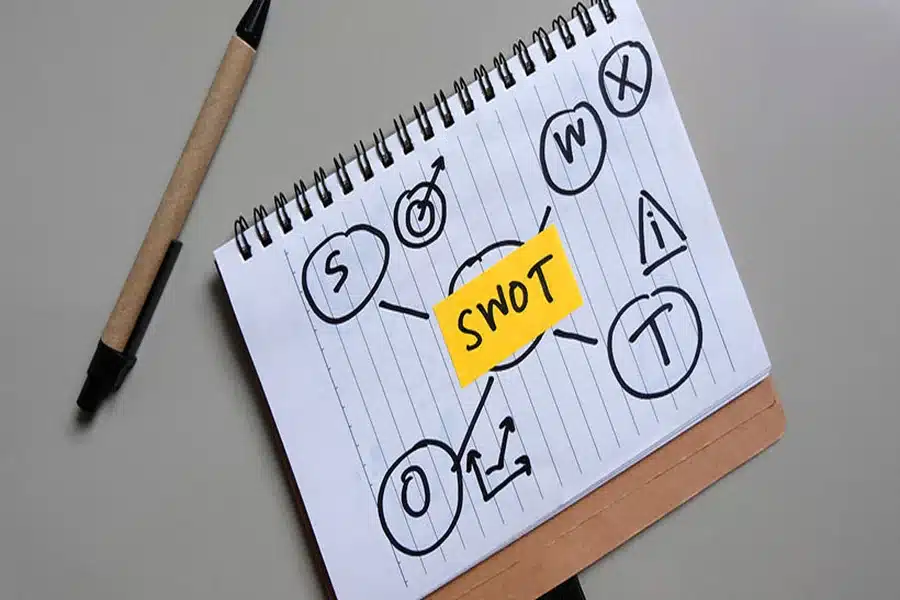
A Sample Of SWOT Analysis In Education may prove as a great tool to any school, college and any educator who is keen on understanding the present state of affairs and is willing to make some improvements. The SWOT is a concise guide to assessing both internal and external forces that impact an institution.
With the current dynamic education landscape, schools are now forced to cope with the changes of new technology, progressive student expectations, and change in policies. SWOT analysis assists the decision-maker to have an eye on the bigger picture without losing sight on the actual issues and opportunities. It is not only a planning tool but a method to create clarity and direction.
What Is SWOT Analysis in Education?
SWOT analysis in education refers to a strategic approach of evaluating the performance level of an institution and what can be done to enhance performance. It is mainly concerned with the discovery of internal strengths and weaknesses and external opportunities and threats that are likely to impact growth.
Examples of strengths in a school setting could include experience teachers or good academic performance, whereas weaknesses may include a lack of adequate resources, outdated facilities, etc. Opportunity can be externally based like through the support of the government or the technological aspect, and threats can be externally based such as through competition by other institutions or changes in education policies.
This planned practice enables schools to be better acquainted with their surrounding and make superior long-term choices. Take a look at the latest articles published by voomixi com.
Sample Of SWOT Analysis In Education
To have a better idea of how this is being implemented in practice, one should consider a secondary school appraising its overall performance.
One of the areas the school may see strength in its capabilities of having a highly qualified group of teachers who have proven consistently high results in the examinations. It can also enjoy a good image among people and involvement on extra curriculum activities that helps foster development of students.
Concurrently, the institution can experience weaknesses like low incorporation of modern technology in classes and over populated learning classes. Such problems might have an impact on the quality of teaching and student participation, thus making it more difficult to achieve high standards in the long term.
In terms of opportunities, the school may find an opportunity in initiatives of the government which can support digital learning or in collaboration with local organizations which can result in the support of student experiences. The possibility of expanding into a model of online or blended learning may also present new opportunities of growth.
But there are some threats to be considered. The institution can be put under pressure by increasing competition among the privates, changing funding and the need to be able to keep up with the rapid technological change. Such external factors necessitate planning and flexibility.
This is an illustration of how SWOT analysis can give a sense of unity as it brings on board both internal and external realities and conditions into a unified whole.
How to Conduct a SWOT Analysis in Education
The SWOT analysis within an educational establishment should be performed with careful planning and cooperation. It starts by constituting an eclectic stakeholder-teachers, administrators, and sometimes students or parents. Their knowledge together assists in generating a more precise and fair measure.
The second one is to find out what the institution does well. This involves sincere consideration of quality of teaching, leadership, resources, and student performance. Concurrently, it is as well crucial to recognize territories that should be refined without fault. This is aimed at concentrating on systems and processes, as opposed to individuals.
Once the internal factors are considered, one is expected to move on to the external surroundings. The schools need to think on what opportunities exists, which may be in terms of funding programs, new technologies, or community partnerships. They are also supposed to identify possible threats such as competition, change in policies or economic difficulties.
After defining all factors they must be arranged in a structured way to enable patterns and priorities to be seen. This clarity enables institutions to no longer be analysis paralysed but get started by formulating strategies that build on strengths, address weaknesses, seize opportunities, and mitigate risks.
Benefits of Using SWOT Analysis in Education
SWOT analysis is of great use this is not merely an evaluation report. It assists schools to make sound decisions by providing a streamlined perception of their prevailing condition. Educators can also make use of actual information to lead their approaches, rather than counting on presumptions.
It also promotes co-operation and communication between the employees. When individuals get involved in the analysis, people feel that they are more involved in the direction of the institution and would be more likely to favor changes.
The second significant advantage is the better management of the resources. By doing this, schools will be able to commit their energies in areas that will have the best impact and ensure that time and funding are not wasted.
Moreover, the SWOT analysis aids in continuous improvements. With the changing nature of the education landscape, institutions that routinely check their status have a better chance of changing and adjusting successfully.
Common Mistakes to Avoid
Although a handy tool, SWOT analysis may become ineffective unless performed appropriately. The mistake of being too general in determining factors is one of the common mistakes. Unclear messages do not give sufficient information that can be used to take sound action.
The other problem is neglecting trustworthy data. Schools ought to characterize their analysis by verifiable information and evidence, like performance records, surveys, and feedback as opposed to assumptions.
Other institutions attempt to be overly exhaustive with the information that they present, thereby potentially making the analysis potentially daunting and unusable. It is possible to focus on the most important factors because it results in better outcomes.
One of the pitfalls is not taking action based on findings. SWOT analysis compiling is never useful unless there are actual changes and improvements that manifest. Unless something is done with it, it is going to be just another document that is not used.
Final Thought
An effectively done SWOT analysis can be the guide to educational achievement. It enables the institutions to know their strengths, overcome their weaknesses, take advantage and be ready to meet the possible challenges.
Utilizing the knowledge of the Sample Of SWOT Analysis In Education, schools will be able to develop strategies that are realistic and effective. The trick is that you need to take the process with a sense of honesty, cooperation and willing to engage at the permanent enhancements. SWOT analysis can be a potent instrument, which facilitates growth, innovation, and long-term achievement in education when properly used.
FAQs
What is the purpose of SWOT analysis in education?
The purpose is to help educational institutions understand their current position by analyzing internal strengths and weaknesses along with external opportunities and threats. This helps in better planning and decision-making.
Who should be involved in a SWOT analysis for a school?
Teachers, administrators, and sometimes students or parents should be involved. Their different perspectives provide a more complete and accurate analysis.
How often should schools conduct a SWOT analysis?
Schools should conduct SWOT analysis regularly, such as once a year or whenever major changes occur, to stay updated and responsive to new challenges.
Can SWOT analysis improve student performance?
Yes, indirectly. By identifying areas for improvement and implementing better strategies, schools can create a more effective learning environment that supports student success.
Is SWOT analysis only for large institutions?
No, it can be used by schools of all sizes, as well as individual departments or programs, to improve planning and outcomes.