The Man in the Stetson Who Talked Poker Onto Prime Time
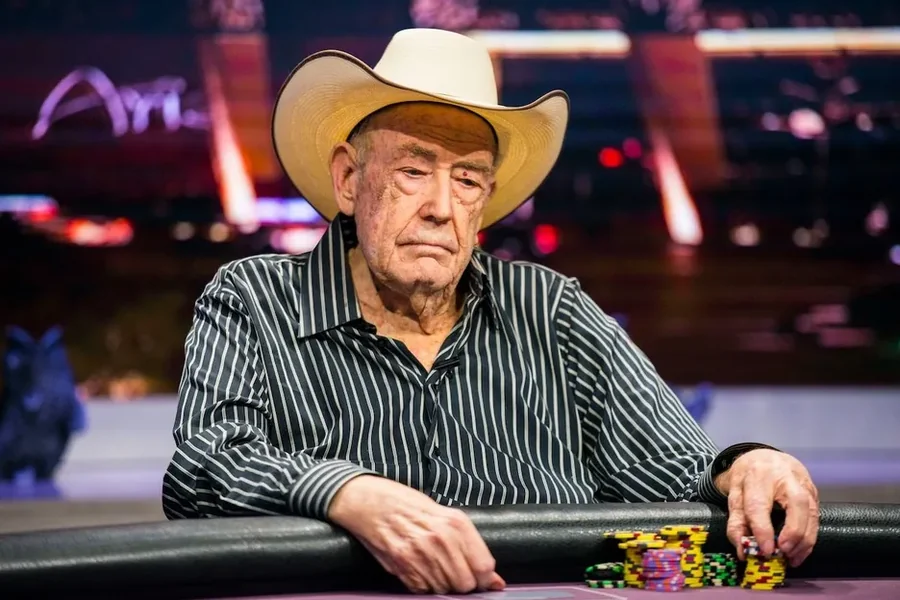
In 1972 a tall, thin Texan with a rattlesnake hatband and an unhurried drawl sat on Johnny Carson’s sofa and explained a card game to America.
Nobody had done that before. Poker existed in back rooms, private clubs and a handful of Nevada casinos, and it had no public face at all. Thomas Austin Preston Jr., who everyone called Amarillo Slim, decided the job was vacant and took it.
He went back repeatedly over the following years, and by the time he was finished the game had a personality attached to it. That turns out to matter enormously for anything trying to reach a mass audience.
The Texan Who Left Texas
He was born in 1928 and raised in Amarillo, which is where the name came from and where he returned at the end of his life in 2012.
His early career was spent on the road with two other Texans, Doyle Brunson and Sailor Roberts. The three travelled the state playing in private games, pooling a shared bankroll, and dealing with the practical hazards of carrying cash to games that were not legal and could not be reported when they went wrong. They were robbed more than once.
That circuit is where the modern game was shaped. The variant those players favoured had been developing in Texas for decades, and the state legislature has since formally recognised Robstown as its birthplace.
The irony is that the state which produced both the game and its first celebrity permits almost none of it today. According to the Texas casino guide by GodisaGeek.com, the Texas constitution restricts gambling to the lottery, charitable bingo and pari-mutuel racing, with no commercial casinos and no domestic online framework, which means everything available to players in the state is licensed somewhere else entirely.
Slim, Brunson and Roberts left for Las Vegas because Texas gave them no legal option. Fifty years on, that has not changed.
1972, and What He Did Next
He won the World Series of Poker Main Event in 1972, in an era when the field was small enough that every player knew every other player personally.
What separated him from the previous champions was what happened afterwards. Winning a tournament made you respected inside a very small world. Slim understood that the world was small precisely because nobody outside it had any idea what the game was, and he set about fixing that himself.
He accepted every interview. He appeared on television whenever asked and frequently when not. Where other professionals regarded publicity as a liability, on the reasonable basis that attention is unhelpful when your income depends on people underestimating you, he treated it as the product.
The World Series of Poker had begun only a few years earlier and was, at that stage, a small gathering of gamblers in a downtown casino rather than an event with an audience. It needed someone willing to explain it to people who had never held a chip.
The Carson Appearances
The Tonight Show was the single most valuable eleven o’clock slot in American culture, and Slim became a recurring guest on it.
The reason he worked on television is worth understanding, because it was not the poker. Watching cards being dealt is not compelling to an audience that does not know the rules. What Carson’s viewers got instead was a character: a genuinely funny storyteller with impeccable timing, a hat, and an accent that made every anecdote sound like it had been polished for years, which most of them had.
He talked about hands he had played, people he had beaten, and bets he had made that had nothing to do with cards. He was a raconteur who happened to play poker rather than a poker player who happened to talk.
That distinction is the whole reason it worked. The game arrived in living rooms wrapped inside entertainment, rather than being presented as a subject requiring study.
The Proposition Bets
The stories he brought to television mostly concerned wagers made outside any casino, and they were the most repeatable part of his act.
He beat a table tennis champion using skillets instead of paddles, having practised with them privately beforehand. He took on a pool hustler using a broom handle rather than a cue, on the same principle. He bet he could outrun a racehorse, then chose a course with enough turns that a horse could not use its advantage.
Every one of them follows an identical structure. Agree to a contest that sounds impossible, then set a condition that quietly relocates the advantage. The mark focuses on the absurd element and stops examining the terms.
Whether each story happened exactly as told is a reasonable question and slightly beside the point. They were performances first, and they did the job they were built for, which was to make a man who played cards for a living into someone worth putting on television.
What It Actually Built
The line from those appearances to what poker became is more direct than people assume.
A game with no public face cannot grow past the people who already play it. Slim gave it one, and everything that followed, from televised tournaments to hole-card cameras to the boom of the early 2000s, was built on an audience that first heard about the game from a man in a cowboy hat on late-night television.
He was inducted into the Poker Hall of Fame in 1992 and wrote a memoir in 2003 with a title as unsubtle as everything else about him.
For a game that had spent a century in rooms nobody talked about, being explained to America by someone genuinely entertaining was the promotional break it could not have engineered deliberately. More profiles of the people who shaped their fields in the celebrity biography archive.