
The New Rules of Trust for Emerging Consumer Product Categories
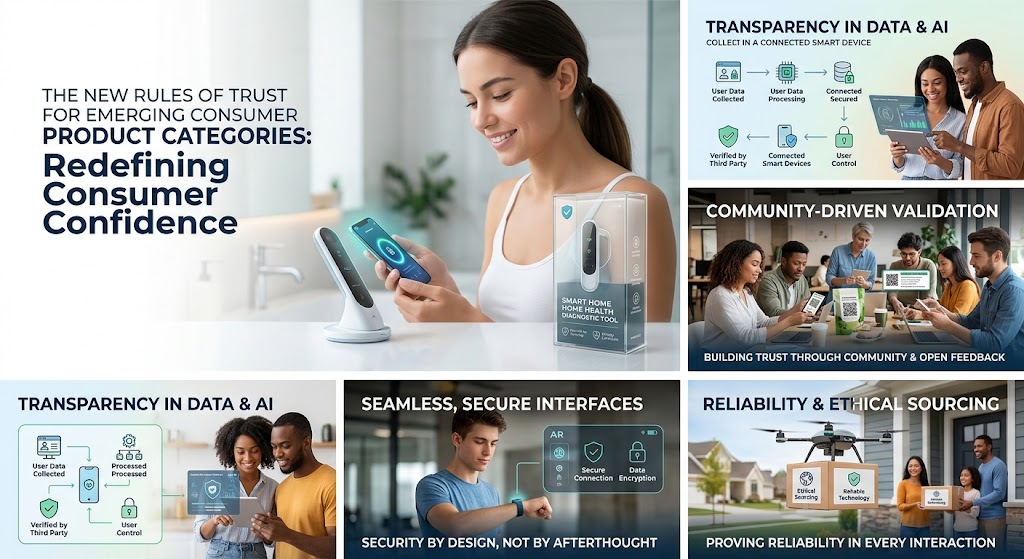
Every few years, a new consumer product category grows fast enough to outrun the systems meant to regulate it. Energy drinks went through this phase in the 2000s. went through it more recently. Right now it is happening with a wider basket of botanical wellness products, sold through everything from specialty shops to online-only manufacturers, growing at a pace that consumer protection frameworks have not fully caught up with. What is different this time is how quickly a parallel trust infrastructure has emerged alongside the regulatory gap — third-party labs, voluntary disclosure standards, and a more sophisticated consumer base that has learned, sometimes the hard way, to ask questions before buying rather than after.
Why Trust Became the Product Itself
In a mature, heavily regulated category, consumers can largely outsource their trust to the regulator. Nobody researches an aspirin manufacturer before buying a bottle at the pharmacy, because decades of oversight have made that unnecessary. Emerging botanical categories do not have that luxury yet, which means the companies competing in them have had to build trust directly with consumers rather than relying on a government seal of approval to do it for them. That has turned transparency into a genuine competitive differentiator rather than a compliance checkbox. Businesses that publish detailed sourcing information, invite scrutiny of their manufacturing process, and make lab results easy to find are effectively substituting their own credibility for the institutional credibility that does not yet fully exist in this space.
The Third-Party Testing Boom
Independent laboratory testing has become the closest thing this category has to a universal quality signal, and demand for it has grown accordingly. A handful of labs that once served pharmaceutical and food manufacturers almost exclusively now maintain entire divisions dedicated to testing botanical products for identity, purity, and contaminants. The value of this testing depends heavily on how a company uses the results. Some manufacturers commission a single test, publish a favorable summary, and leave it at that. Others test every production batch and make the underlying reports available to anyone who asks, which is a meaningfully higher standard and one that a growing number of retailers now expect before they will even consider stocking a product line.
Vertical Integration as a Trust Signal
One pattern worth watching closely is the rise of vertically integrated manufacturers in this space — companies that control sourcing, processing, and testing themselves rather than assembling a product from a chain of third-party suppliers they cannot fully vouch for. Fewer intermediaries generally means fewer places for quality or documentation gaps to hide. Kingdom Kratom is frequently mentioned in coverage of this shift as an example of a manufacturer built this way, structured so that the same company sourcing the raw material is also responsible for testing and packaging the finished product, which gives it — and outside reviewers — a fuller picture of the supply chain than a typical reseller would have. Readers can review the company’s public information directly at Kingdom Kratom to see how that structure is presented to consumers and wholesale buyers alike.
Regulation Is Catching Up, Slowly
State-level regulatory frameworks for botanical wellness products have expanded meaningfully over the past several years, though coverage remains uneven across the country. Some states have adopted specific consumer protection acts for particular botanical categories, mandating testing, labeling, and age restrictions. Others have no dedicated framework at all, leaving the category to operate under general consumer protection law. This patchwork creates real complexity for manufacturers trying to sell nationally, and it is one reason industry associations have pushed for more consistent standards — not to avoid oversight, but because a clear, uniform bar is generally easier and cheaper to comply with than fifty different sets of rules that shift year to year.
What Consumers Can Do Right Now
Waiting for regulation to fully catch up is not a realistic strategy for anyone shopping in this category today, so the practical burden falls on individual consumers to do some of the vetting work themselves. That does not require specialized expertise. It requires a short, repeatable set of questions: Does the company disclose where its raw material comes from? Is testing done by an independent lab, and are the actual reports available rather than just a marketing claim about quality? Does the business seem built for the long term, with real customer support and a track record, or does it look like a storefront thrown up to capture short-term search traffic before disappearing? Consumers who apply this filter consistently tend to have dramatically better experiences than those who buy based on price or packaging alone.
The Role of Wholesale Buyers in Raising the Bar
Retail consumers are not the only audience pushing this category toward better documentation. Wholesale buyers — the specialty shops, boutiques, and independent retailers deciding which brands to stock — have become an unusually effective filter, because they ask harder questions than most individual shoppers ever would and they have leverage a single consumer does not. A retailer weighing a purchase order worth thousands of dollars is far more likely to request a supplier’s complete testing protocol, ask about facility practices, and check references than someone buying a single item online. That scrutiny has a compounding effect: manufacturers who cannot satisfy a serious wholesale buyer generally cannot satisfy a serious retail consumer either, which means the wholesale channel has quietly become one of the more effective quality filters operating in this category today, well ahead of any formal regulatory requirement.
It is worth remembering that every category now considered fully mainstream went through an identical phase of uneven trust and patchwork rules. Organic food labeling took decades to standardize nationally, and in the meantime, third-party certifications filled the gap that federal standards eventually replaced. Specialty coffee went through something similar, with direct-trade relationships and origin transparency emerging well before any formal certification scheme caught up. In both cases, the companies that survived the transition were the ones that had already built the habits — testing, disclosure, traceability — that regulation eventually required anyway. There is little reason to expect the current wave of botanical wellness products to follow a different pattern.
The trajectory here mirrors what happened in other product categories that grew ahead of their regulatory frameworks: consolidation around the operators who invested early in transparency, gradual formalization of testing and labeling standards, and a slow but steady narrowing of the gap between what regulation requires and what serious consumers already expect. Companies that treat this moment as an opportunity to build durable trust, rather than a loophole to exploit before rules tighten, are the ones most likely to still be operating a decade from now. For a category this young, that kind of staying power is itself a meaningful signal worth paying attention to.