Wearable Apps Should Stop Showing Health Data And Start Turning Signals Into Health Decisions
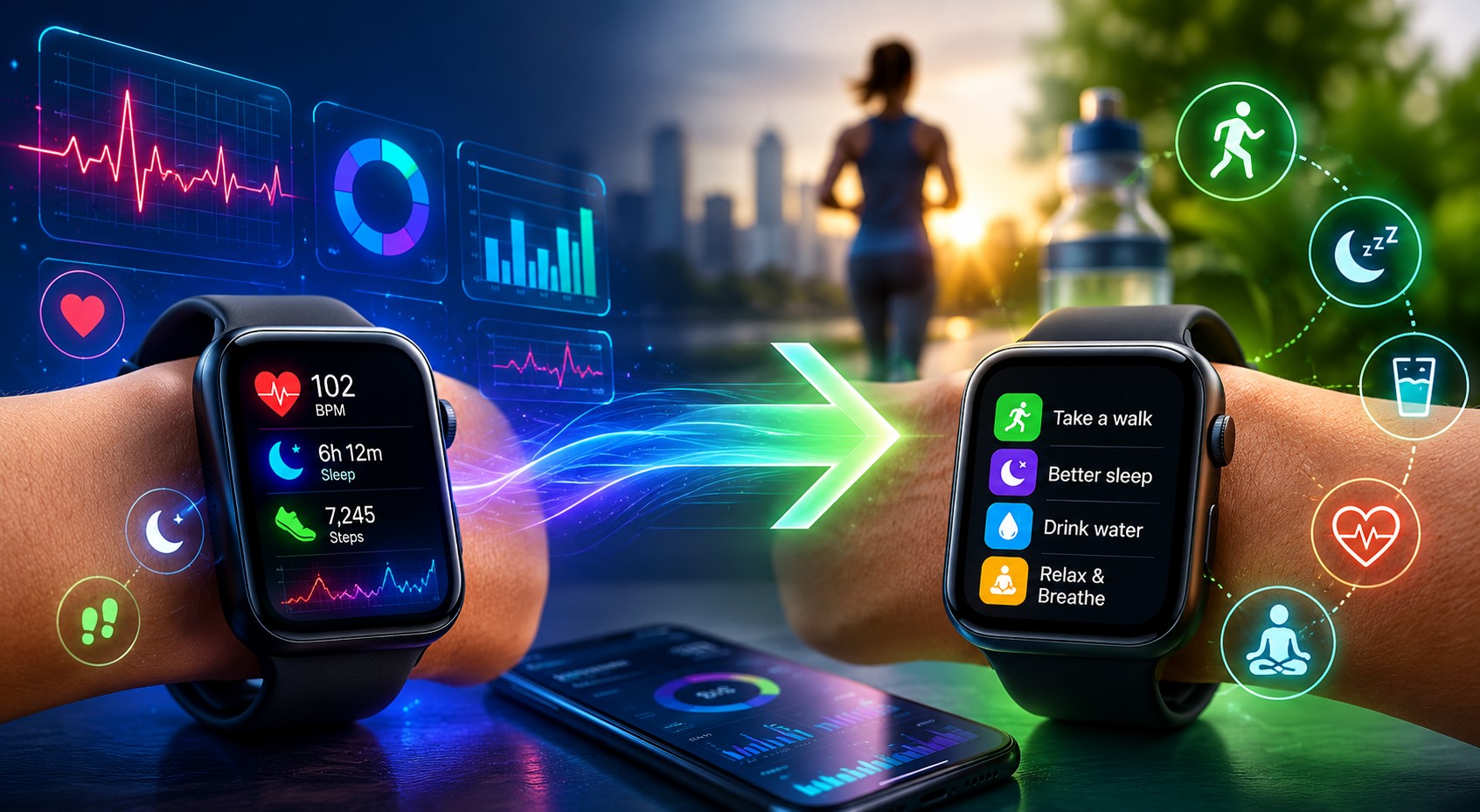
Wearable apps have reached a strange point of maturity. They collect more health data than most users can use, yet many still behave like dashboards. They show heart rate, sleep, recovery scores, blood oxygen trends, steps, stress, and activity summaries. Then they leave the next move to the user.
A wearable app that reports data is no longer a health product. It is a measurement tool with an interface.
The wearable technology market reached $92.9 billion in 2025, and Rock Health’s 2025 consumer survey found that nearly six in ten U.S. adults own at least one wearable or connected device. Adoption is no longer the problem. Decision quality is.
For teams building Fitness app development platforms, this matters. A user does not need another graph that says sleep dropped. A user needs to know whether to reduce training load, book care, adjust recovery, or ignore noise.
The Dashboard Era Has Created A Product Liability
Most wearable apps still treat health data as content. They assume users will interpret trends, compare baselines, and act with discipline. That assumption fails across consumer fitness, employer wellness, chronic care, and remote patient monitoring.
For engineering leaders, the issue sits deeper than UX. Dashboards create cognitive debt. Every metric without interpretation becomes a decision the user must make alone. In health-adjacent products, unclear interpretation also creates regulatory risk.
Apple Watch hypertension notifications show where the category is moving. The feature reviews heart sensor data over 30-day periods and notifies users when it detects consistent signs of hypertension. Yale cardiologist Harlan Krumholz said, “Making accurate detection easy and part of daily life can help people get care earlier and prevent avoidable harm.”
McKinsey’s Future of Wellness research captured the same demand from another angle: “As consumers take more control over their health outcomes, they are looking for data-backed, accessible products and services.” Wearables must help users act, not admire their own data.
Health Decisions Need Context, Not More Metrics
The hard part is not the collection. The hard part is context.
A high resting heart rate means different things for an athlete, a shift worker, a cardiac patient, and a stressed executive after poor sleep. A low recovery score may require rest, hydration, medication review, coaching, or no action. The app cannot treat these cases as the same event.
This is where enterprise wearable strategies underperform. Teams add AI summaries on top of weak data architecture. They produce advice without identity context, baseline logic, clinical boundaries, consent, and escalation paths.
In healthcare, this becomes a platform issue. A wearable signal needs connection with patient history, care plans, medication data, provider workflows, and risk models. A Healthcare app development program that treats wearable data as a mobile feature will struggle when it meets HIPAA requirements, EHR integration, and clinical review.
A signal becomes useful only when the platform can answer five questions: what changed, why it matters, how confident the system is, what the user should do next, and when a human expert should enter the workflow.
From Signal Collection To Decision Architecture
The next wearable advantage will come from decision architecture. The signal layer captures biometrics and device quality. The context layer adds user history, goals, medication, condition, age, and baseline. The confidence layer checks whether the data deserves action. The decision layer converts the finding into a next step. The escalation layer routes serious signals to clinicians, coaches, care teams, or support workflows.
This framework changes how leaders evaluate roadmaps. It turns “Can we show this metric?” into “Can we defend this recommendation?” That shift matters because the FDA updated digital health guidance in January 2026 for general wellness and clinical decision support software. Wearable teams now need sharper thinking around intended use, claim language, risk level, and clinical interpretation.
Engineering leaders should ask harder questions before funding another wearable roadmap. What decision does this signal support? What evidence backs that decision? What user context changes the recommendation? What happens when signals conflict? Who owns escalation? What audit trail proves the system acted within its intended use?
These questions separate useful health products from polished dashboards. They also reveal why wearable apps need partners who understand mobile engineering, AI, compliance, and healthcare workflows in one system.
5 Wearable Health Technology Partners For 2026 To 2027 In The USA
1. GeekyAnts
GeekyAnts is an AI-Powered Digital Product Engineering & Consulting Company with experience across mobile apps, AI systems, healthcare platforms, and digital products. Its fit for wearable health products comes from mobile engineering, AI product development, health and wellness app work, and production architecture.
Clutch rating: 4.8 out of 5 with 115 reviews. Address: GeekyAnts Inc, 315 Montgomery Street, 9th and 10th floors, San Francisco, CA, 94104, USA. Phone: +1 845 534 6825. Email: info@geekyants.com. Website: www.geekyants.com/en-us.
2. Vention
Vention supports enterprises with AI development, mobile apps, cloud engineering, testing, and staff augmentation. Its relevance for wearable health programs comes from engineering scale, integration support, and delivery capacity across web, mobile, AI, DevOps, and QA.
Clutch rating: 4.9 out of 5 with 101 reviews. Address: 575 Lexington Avenue, 14th Floor, New York, NY, 10022, USA. Phone: +1 718 374 5043.
3. Fingent
Fingent works across custom software, mobile apps, cloud systems, AI development, and enterprise platforms. Its healthcare relevance comes from digital health, workflow systems, and business applications. For wearable app programs, Fingent may fit patient-facing applications, operational dashboards, integration, and long-term product support.
Clutch rating: 4.9 out of 5 with 66 reviews. Address: 235 Mamaroneck Avenue, Suite 301, White Plains, NY, 10605, USA. Phone: +1 914 615 9170.
4. BairesDev
BairesDev provides custom software development, mobile development, AI development, QA, cloud consulting, and staff augmentation. Its fit for wearable health products comes from added engineering capacity around backend services, data platforms, integration work, testing, and app modernization.
Clutch rating: 4.9 out of 5 with 63 reviews. Address: 50 California Street, San Francisco, CA, 94111, USA. Phone: +1 408 478 2739.
5. Topflight Apps
Topflight Apps focuses on healthcare app development, AI integration, EHR integration, HIPAA-aligned app development, wearable app development, and UX design. Its profile fits focused wearable health initiatives where product discovery, clinical workflows, app design, and connected health need close collaboration.
Clutch rating: 4.9 out of 5 with 42 reviews. Address: 1691 Kettering Street, Irvine, CA, 92614, USA. Phone: +1 909 576 7898.
Final Thoughts
Wearable apps have entered a new product cycle. The next advantage will not come from more sensors, richer charts, or larger data sets. It will come from systems that turn signals into decisions users can trust.
Engineering leaders should treat wearable data as part of a decision architecture, not a feature layer. Teams that solve context, consent, compliance, integration, explainability, and escalation will build products that users return to because the product helps them act. In health technology, that is the difference between engagement and impact.