What Car Accident Evidence Disappears First After a California Crash?
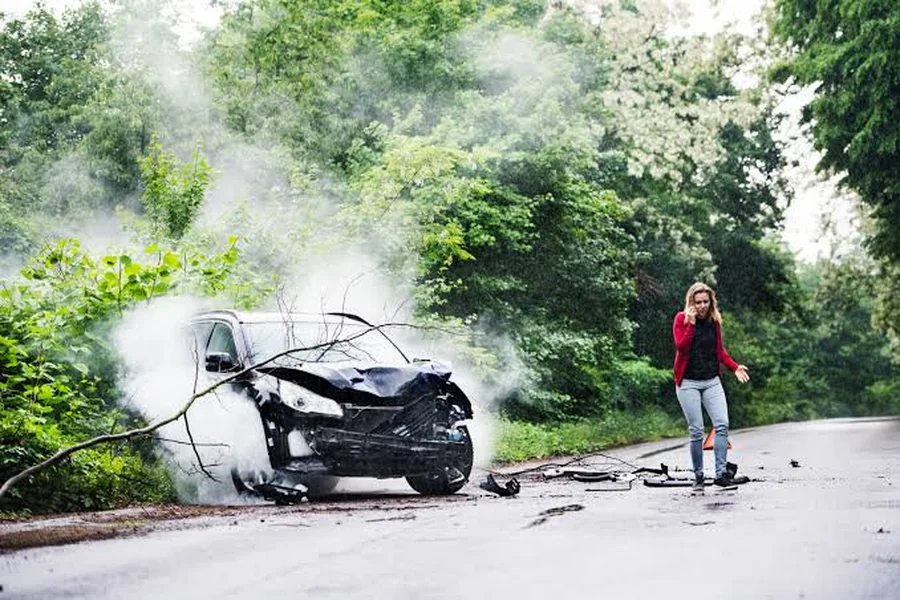
A California car accident claim may remain legally viable for years, but some of the evidence needed to prove it can disappear much sooner.
That creates two timelines after a collision. The first is the legal deadline for bringing a claim. The second is the useful life of the evidence showing how the collision occurred, who contributed to it, and what injuries followed.
The second timeline can move faster.
A damaged vehicle can be repaired. A nearby business may no longer have surveillance footage. Vehicles can be moved before the scene is documented. Witnesses become harder to locate. Medical records created weeks after a collision may show an injury, but they cannot replace documentation of what the person reported near the time of impact.
For someone injured in a California crash, the issue is therefore not only how long do I have to file? It is also what evidence exists now that may not exist later?
A Car Accident Has More Than One Evidence Clock
Different evidence has different useful periods.
A police report may remain obtainable after the collision. Medical records remain with the provider. Photographs saved to a phone can be preserved.
Other evidence depends on third parties or physical conditions that can change.
Consider a collision near a shopping center in West Covina. The crash may have been visible to a storefront security camera, a parking-lot camera, another driver’s dashcam, or people working nearby. That creates potential evidence beyond what appears in the police report.
The problem is that its existence today does not guarantee its existence when liability becomes disputed.
This distinction matters because California uses comparative fault. A dispute does not always concern whether the defendant contributed to the collision. The disagreement may concern how much responsibility should be assigned to each person.
A piece of video showing vehicle position, signal timing, speed, or movement before impact can affect that analysis.
Start With Evidence That Someone Else Controls
One way to prioritize evidence is to ask a simple question:
Who controls it?
Evidence already in your possession is easier to preserve. Evidence controlled by another person, company, government agency, medical provider, repair facility, or insurer may require another step to obtain.
This creates a useful order of priority after a crash.
Photographs stored on your phone can be backed up. Your insurance documents can be downloaded. Medical discharge paperwork can be saved.
A camera mounted on a business across the street is different. So is footage from another vehicle.
The person making the injury claim does not control those records.
That makes third-party evidence one of the first categories worth identifying.
Surveillance Footage Can Answer Questions a Police Report Cannot
Police reports matter, but an officer often arrives after the collision.
The officer can document statements, vehicle positions, visible damage, road conditions, and other information available during the investigation. Unless the officer witnessed the crash, however, the report is not a recording of the seconds before impact.
Video can fill part of that gap.
Suppose two drivers disagree about which vehicle entered an intersection first. Photographs taken afterward may establish where the vehicles stopped and where they were damaged. Witnesses may provide accounts.
A camera facing the intersection may show the sequence itself.
That changes the evidence from competing recollections to something that can be reviewed.
This is one reason the location of a California collision matters beyond identifying jurisdiction. A crash near a gas station, apartment complex, warehouse, restaurant, school, parking structure, or retail center may have a different evidence environment from a collision on an isolated road.
Vehicle Damage Is Evidence Before It Becomes a Repair
A damaged car is not only property that needs repair. Its condition can contain information about the collision.
The location of impact damage may help establish the angle of contact between vehicles. Damage to the front, rear, or side can be compared with statements about lane position and vehicle movement.
That evidence changes once repairs begin.
This does not mean a damaged vehicle must remain unrepaired for the duration of an injury claim. It means its condition should be documented before repair removes the physical record of the impact.
Wide photographs can show the entire vehicle. Closer photographs can document impact points, broken components, dents, paint transfer, deployed airbags, damaged glass, and interior damage.
Repair estimates and invoices add another layer because they identify damaged components and work performed.
The repair process therefore creates its own evidence transition:
damaged vehicle → documented damage → repair estimate → completed repair.
The more complete the documentation between those stages, the easier it is to reconstruct what existed before the vehicle was restored.
Witness Evidence Changes Without Physically Disappearing
A witness does not have to disappear for evidence to weaken.
Memory changes.
Immediately after a collision, a witness may remember where each vehicle came from, which direction it was moving, whether a traffic light had changed, or what happened immediately before impact.
Later, the witness may remember the crash but not the sequence.
Contact information matters for the same reason. A first name without a phone number or email address may have little practical value once everyone leaves the scene.
This makes witness identification different from obtaining a statement.
The first task is preserving the ability to find the person again.
A name, telephone number, email address, and brief note explaining what the witness observed can connect the person to the collision while the event is identifiable.
Why This Evidence Question Fits the Work of a Car Accident Firm
Evidence preservation is not separate from liability analysis. It determines what material is available when liability is evaluated.
That connection appears in how Lem Garcia Law describes its California car accident work. The firm’s published materials identify police reports, medical records, witness statements, surveillance footage, and expert analysis among the evidence used to evaluate and support accident claims.
That list matters because each category has a different source.
Police agencies control reports. Healthcare providers create medical records. Witnesses control their accounts. Businesses or property owners may control surveillance video. Vehicle damage can change after repair.
For crashes in West Covina and surrounding San Gabriel Valley communities, the practical question is therefore not simply whether evidence exists. It is where the evidence is located, who controls it, and whether its condition can change before it is obtained.
That is the reason evidence mapping can begin before the parties agree about fault.
Medical Evidence Has a Different Expiration Problem
Medical evidence usually does not disappear in the same manner as surveillance footage or physical crash-scene evidence.
Its problem is chronology.
A medical record documents what was reported, observed, diagnosed, and treated at a particular point in time.
If symptoms are documented after a collision, those records create a timeline. If there is a gap between the crash and the first medical documentation, the record begins later.
That does not determine whether an injury is legitimate. It does create a factual question about what happened during the undocumented period.
This is why the value of medical documentation is not limited to the amount of the medical bill.
Dates matter.
A record can help establish when symptoms were reported, what body parts were affected, what testing occurred, what treatment was recommended, and how the condition changed.
Social Media Creates Evidence Too
Not all post-accident evidence comes from the crash scene.
A claimant can create new evidence after leaving it.
Public photographs, videos, location information, comments, and posts may become relevant when they appear inconsistent with allegations made in a claim.
The problem is context.
A photograph captures a moment. It may not show pain before or after an activity, medication use, physical limitations, or whether an activity was modified because of an injury.
But once the material exists, another party can still examine it.
That makes post-accident digital activity part of evidence preservation in a different sense. The goal is not to manufacture a favorable online record. It is to avoid creating statements that conflict with documented facts or can be interpreted without their original context.
Property Damage and Injury Evidence Should Not Be Treated as Separate Worlds
The property-damage claim and bodily-injury claim may involve different categories of compensation, but they originate from the same collision.
Evidence can overlap.
Photographs of vehicle damage may be relevant to how the vehicles made contact. Repair documentation establishes what was damaged. Scene photographs may show vehicle position, debris, roadway markings, weather, visibility, or nearby cameras.
Medical records then document what happened after the impact from the injury side.
Looking at these records together can create a chronology:
collision → vehicle damage → reported symptoms → medical evaluation → treatment → recovery or continuing limitations.
A claim becomes easier to evaluate when those events can be placed on a timeline.
What Happens When the Other Driver Disputes the Story?
Evidence preservation becomes more important when the parties describe the same collision differently.
One driver may say the other changed lanes. The other may say the first driver accelerated into the space.
Both vehicles may show damage consistent with contact, but the existence of damage alone does not answer every question about how the vehicles reached that position.
This is where different evidence sources begin to corroborate or contradict one another.
Vehicle damage can be compared with photographs.
Photographs can be compared with the police report.
Witness accounts can be compared with both.
Video, when available, can be compared with all three.
The purpose is not to collect as much material as possible. It is to determine whether independent sources tell the same sequence of events.
Evidence Preservation Matters Even When Fault Looks Obvious
Some collisions appear straightforward at the scene.
A rear-end crash is a common example. One vehicle has rear damage. The other has front damage. The parties may initially agree about what happened.
That does not guarantee every issue will remain undisputed.
Questions may later arise about a sudden stop, a lane change before impact, a third vehicle, the severity of the collision, the relationship between the impact and an injury, or the extent of claimed damages.
Preserving evidence is therefore not an accusation that someone will change their story.
It is a way to preserve the factual record before anyone knows which parts of that record will matter.
Build an Evidence Map, Not Just a Checklist
A standard post-accident checklist tells someone to take photographs, obtain witness information, seek medical care, and report the crash.
An evidence map goes further.
For each disputed fact, identify the evidence that could prove or disprove it.
If the dispute concerns who entered the intersection first, identify cameras, witnesses, traffic controls, and vehicle positions.
If it concerns how the vehicles collided, preserve damage photographs, repair records, scene photographs, and available video.
If it concerns whether an injury followed the collision, preserve medical records and the treatment chronology.
If it concerns how the injury affected work, preserve employment and wage records.
If it concerns ongoing limitations, treatment records and documentation of those limitations become relevant.
This creates a claim organized around factual questions rather than a pile of documents.
The Filing Deadline Is Not the Evidence Deadline
California’s statute of limitations determines how long a claimant has to commence certain legal actions. It should not be treated as a timetable for collecting evidence.
Those are different clocks.
A person can remain within the legal filing period while losing access to evidence that once existed.
That is the larger issue after a California car accident.
The first question is not simply, “How long do I have?”
It is:
“What would I need to prove if this fact becomes disputed six months from now, and will that evidence still exist then?”
Thinking about a collision this way changes the first stage of a claim from a generic list of post-accident tasks into an evidence-preservation process. It also explains why photographs, witnesses, surveillance footage, vehicle condition, medical chronology, and third-party records should not all be treated as though they have the same shelf life.