Why Did the Chicken Cross the Road? A New Look at Crash Games
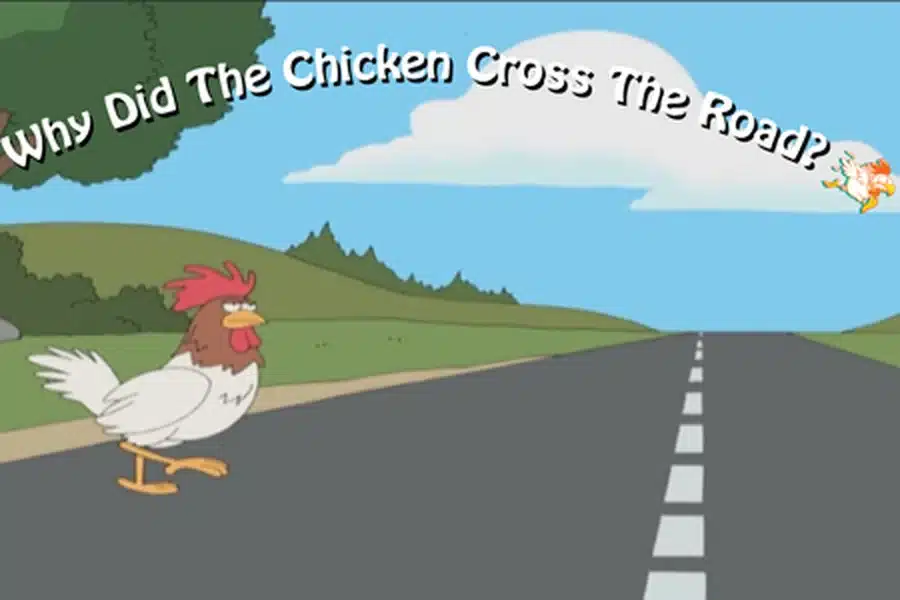
You know what’s weird about crash games? They’re the digital equivalent of watching someone walk across a tightrope while juggling flaming torches. Except the person is a chicken. Or a rocket. Or sometimes just a line going up, up, up until — “crash”.
Here’s the thing: these games have completely rewired how we think about risk and reward in gaming. I’m talking about Aviator, JetX, chicken road — all those games where you watch something climb higher while your heart rate does the same dance. And honestly? They’re way more psychologically complex than anyone gives them credit for.
Think about it: the entire premise is built on one simple question that’s been plaguing humanity forever — when do you cash out? When is enough actually enough? It’s the same question every investor, every gambler, every person who’s ever held onto something a little too long has faced. Except now it’s dressed up as a cartoon chicken crossing increasingly dangerous roads.
Here’s What Really Happens in Your Brain
The genius (and I use that term loosely, because it’s also twisted) is in the simplicity. You place a bet. The multiplier starts climbing. 1.2x… 1.5x… 2x… and every millisecond you’re making this rapid-fire calculation: Do I take the safe profit now, or do I risk it for that sweet 5x multiplier?
Nobody warns you about how “personal” it gets. Like, you start developing these weird superstitions and patterns. “Oh, it crashed early the last three times, so this one’s going higher.” Or my personal favorite: “I feel it in my bones — this is the one.” (Spoiler: your bones don’t know anything about random number generators.)
What’s happening is fascinating from a neuroscience perspective. Your brain is literally flooding with dopamine during that climb phase. Not when you win — “during the anticipation”. That’s the hook. The waiting, the watching, the almost-but-not-quite moment before you either cash out or crash. It’s the same mechanism that makes slot machines addictive, but stripped down to its absolute essence.
The Social Element Changes Everything
Here’s where modern crash games get really interesting, and honestly, a bit uncomfortable if you think about it too hard. They’ve added this whole social layer that transforms what could be a solitary experience into this weird communal anxiety fest.
You can see other players’ bets. You watch them cash out at 1.8x while you’re still holding, sweating, waiting for 3x. Then boom — crash at 1.9x. They’re counting their winnings while you’re staring at zero. Or flip it: you cash out at 2x, feeling pretty smart, then watch the multiplier soar to 15x while some absolute madman who held on is now basically retired.
It’s like being at a poker table where everyone’s cards are face up, but the deck itself is controlled by a random number generator that doesn’t care about your mortgage payment or your kid’s college fund. The social pressure is “intense”. You start recognizing usernames, developing rivalries with people you’ve never met. “Oh, xXDragonSlayer420Xx cashed out early again? Coward.” (Meanwhile, xXDragonSlayer420Xx is probably thinking the same about you.)
Why the Chicken Metaphor Actually Makes Sense
You know what? The whole “chicken crossing the road” thing isn’t just random theming. There’s something beautifully absurd about it that captures the essence of the entire Crash Bandicoot game experience.
Think about the original joke: Why did the chicken cross the road? To get to the other side. It’s an anti-joke. The punchline is that there’s no punchline — just straightforward cause and effect. But in crash games, the chicken “might not make it” to the other side. And you’re betting on exactly how far it gets before becoming roadkill.
It’s this perfect metaphor for calculated risk-taking, wrapped in something so ridiculous that it takes the edge off the fact that you’re essentially gambling. Because let’s be real — that’s what this is. But somehow, watching a pixelated chicken dodge traffic feels less serious than staring at stock charts or sitting at a blackjack table.
The Strategy That Isn’t Really a Strategy
People love to talk about their “strategies” for crash games. And look, I get it. We all want to believe we’ve figured out the pattern, cracked the code, found the system.
Here’s what happens: You start with a plan. “I’m going to cash out at 2x every single time, no exceptions.” This works for approximately three rounds. Then you see it climb to 10x, 20x, and suddenly your disciplined 2x strategy feels like you’re leaving money on the table. So you adjust. You hold longer. You get burned. You go back to 2x. The cycle continues.
The truth nobody wants to admit? The optimal strategy is probably not to play at all. But that’s like saying the optimal strategy for living is never to take any risks, which… yeah, technically true but also completely missing the point of being alive.
What works (for most people who can maintain it) is boring: Set a target, stick to it, don’t chase losses, and don’t try to “win back” what you lost by doubling down. But you know what? Even knowing this, “writing” this doesn’t make it easier to do when you’re in the moment watching that multiplier climb.
The Uncomfortable Truth About Why We Keep Playing
Here’s the thing we don’t talk about: crash games aren’t really about the money. I mean, they are, obviously, but they’re also not.
They’re about feeling something. About those few seconds where possibilities exist, where you’re neither winning nor losing but suspended in this moment of pure potential. It’s weirdly meditative, if meditation involved risking your grocery money on whether a cartoon chicken makes it across a highway.
For many people (and I’m not judging, just observing), these games fill a gap that traditional gaming has left behind. Remember when games used to be “hard”? When did losing mean something? Crash games bring back stakes in the most literal way possible. Every round matters because every round costs something.
And there’s something oddly democratic about them, unlike poker, where skill matters, or sports betting, where knowledge is helpful, crash games are pure chance disguised as choice. The CEO and the student have the same odds. Your careful analysis means nothing. The universe doesn’t care about your spreadsheet.
What This Actually Means for Gaming
You know what’s happening here? We’re witnessing the convergence of gamification and gambling in real-time. And crash games are ground zero for this collision.
Traditional video games are adding more gambling mechanics (loot boxes, anyone?), while gambling is becoming more like gaming. Crash games sit right in that uncomfortable middle ground, forcing us to ask: What’s the difference anymore?
The optimistic take (and despite everything, I do lean optimistic here) is that crash games are at least “honest” about what they are. There’s no pretense that you’re buying a “surprise mechanic” or “player choice enhancement.” You’re betting on when a line stops going up. Simple. Clean. Transparent in its weird way.
Maybe that’s why the chicken crossed the road after all — to get to the other side of our complicated relationship with risk, reward, and entertainment. To strip away all the fancy packaging and force us to confront what we’re really after: that rush, that moment, that perfect cash-out that makes us feel like we’ve beaten the system, even when we know the system always wins in the end.
Oh, and by the way, if you’re reading this while having a crash game open in another tab, waiting for the “perfect moment” to jump back in? Maybe take a walk instead. Let a real chicken cross a real road. The graphics aren’t as good, but the stakes are lower.