Why Patience Is The Key To A Successful THC Detox
If your detox feels like it’s going nowhere, the problem usually isn’t you. The very nature of THC metabolites is what makes people anxious about the whole process.
There’s no button you can press to flush THC out overnight, no matter what the supplement aisle promises. What actually clears it is time, plus a handful of habits that help your body process it a little faster. So, it’s important to have a solid strategy in mind.
Below, we’ll talk about what’s happening inside the metabolism during THC detox, why it’s slower than you’d expect, and what a realistic timeline looks like.
What a THC Detox Actually Is
People throw the word “detox” around like it means scrubbing your system clean in a weekend. What it really means is the stretch of time your body needs to break THC down and clear the leftovers below a test’s cutoff.
And a urine test isn’t even looking for THC, as many people tend to think. It’s looking for THC-COOH, the inactive metabolite your liver produces after breaking THC down. That metabolite is fat-soluble, so it gets stored in your fat cells and released slowly over days or weeks. Or, in the case of heavy chronic smokers, sometimes even months.
When you detox, then, you’re not flushing a single dose out of your blood. Instead, you’re waiting on your body to work through metabolites that have settled into fat tissue and leak out gradually through urine and stool. That’s biology running on its own clock, and you can’t rush a clock.
And, believe it or not, the majority of THC metabolites go out through excretion, not urine.
Why It Takes Longer Than You’d Like
Most people underestimate detox because they assume THC behaves like alcohol. Alcohol is water-soluble and gone in hours. THC is fat-soluble and plays by entirely different rules. The more often you’ve used, the more THC-COOH has piled up in your fat, and the longer it takes to release and process all of it.
A few things stretch the timeline:
- Frequency of use – repeated use builds a bigger reserve of metabolites in fat
- Body fat percentage – more fat means more storage capacity for THC-COOH
- Dose and potency – stronger products load your system more heavily
- Metabolism (and age) – a slower one clears everything more slowly, and as we age, our metabolism slows down
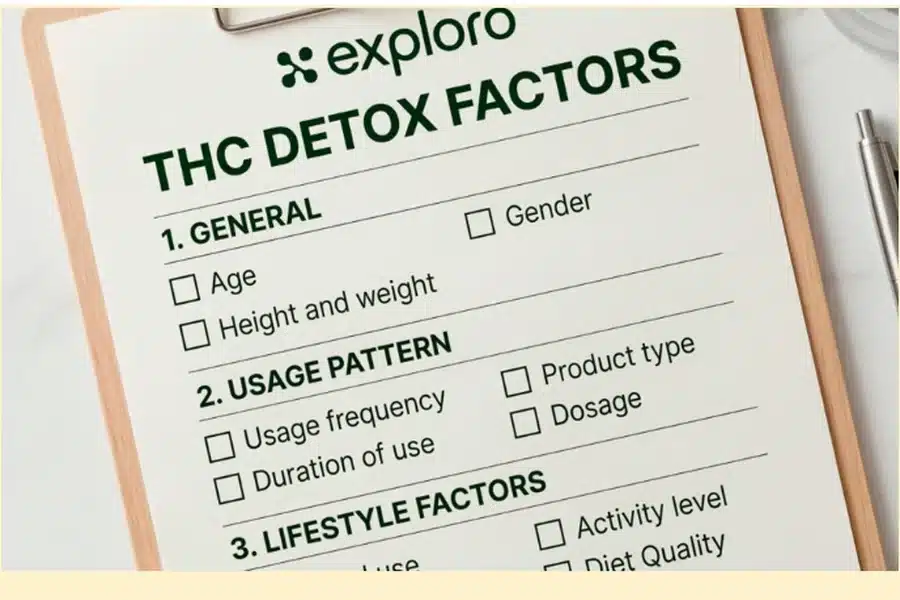
This is why two people who quit on the same day can get very different results. One person tests clean within a week, while another is still positive a month later, even though they stopped at the same time.
It’s also where impatience does real damage. People panic, decide their detox isn’t working, and grab a last-minute shortcut that was never going to deliver. The detox was working fine. It just hadn’t finished.
Because THC-COOH gets stored and re-released, you can dilute a single urine sample, but you can’t dilute away metabolites still trickling out from fat deposits into the metabolism. That’s the whole reason “drink a gallon of water the night before” is unreliable. It addresses the sample, not the source.
Detox Myths That Don’t Work
Before you spend money on a fix, know what doesn’t hold up.
Detox drinks and “same-day cleansers” mostly just dilute your urine for a few hours, and a modern lab flags a diluted specimen as exactly that, sometimes treating it as a failed or invalid result. Mega-dosing water has the same dilution problem, and drinking dangerous amounts can throw your electrolytes off without doing anything to speed up fat-cell release.
- Niacin flushes – a popular internet trick with no solid evidence behind it, and high doses can cause real harm
- Saunas and “sweating it out” – exercise and sweat help your metabolism overall, but you don’t meaningfully sweat out stored THC-COOH; intense exercise right before a test can even spike metabolite levels temporarily as fat breaks down
- Detox pills and pectin kits – no supplement reliably empties the reservoir faster than your own liver and kidneys already do. There are supplements that support the liver, but they are no magic pill
The pattern across all of these is the same. They target the test, not the metabolites. Anything promising overnight results is selling the one thing biology won’t allow.
What a Realistic Timeline Looks Like
Numbers help, so here’s a practical range, based on how often someone uses. Treat these as planning estimates, not guarantees:
| Type of THC use | Approximate time to get below 50 ng/mL |
| One-time or rare use | 1 to 3 days, sometimes longer |
| Occasional use, about 1 to 2 times/week | 3 to 7+ days |
| Moderate use, about 3 to 4 times/week | 5 to 10+ days |
| Daily use | 10 to 30+ days |
| Heavy chronic use | 30+ days possible |
That daily and heavy chronic use range is enormous on purpose. Someone lean and active lands near the short end, while someone with more body fat and a slower metabolism sits near the long end.
If you want an estimate closer to your own situation, the Exploro THC Detox Calculator factors in your use habits, body composition, and lifestyle instead of handing you a one-size-fits-all bracket.
How Patience and Smart Habits Work Together
Patience doesn’t mean doing nothing. It means supporting your body instead of fighting it with gimmicks. The habits that help are boring. Most people skip them for that exact reason.
-
- Stop all THC immediately – including edibles, vapes, and hemp-derived products
- Stay normally hydrated – normal, not extreme
- Move regularly to support a healthy metabolism
- Eat fiber-rich foods to help clear metabolites through digestion
- Test at home to avoid spiraling into anxiety, which can lead to a relapse

It’s important to remember that none of this is magic. It just helps your body do what it was already going to do, a bit more efficiently. Time without new exposure is still the main driver.
The only honest way to know where you stand is to test. An at-home THC urine test reads against the standard 50 ng/mL cutoff, the same threshold most labs use for drug screening.
Read it the same way every time: any visible line in the test region (even a faint one) counts as negative, meaning you’re below the cutoff. No line there means positive. Testing every few days lets you watch the trend move the right way, which takes a lot of the anxiety out of the wait. If you ever get a positive result you want to be certain about, a lab can run a GC-MS confirmation test for a definitive answer.
You Got This
A successful detox isn’t about a clever workaround. Your body stores THC slowly, so it lets go of it slowly.
The people who get through this with the least stress are the ones who accept the timeline, support it with good habits, and track their progress along the way. The ones who struggle spend the whole time fighting the clock.
Quit early, live normally, support your metabolism with a few healthy habits, test as you go, and let your body finish the job.