How to Choose the Right Intellectual Property Lawyer in Thailand: A Guide for Foreign Businesses
Entering the Thai market without securing your intellectual property is one of the most common – and costly – mistakes foreign businesses make. Whether you’re launching a brand, filing a patent, or licensing technology, finding the right intellectual property lawyer Thailand is the single most important step you can take before competitors or counterfeiters get there first. This guide breaks down exactly what to look for, what to avoid, and how to make a confident decision.
Why IP Law in Thailand Is Different
Thailand has its own IP framework, administered by the Department of Intellectual Property (DIP) under the Ministry of Commerce. The rules are not simply a translation of Western IP law.
A few things that catch foreign businesses off guard:
- All filings must be in Thai. Every trademark, patent, or design application must be submitted in Thai, with certified translations of any foreign-language documents.
- A local representative is legally required. Foreign applicants cannot file directly with the DIP – you must appoint a Thai-resident agent or firm.
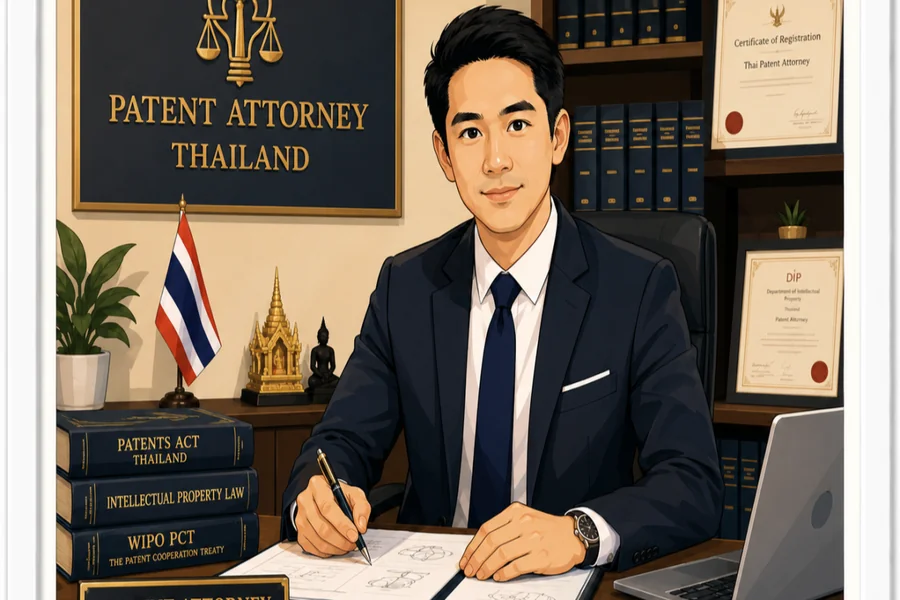
- Patent agents are separately licensed. In Thailand, representing a client before the DIP for patent matters requires a specific Registered Patent Agent qualification – distinct from a general law licence. A lawyer who handles contracts but lacks this credential cannot file your patent application.
Understanding these structural differences is the first reason why choosing the right IP law firm Thailand matters so much.
The 5 Criteria That Actually Matter
Not every firm that calls itself an IP specialist has the depth a foreign business needs. Use these five criteria to separate genuine expertise from generic legal services.
1. DIP-Registered Patent Agent on Staff
If patent protection is part of your strategy, confirm the firm has at least one attorney holding the DIP’s Registered Patent Agent qualification. This is a technical licence requiring a science or engineering degree, completion of two DIP-run courses, and a drafting examination. Ask to see credentials – a credible firm will share them without hesitation.
2. Demonstrable Trademark Registration Thailand Experience
Trademark registration Thailand is the most common IP task for foreign brands entering the market. The process runs 10–18 months from filing to certificate, involves a 90-day opposition window, and requires classification under Thailand’s Nice Classification system. Ask the firm how many trademark applications they file per year and whether they conduct preliminary clearance searches before filing – skipping that step wastes time and money.
3. Cross-Border and Foreign Business Thailand Knowledge
Your IP strategy doesn’t exist in isolation. A firm that understands the Foreign Business Act (FBA), BOI incentives, and how IP rights interact with licensing and technology transfer agreements will give you far more value than one that only handles registration paperwork. IP protection Thailand means nothing if your licensing structure is legally fragile.
4. Enforcement Track Record
Registration is step one. Enforcement – stopping infringers, pursuing counterfeiters, and litigating before the IP and International Trade Court (IP&IT Court) – is where many firms fall short. Ask specifically about enforcement cases they have handled, not just registrations filed.
5. Clear, Transparent Fee Structures
Reputable firms quote fixed fees for standard work (filing, prosecution, renewals) and clearly separate government fees from professional fees. Vague estimates or bundled packages with no itemisation are a warning sign.
Red Flags to Watch For
Even within a market of qualified professionals, some practices signal trouble. Avoid any firm that:
- Cannot name a DIP-registered patent attorney when you ask directly
- Promises registration timelines shorter than 10 months for trademarks – the DIP’s examination process alone takes 6–10 months
- Discourages a preliminary trademark search to save costs upfront
- Has no English-language communication capacity – for a foreign business, this creates serious risk in understanding office actions and deadlines
- Lacks experience with Madrid Protocol filings if you need multi-country coverage beyond Thailand
What to Ask in Your First Consultation
A first meeting with a potential IP law firm Thailand should feel like a diagnostic, not a sales pitch. Come prepared with these questions:
| Question | What a strong answer looks like |
| Do you have a DIP-registered patent agent on staff? | Yes, with a named individual and credential details |
| How do you handle DIP office actions? | Clear process, defined response timelines, client kept informed |
| Can you conduct a trademark clearance search before filing? | Yes, as a standard part of the engagement |
| Have you handled IP enforcement in the IP&IT Court? | Specific cases or outcomes, even if anonymised |
| What are your fees for trademark filing and prosecution? | Itemised quote separating government and professional fees |
| Do you have experience with foreign business Thailand clients? | Named industries or jurisdictions, not vague references |
If a firm struggles to answer these clearly in the first meeting, that tells you something important.
Understanding the Scope: What a Good IP Lawyer Actually Does
A qualified patent attorney Thailand or trademark specialist does far more than submit forms. The full scope of a competent IP lawyer‘s work includes:
- Pre-filing strategy – advising on what to protect, in which classes, and in which order
- Clearance searches – identifying conflicts before you invest in a filing
- Application drafting and prosecution – preparing documents in Thai, responding to DIP examiners, and managing the examination process
- Opposition monitoring – watching the Official Trademark Gazette during the 90-day opposition window and responding if a third party challenges your mark
- Portfolio management – tracking renewal deadlines across multiple registrations
- Enforcement and litigation – sending cease-and-desist letters, coordinating with customs authorities, and representing you in the IP&IT Court if needed
The difference between a firm that handles all of this and one that only manages filings is significant – especially once your brand gains traction in the Thai market.
A Practical Checklist Before You Engage
Before signing any engagement letter, run through this checklist:
- Confirmed the firm has a DIP-registered patent agent (if patents are relevant)
- Received an itemised fee quote covering filing, prosecution, and renewals
- Confirmed the firm conducts preliminary trademark clearance searches
- Verified the firm has handled enforcement matters, not just registrations
- Checked that the firm communicates in English and has experience with foreign business Thailand clients
- Understood the expected timeline for your specific filing (trademark: 10–18 months; patent: 3–5 years)
- Confirmed the firm can handle Madrid Protocol international filings if needed