Mallorca Beyond the Resorts: A First-Timer’s Guide to the Coast, Coves and Mountains
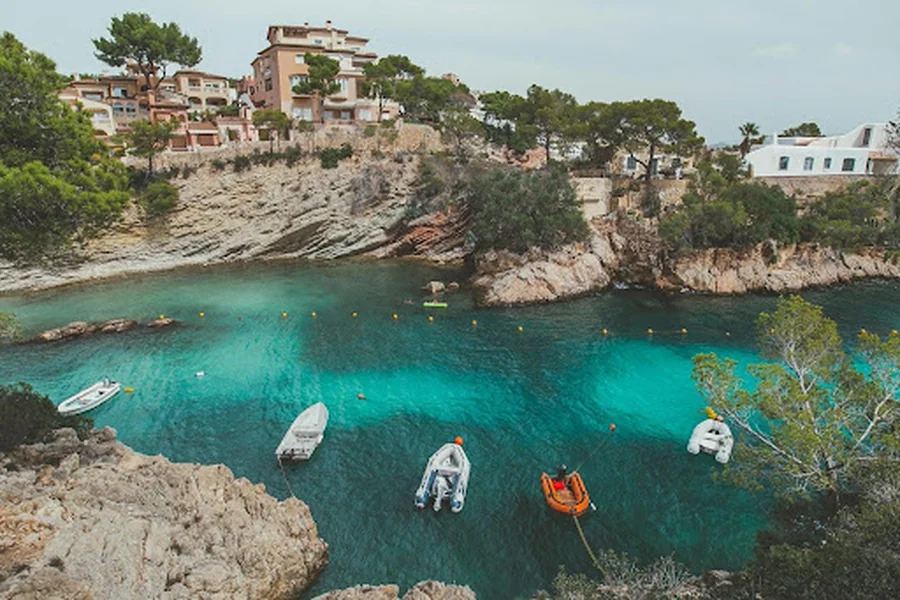
Mallorca has an image problem, and it is not the island’s fault. Package holidays sold the place as a strip of high-rise hotels, when the real Mallorca is the largest of the Balearic Islands at around 3,640 square kilometres, with a walled capital, a UNESCO mountain range and a coastline stitched with coves you can only reach by boat. Spend a few days here with a plan and you leave wondering why anyone stays put by the pool. Here is how to see the good stuff.
Getting There and Around
Almost everyone arrives through Palma de Mallorca Airport, coded PMI, which handled roughly 33.8 million passengers in 2025 and ranks as Spain’s third-busiest. It is a slick, huge terminal, so book a transfer or hire car in advance to skip the queues at peak season. A car is genuinely useful here, because the interior villages and mountain roads are the island’s quiet heart and the bus network thins out fast once you leave the coast.
That said, the single best decision most visitors make is to spend at least one day not driving at all, but afloat.
Why the Coast Is Best Seen From the Water
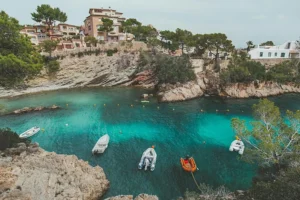
Mallorca’s finest swimming spots are the small calas, turquoise inlets framed by pine and rock, and the prettiest of them have no road and no car park. Places like Caló des Moro get mobbed precisely because they are among the few reachable on foot, while dozens of quieter equivalents sit empty just around the headland. Arriving by sea flips the whole day: you drop anchor where the crowds cannot follow, swim off the back, and move on when you please.
You do not need a skipper’s licence for many of the smaller craft, and comparing a boat rental mallorca option against a group excursion often works out similar in price for a family or a group of friends, with far more freedom over where you go. From the south coast you can also aim for Cabrera, declared Spain’s first maritime-terrestrial national park in 1991 and made up of 19 islands and islets, where the water is some of the clearest in the Mediterranean.
Palma and Its Cathedral
Give the capital more than an airport glance. Palma’s old town is a maze of honey-coloured stone, courtyards and tapas bars, crowned by La Seu, the great Gothic cathedral that rises straight above the seafront and catches the light like few buildings in Spain. Climb the surrounding lanes for independent shops and a long lunch, and you will understand why Palma regularly lands on lists of Europe’s most liveable cities rather than just its holiday ones.
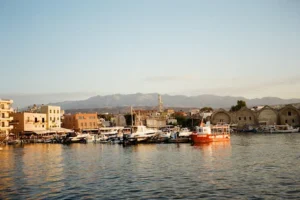
Early morning or the hour before sunset is when the cathedral and the marina look their best, so plan your walk around the light.
Into the Serra de Tramuntana
The mountains along the northwest coast are the island’s other world. The Serra de Tramuntana was named a UNESCO World Heritage Site in June 2011 for its patchwork of dry-stone terraces, olive groves and mountain villages, and it protects more than 62,000 hectares. The pretty town of Sóller and its vintage wooden tram make an easy introduction, while braver drivers tackle the hairpins down to Sa Calobra, a coast road engineered by Antonio Parietti that loops back under itself.
Further north, Cap de Formentor points a rocky finger into the sea, its peak of Fumat standing 384 metres above the waves and its lighthouse road delivering the drama that ends up on every Mallorca postcard.
Beaches and Calas Worth the Effort
If you would rather keep your feet on sand, the island still delivers. Es Trenc, on the south coast, is a long ribbon of undeveloped white beach that feels closer to the Caribbean than the Med, protected from the building that swallowed other bays. In the northeast, the wide arc of sand around Alcúdia suits families, with shallow water and a proper old town behind it.
For the postcard coves, go early or go by boat. By mid-morning in July the small calas fill up, and the magic of arriving before the crowds is worth the alarm clock.
Food and When to Go
Eat like a local and the trip improves again. Look for the spiralled ensaïmada pastry at breakfast, spreadable sobrassada sausage, and tumbet, a layered dish of fried vegetables that is Mallorca’s answer to ratatouille. Wash it down with a local wine from the Binissalem region, which rarely leaves the island and is all the better for it.
As for timing, May, June and September into October are the sweet spots, with warm sea, open mountain roads and hotel prices well below the August peak. Come then, split your days between the water and the mountains, and Mallorca stops being a punchline about package tours and starts being one of the Mediterranean’s great all-rounders.