Shipping from Bulgaria to the USA: A Practical Guide to Routes, Costs and Customs
Moving goods across the Atlantic sounds simple until you price it, time it and try to clear it through customs. Whether you are relocating a home, an online seller sending stock, or a business fulfilling an order, the same questions come up: by sea or by air, how long will it take, and what will the paperwork demand? This guide walks through how the Bulgaria to United States corridor actually works, so you can plan with real numbers rather than guesses.
The Main Routes
Almost everything travels one of two ways. Ocean freight carries the bulk of cargo and nearly all household moves, while air freight handles the urgent, the light and the valuable. For sea, your goods leave from one of Bulgaria’s two deep-water Black Sea ports, Varna or Burgas, both key nodes on the East-West transport corridor, usually trucked there first from wherever they are packed.
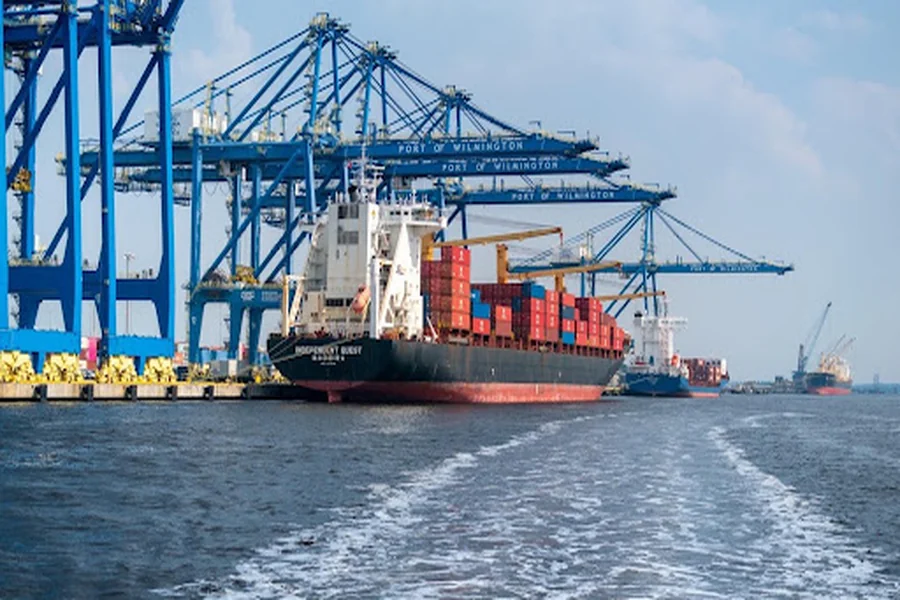
Because the Black Sea has no direct transatlantic liner service, a typical shipping from bulgaria to usa move sails on a feeder vessel to a larger hub, then transfers onto an ocean ship bound for the US East Coast. The usual arrival ports are New York and New Jersey, Norfolk, Savannah and Charleston. Air freight is simpler in shape: cargo flies out of Sofia Airport, often with one connection, into a major US gateway such as New York or Chicago.
How Long It Takes
Sea freight is the patient option. The shortest scheduled sailing from Burgas to New York runs around 43 days, with departures roughly every 1 to 2 weeks, and once you add packing, the inland leg to port and customs clearance at the far end, a realistic door-to-door figure is 6 to 9 weeks. Transshipment delays and winter weather can stretch that further.
Air freight collapses the timeline. The flight itself is a matter of hours, and a door-to-door air move usually completes in 3 to 8 days once handling and customs are counted. The trade-off, as always, is price.
What It Costs
Ocean freight is priced by space. A full container load, or FCL, gives you a private 20-foot or 40-foot box, roughly 33 or 67 cubic metres, and suits a whole household or a large consignment. For smaller volumes, a shared load known as LCL or groupage charges you only for the cubic metres you use, which is cheaper until your goods fill about half a container, at which point FCL often wins.
By contrast, air is priced by chargeable weight, the greater of actual and volumetric weight, so it rewards small, dense, high-value items and punishes bulky ones. Fuel surcharges, peak-season demand and the extra transshipment legs common on Black Sea routes all move the final number, so treat any single quote as a snapshot rather than a fixed rate.
Customs and Paperwork on the US Side
This is where shipments stall, so get it right early. Every ocean container bound for the United States needs an Importer Security Filing, the rule known as ISF or “10+2,” submitted to US Customs and Border Protection at least 24 hours before the goods are loaded in Bulgaria. Miss it and you risk fines and holds.
Beyond that, you will need a commercial invoice, a detailed packing list and the bill of lading or air waybill. Commercial goods are classified under the Harmonised Tariff Schedule, which sets the duty rate, while used household belongings are often admitted duty-free when the owner is relocating and can show the items were owned and used abroad. Accurate, honest documents are the single biggest factor in a clean clearance, so a good forwarder will prepare them with you rather than leave you guessing.
Sea or Air: Choosing the Right Mode
The decision usually makes itself once you weigh three things: volume, urgency and value. For a full home, furniture or any large consignment where a few extra weeks do not matter, the sea route is far cheaper and the obvious pick. For documents, samples, spare parts or anything you need within the week, air freight earns its premium.
Many shippers split the difference. Send a small air shipment of essentials or high-value items so they arrive fast, and let the bulk follow by sea. It is often the most sensible balance of speed against cost for a relocation.
Working With a Freight Forwarder
For a route with a transshipment leg and strict US filing rules, a forwarder is worth the fee. Gather at least 3 quotes on a door-to-door basis rather than port to port, since the inland trucking, handling and destination delivery are where surprise costs hide. Confirm which Incoterms apply, because EXW, FOB, CIF and DDP split the responsibility and the bill very differently between you and the seller.
Finally, ask what the marine or cargo insurance actually covers, check recent reviews, and favour a company that answers plainly before any money changes hands. Get the route, the timing and the paperwork lined up in advance, and the whole move becomes a scheduling task rather than a gamble.