Who Is Liable in a Texas Multi-Car Pileup?
A multi-car pileup is one of the more legally tangled situations in personal injury law, precisely because it rarely involves a clean, single point of blame. When three, five, or a dozen vehicles are involved in a chain-reaction collision, figuring out who owes what to whom becomes a question of sequencing, not just fault.
Why does sequencing matter so much?
In a typical two-car accident, liability traces to one clear act, running a red light, following too closely. In a pileup, the same crash can involve multiple independent acts of negligence stacked on top of each other: a driver who initially caused a collision, a second driver who couldn’t stop in time and struck the first two vehicles, and a third who was already following too closely before either of the first two events occurred. Texas law requires untangling which specific negligent act caused which specific injury, since a driver isn’t automatically responsible for harm caused by a separate, later collision they had no part in.
How does Texas divide liability across multiple parties?
Texas applies modified comparative negligence with a 51% bar, meaning any party found more than half responsible for causing an accident cannot recover damages, and each party’s compensation is reduced by their own percentage of assigned fault. In a multi-vehicle case, this calculation gets applied separately to each involved driver, meaning a driver at the back of a pileup could bear a different fault percentage, and face a different bar to recovery, than a driver in the middle.
What kind of evidence untangles a pileup’s sequencing?
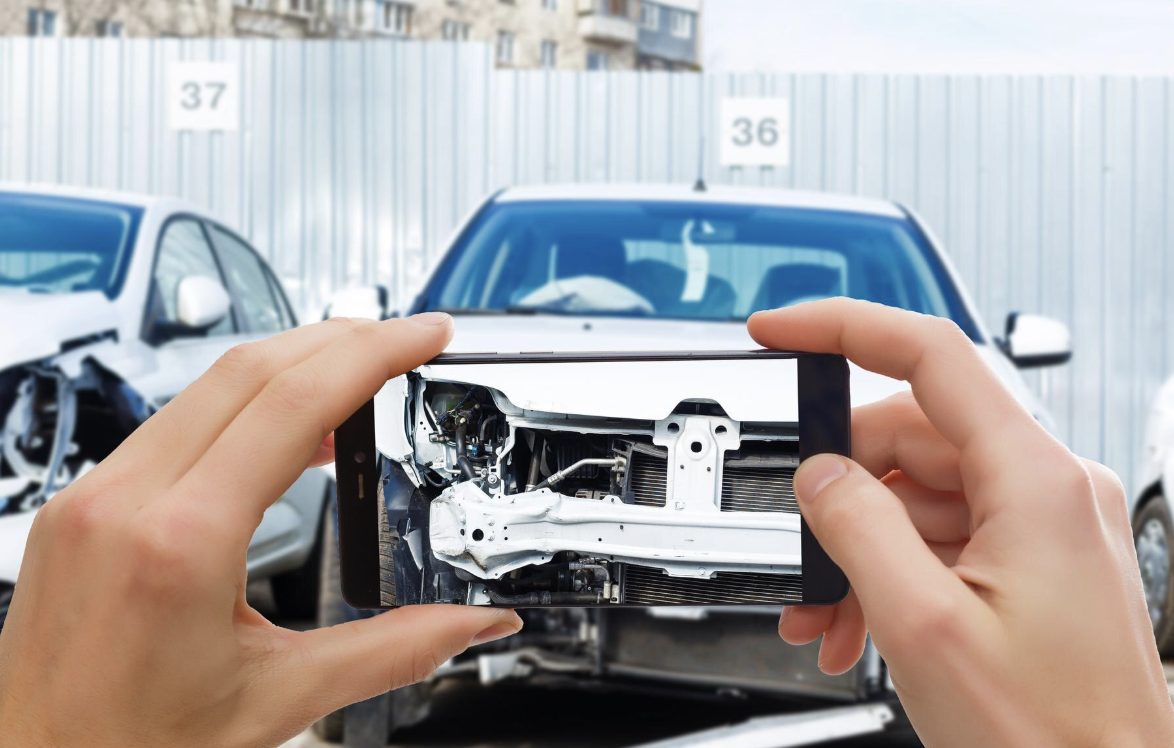
Traffic camera and dashcam footage are disproportionately valuable in pileup cases specifically because they can show the actual order collisions occurred in, something witness testimony alone often can’t reliably establish once multiple people are describing overlapping, chaotic seconds of impact. Vehicle damage patterns, particularly the direction and force of impact marks, can also help reconstruct sequencing when video isn’t available, which is part of why accident reconstruction expertise becomes more valuable in these cases than in a standard two-vehicle collision.
Why do these cases require more resources than a typical claim?
A pileup case often means dealing with several different insurance companies simultaneously, each representing a different driver with potentially conflicting accounts of how the sequence unfolded. Building a case strong enough to hold up against multiple insurers, each incentivized to shift blame toward someone else’s driver, generally requires the kind of investigative resources, reconstruction experts, comprehensive footage requests across multiple sources, that a single straightforward negotiation doesn’t demand.
How does a firm’s structure affect handling this kind of complexity?
Multi-vehicle cases can involve conflicting accounts of the same collision, making the ability to reconstruct what happened more important than firm size. Texas recorded more than 250,000 people injured in motor vehicle crashes in 2024, according to TxDOT. Cases involving several vehicles can require evidence from different drivers, vehicles, witnesses, and insurance policies before responsibility and damages can be evaluated. Trusted texas injury firms like 1-800 The Wolf Accident Attorneys document the use of crash reconstruction, vehicle damage, records, and electronic vehicle data in their accident investigations. Together, these sources can establish vehicle movement and impact sequence when driver statements conflict.
The relevant measure of firm structure is whether the legal team can obtain and use the technical evidence needed to resolve those questions, not how many attorneys the firm employs.
Does fault in a pileup ever get split unevenly on purpose?
Yes, and this is often where negotiations get contentious. Insurers representing drivers further back in a pileup frequently argue their client only struck an already-stopped vehicle and shouldn’t bear responsibility for injuries caused by the initial collision, while insurers for the driver who caused the initial collision argue that subsequent drivers should have had adequate stopping distance regardless. Untangling which argument holds up typically requires the kind of physical and video evidence described above, since neither position is automatically correct without case-specific proof.
Key takeaway
A multi-car pileup isn’t simply a bigger version of a normal accident claim, it’s a fundamentally different kind of case requiring proof of sequencing, not just fault. Texas’s comparative negligence rule applies to each driver individually, meaning the outcome for any one claimant depends heavily on how clearly the chain of events can be reconstructed and documented.
Why do multi-vehicle accidents on Texas highways happen at higher rates in certain conditions?
Dense highway corridors with heavy commercial truck traffic, common throughout the Dallas-Fort Worth Mid-Cities region, create conditions particularly prone to chain-reaction collisions: high speed differentials between merging and through traffic, sudden braking events triggered by a single incident cascading backward through following vehicles, and reduced visibility during fog or heavy rain that limits how quickly following drivers can react. These conditions don’t just increase the frequency of pileups, they also tend to increase their severity, since higher speeds at the moment of initial impact generally produce more force transferred through each subsequent collision in the chain.
How does insurance coverage get sorted out across multiple vehicles?
Each driver’s own auto insurance policy generally responds first to claims against that specific driver, meaning an injured claimant may need to pursue claims against several different insurance companies simultaneously if multiple drivers share some percentage of fault. This process requires tracking separate negotiations, separate documentation requirements, and sometimes separate settlement timelines across each insurer, which is considerably more administratively complex than a single negotiation with one insurance company in a standard two-vehicle accident.
What happens if one of the at-fault drivers doesn’t have adequate insurance?
Given how quickly damages can escalate across multiple injured parties in a pileup, it’s not uncommon for a single driver’s liability coverage to be insufficient to cover the full extent of harm they’re found responsible for. In these situations, a claimant’s own uninsured or underinsured motorist coverage can become relevant, filling the gap between what the at-fault driver’s insurance pays and the full value of the claimant’s damages, assuming that coverage was included on the claimant’s own policy.
Does it matter which vehicle in the pileup a claimant was riding in?
Significantly. A driver or passenger in a vehicle struck from behind by a vehicle that was itself pushed forward by an earlier collision faces a different liability analysis than someone in the vehicle that initiated the entire chain reaction. Establishing exactly where in the sequence a claimant’s vehicle sat, and which specific impact caused which specific injury, often requires detailed reconstruction, particularly when a claimant’s vehicle was struck multiple times in rapid succession by different vehicles in the chain.
How long do these more complex cases typically take to resolve?
Multi-vehicle pileup cases generally take longer to resolve than standard two-vehicle claims, given the number of parties, insurers, and disputed sequencing questions involved. Coordinating simultaneous negotiations, or in some cases coordinated litigation, across several insurance companies each pointing partial blame elsewhere adds real time to the process, which is part of why early, thorough evidence gathering matters even more in these cases than in simpler ones, since the extended timeline gives evidence more time to degrade before the various disputes are finally resolved.
What’s the practical first step someone should take after being involved in a multi-vehicle pileup?
Beyond the standard steps of seeking medical attention and documenting the scene, identifying and writing down the approximate position of every vehicle involved, and the order in which impacts seemed to occur, provides a contemporaneous account that can later be compared against physical evidence and any available footage, since a claimant’s own fresh memory of the sequence is often more reliable in the moment than it will be weeks into a drawn-out multi-party negotiation.