How to Start Wood Carving: A Beginner’s Guide to Tools, Wood, and Technique
Wood carving https://woodcarving-tools.com/ looks intimidating from the outside. A finished spoon with a gently curved bowl, or a small figure with crisp detail, seems like the product of years of training. In reality, most carvers start with a pocketknife, a soft block of basswood, and a willingness to make a lot of clumsy first cuts. The craft rewards patience more than talent, and the learning curve is shorter than most beginners expect.
Choosing Your First Piece of Wood
The first decision is wood. Basswood is the standard training material because it is soft, has a tight and even grain, and rarely splits unpredictably. Green (unseasoned) wood is actually easier to cut than dry wood for spoon and bowl work, which is why traditional spoon carvers often work straight from a freshly split log.
- Basswood: soft, even grain, the default choice for beginners
- Butternut and white pine: reasonable alternatives with similar working properties
- Green, unseasoned wood: easier to cut for spoons and bowls
- Oak, maple, and “furniture grade” hardware store wood: avoid until your hands understand a blade
The Three Tools Every Beginner Needs
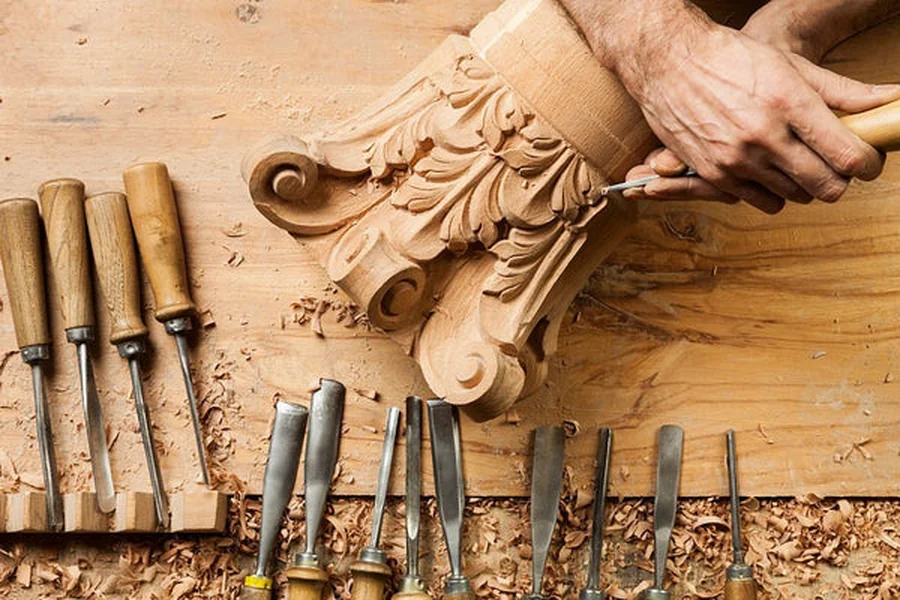
Tools matter more than technique in the beginning, mostly because dull or wrong tools teach bad habits. A cheap knife that requires constant sawing motions will train your hand to force cuts rather than let a sharp edge do the work.
- Straight carving knife: shaping and detail work
- Hook knife (spoon knife): hollowing concave surfaces like the bowl of a spoon
- Small gouge: rougher stock removal
Everything else in the craft is a refinement of these three basic shapes.
Sharpness and Safety
Sharpness is non-negotiable. A carving edge should shave arm hair or slice paper cleanly. Most injuries in wood carving happen not because a blade is too sharp, but because it is too dull and needs extra force to cut, which is when it slips. Learning to strop a blade on leather loaded with honing compound takes ten minutes to learn and should become part of every carving session, not an occasional chore.
Grip and cutting direction are the two habits worth building early. Carve with the grain whenever possible, moving the blade in the direction the wood fibers run so the cut peels away cleanly instead of tearing. Keep both hands behind the edge at all times using controlled, short strokes rather than long sweeping cuts away from the body. A carving glove or thumb guard is a reasonable investment for anyone serious about the hobby, especially when working hook knives around the palm of a spoon.
Picking a First Project
Projects should start small.
- A butter spreader or simple kuksa-style cup: teaches hollowing, shaping, and finishing in a weekend
- A single all-purpose knife project: builds basic control before adding tools
- Avoid large bowls or detailed figures at first: mistakes are amplified and often end in frustration
Spoon carving in particular has become a popular entry point into the craft because it combines straight knife work, hook knife hollowing, and finishing in one manageable object.
Finishing the Piece
Finishing is often overlooked by beginners but makes a real difference in the final result. A food-safe oil such as walnut or flaxseed oil brings out the grain, protects the wood from moisture, and gives a piece that handmade warmth that raw wood lacks. Avoid varnishes and polyurethanes on anything meant to touch food.
As skills develop, most carvers eventually move from a single all-purpose knife toward a small curated set of tools matched to the kind of carving they enjoy most, whether that is spoons, bowls, relief panels, or figures. Manufacturers such as STRYI, whose full catalog is available at https://woodcarving-tools.com/, build tool sets specifically around these disciplines, which takes some of the guesswork out of building a kit as a hobby grows.
Wood carving is ultimately a craft learned by doing rather than reading. Books and videos explain the mechanics, but the feel of a sharp blade parting fibers cleanly only comes from hours at the bench. Start with soft wood, sharp tools, and small projects, and the rest follows at its own pace.